
Milasinovic: Pristina is seeking to marginalize the topic of protecting Serbian cultural heritage
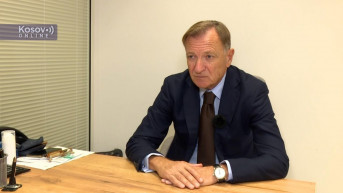
President of the National Commission for Cooperation with UNESCO, Prof. Dr. Goran Milasinovic, expressed his belief that Kosovo was far from gaining membership in UNESCO, considering that most member states now recognized the paradox that Pristina sought to become a permanent member of that UN organization while, on the other hand, they were destroying and rendering inaccessible the properties on the list of world cultural heritage, such as the Decani Monastery, the Patriarchate of Peja, Our Lady of Ljevis, and Gracanica.
Milasinovic emphasizes that Serbia has jurisdiction over these cultural monuments and is expected to submit reports to the UNESCO World Heritage Committee and take care of them. However, he believes that the collaboration of the local community on this matter is also important. Nonetheless, he assesses that the local community is not making sufficient efforts to protect Serbian monasteries.
"The jurisdiction is primarily ours; we are a member state of UNESCO, and it is expected that we take care of these cultural monuments, which we are doing. However, it's impossible without the involvement of the local community. The local community must have its share, and it does have its share, but we are not satisfied with it. For example, in the case of Decani, even more so in the case of Our Lady of Ljevis, we see that the local community is not making enough effort to protect these properties. These properties would not be on the endangered list if they were adequately protected. As a result, they are inaccessible, not only to people who want to see them from Serbia, believers but also to people who want to see them from the region and around the world," Milasinovic told Kosovo Online.
The recent session of the UNESCO World Heritage Committee has concluded, and Milasinovic says that it is obligatory to submit annual reports on the status of endangered properties, among which, he notes, are four medieval Serbian cultural monuments. According to him, Serbia is obligated to submit a report every year, as it is a member of UNESCO. The Republic Institute for the Protection of Cultural Monuments of Serbia is responsible for preparing the report.
However, he also emphasized that there had been attempts by Pristina to remove Serbian monasteries from the list of endangered world heritage properties.
"The report is comprehensive every year and it shows the condition of these properties, and whether any maintenance work has been done. We must not carry out reconstructions; there are strict rules in UNESCO regarding what is allowed and what is not, to ensure they remain on the list. Our responsibility is to report, so that all interested parties know which properties are still endangered. There have been attempts by Pristina to remove them from this list because if they are not on the list, reporting happens every ten years, and a lot can change in ten years. They did not succeed in that," Milasinovic stated.
Serbia's goal, as explained by Milasinovic, is to inform all other UNESCO member states about the situation.
"Our goal is for everyone to know what is happening, but not to engage in too much discussion since we do not like to trigger status issues regarding these monasteries. As long as we report as a member state, we have jurisdiction over these monasteries," Milasinovic emphasized.
The cooperation of the local community with Serbia, which has jurisdiction over the monasteries, is not at a satisfactory level, Milasinovic noted, highlighting that Pristina was trying to marginalize the issue of protecting Serbian cultural heritage.
He reminds that UNESCO's primary mission is to protect heritage for future generations and make it accessible to every person.
"For every person on the planet to feel Our Lady of Ljevis or the Patriarchate of Peja as a part of their heritage, as a part of humanity that belongs to them and that they want to pass on to the next generation. This is not possible at the moment, and we are very disappointed with the involvement of the local community," Milasinovic said.
Speaking about Kosovo's desire to become a permanent member of UNESCO, Milasinovic reminded that it was a kind of paradox when considering Pristina's attitude toward Serbian cultural heritage.
"We hope that this will not happen soon, and we cannot even imagine such a scenario because we have seen a series of hostile actions against these monasteries. There are not only legal reasons related to Resolution 1244 but also ethical issues. It's an attempt to become a member state while simultaneously destroying cultural monuments on UNESCO's list. This is a paradox that most member states recognize today, and that's why their efforts to become permanent members have not succeeded," Milasinovic explained.
When asked to comment on the candidacy for the Executive Board and the chances of Serbia gaining membership, the President of the National Commission for Cooperation with UNESCO said that significant diplomatic efforts were being made to secure a place in that body and reminded that Serbia had been a member of the Executive Board several times before.
"However, in the past two years, we chaired the Executive Board and couldn't fully engage in all of UNESCO's activities due to our presidency. That's why we believe our desire to become a member of the Executive Board is legitimate. We hope that we have garnered enough support and have enough friends among UNESCO member states who will understand and vote for us," Milasinovic concluded.



comments