
NGO CASA: Police in Kosovo is not a neutral institution but an instrument of political power
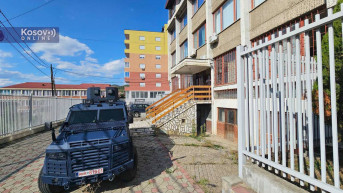
The Center for Affirmative Social Action (CASA) issued a statement announcing the findings of a study, which concluded that the current police structure in northern Kosovo is not perceived as a neutral law enforcement institution but rather as an instrument of political power that deepens divisions instead of overcoming them.
In its media statement, NGO CASA explains that the study focuses on practical policies concerning "the key interests and rights of the Serbian community in the process of normalizing relations in Kosovo."
The research examined security, the protection of cultural heritage, and access to personal documents and legal identity, revealing systematic violations of the rights of the Serbian community.
“The most alarming situation, though far from the only issue, concerns the security of the Serbian community in northern Kosovo. This has been further exacerbated by the deployment of special police forces and the withdrawal of Serbs from institutions, particularly the police. Such policies have created a security vacuum that Pristina has exploited to establish political control over the instruments of the rule of law,” the statement reads.
The organization claims that the study was conducted using internationally recognized methods and standards for policing in divided societies.
“Among the key findings are politically motivated actions by the Kosovo police, the systematic use of excessive force, and a lack of institutional accountability in such cases. As a result, there is a severe lack of trust and an alarming degree of legal uncertainty among citizens in northern Kosovo,” the statement continues.
The main conclusion of the research is that the current police structure in northern Kosovo is not perceived as a neutral law enforcement institution but rather as a tool of political power.
As a solution, CASA proposes introducing a so-called hybrid model that would align the positions of the negotiating parties. This model is based on the voluntary return of some Kosovo police officers who resigned in November 2022, alongside the establishment of clear criteria for their professional integrity and the fulfillment of ethnic quotas by recruiting new officers from the Serbian community.
“A fundamental prerequisite for such a solution is the creation of political will to integrate it into the EU-led dialogue process, as well as international pressure on the negotiating parties to reach a compromise. Therefore, most of the recommendations from this study are directed at the international community,” CASA concludes.



0 comments