
Nineteen years of trauma: I will never forget the day my house was set on fire
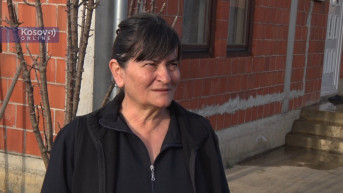
The house of the Mitrovic family in Lipljan in the Pogrom that started on March 17, 2004, was completely burned the next day. After surviving the terror of Albanian extremists, Gorica and her four sons, two of whom are married today and have children, live in the village of Skullan in the municipality of Gracanica.
Gorica Mitrovic says that on March 18, they lost everything they had been creating for years.
"Everything was bad that day, we were attacked. They burned our house, and our garden; we lost everything in one day. Everything we had, not only us, also our neighbors, but everyone feels sorry for themselves. We lost everything, my father-in-law who had lived there for 50 years, was left with nowhere to go. It was terrible, they were shooting at us. To save ourselves, we passed through the neighbors' yards to reach the churchyard, where people who escaped awaited us, and KFOR didn't let us leave the city," Gorica recalls that fatal day.
Gorica points out that they never had a bad relationship with their Albanian neighbors, and that they did not expect them to burn down their house and garden, as well as that a few days before March 17, the atmosphere was different. Silence, the city was peaceful, but they had no idea what could happen to them.
Today, 19 years after they were expelled from Lipljan, as Gorica says, she rarely passes by the property where their house used to be because only bad memories are associated with that place.
"Those memories will never fade; it cannot be forgotten; it is engraved in all of us who experienced it," Gorica said.
She adds that she is afraid that March 17 will happen again, but as she adds, she is not worried about herself but about her children and grandchildren.
"I don't believe we can return to Lipljan anymore, we sold that house because we weren't allowed to return there anymore, here in Skullan we built a new house because we didn't want to leave Kosovo. We just retreated. The children didn't want to go anywhere, they are sentimentally attached here by their childhood, memories, friends, school; they did not want to go somewhere else," Gorica says.
When they returned to Lipljan after a few days, they found the house and other buildings completely burned, and the livestock they had was also burned.
From March 17 to 19, 2004, more than 4,000 people were expelled, more than 900 people were beaten and seriously injured, and 19 cultural monuments of the first category and 16 Orthodox churches that were not categorized were destroyed. About 10,000 valuable frescoes, icons, chalices, and many other church relics were destroyed, as well as baptismal, marriage, and death records.
About 935 Serbian, Roma people, and Ashkali houses were burned and destroyed. Six towns and nine villages were ethnically cleansed of the Serbs.



0 comments