
Alija: The defense strategy was that the accused had no effective control over the KLA, Clark’s testimony followed that line
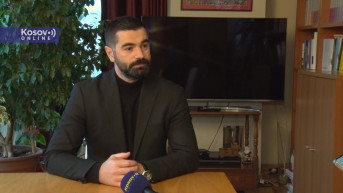
Amer Alija, a lawyer from the Kosovo Humanitarian Law Center, believes that Wesley Clark also testified, among other things, that Hashim Thaci did not have effective control and could not issue orders to KLA commanders.
"As we know, Clark was the last defense witness. The defense proposed, and a total of seven witnesses were heard. They all testified along the same line, and the defense strategy was to prove that the KLA was not an effective structure, and that commanders in different zones across Kosovo were the main leaders with authority over the soldiers in those territories. In other words, the goal of the defense and these witnesses, including Wesley Clark’s testimony, was to prove that the accused, including Hashim Thaci, did not have effective control and was not in a position to issue orders to commanders operating in different zones in Kosovo", Alija says.
He further states that there is an ongoing legal battle between the prosecution and the defense over whether the elements of command responsibility and the elements of a joint criminal enterprise have been met.
"The defense carefully selected who should testify, and as we know, all these witnesses were in some way involved during the war in Kosovo, either in negotiations or in direct contact with KLA leaders and the Serbian side. Their testimony is based on their knowledge and what they personally observed regarding the role each person played during the war in Kosovo", he says.
Regarding the main arguments of the defense, Alija explains:
"The main arguments are that effective control over the entire territory could not have existed due to the circumstances at the time. The defense is trying to prove that the KLA was not organized as a vertical hierarchy, but rather horizontally, meaning each commander operated on his own responsibility within his zone. And that is the strategy of the defense, to prove that the KLA General Staff or those currently on trial did not have the authority to control everything that happened during the war in Kosovo", our interlocutor says, and continues:
"The defense proposed only a certain number of witnesses. Their statements, credibility, and roles during the war will certainly have an impact on the court, because the defense considers them credible witnesses. However, bearing in mind that the KLA was, de facto, an army, but not at the same level as the Yugoslav Army, since the Yugoslav Army and its commanders all held positions based on legal acts, and it was known who had which function. With the KLA, the organization or structure was something that grew day by day, because these were Kosovo civilians who gathered, and it was not clear who was appointed commander or when", Alija says, adding that in previous cases there have also been material evidence and testimonies regarding the structure of the KLA, and that the court will ultimately evaluate everything. He says he hopes the court will issue a proper verdict based on the evidence.
The lawyer from the Kosovo Humanitarian Law Center believes that the first-instance verdicts should be delivered during the next year.
"Today there will be the status conference before the Specialist Chambers. The parties will agree on how much time they need to submit their final briefs, after which the accused have the right to testify if they wish. If they do not, then the defense and the prosecution will agree on how much time they need to prepare their closing arguments. I hope that at the beginning of next year a first-instance verdict will be delivered", Alija says.
0 comments