
Bajraktari: Reparations proceedings in “Thaci et al.” case premature; Hasani: No need to wait
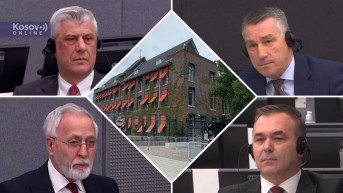
Lawyer Ardian Bajraktari has assessed that, at this stage, it is premature to initiate reparations proceedings for victims in the case against the four convicted former KLA leaders and that such proceedings should begin only once the criminal judgment becomes final. Former Supreme Court President Fejzullah Hasani, however, believes there is no need to wait for a decision by the Court of Appeals.
According to Bajraktari, as long as the judgment can be changed on appeal, initiating reparations proceedings for victims at this stage is premature.
“As a rule, proceedings for compensation of victims begin once a judgment becomes final. However, when it comes to the Specialist Court, anomalies and procedures contrary to the law have continuously characterized the proceedings. I believe that such an action, or such a decision, is premature as long as we do not yet have a final judgment,” Bajraktari told KosovaPress.
According to him, the decision of the Court of Appeals could also alter the basis on which the reparations proceedings are being conducted.
“Of course, further steps will depend on the outcome of the Court of Appeals’ decision. If justice is served, the second-instance court will have to overturn that decision, and consequently, this process will naturally also have to be reviewed. Nevertheless, we should wait for the outcome of the Court of Appeals’ decision. Given the course that has characterized decision-making in previous proceedings, I believe there will be no outcome in the appellate proceedings for approximately two years. Initiating these proceedings at this stage of the process could also prove to constitute prejudgment of the case,” he said.
Former Supreme Court President Fejzullah Hasani interprets the issue differently. In his view, proceedings concerning a property claim arising from a criminal offense may be conducted in parallel with the criminal proceedings, and it is not necessary to wait for the Court of Appeals to issue its decision.
According to Hasani, the purpose of such proceedings is to enable victims to exercise their right to compensation within the criminal proceedings without having to initiate separate civil proceedings.
“The issue of compensation for victims is regulated by all laws, including our own. The Criminal Procedure Code provides that matters of a civil-law nature, namely civil claims, may also be decided within criminal proceedings. The purpose of enabling persons who are victims of unlawful acts to exercise this right is to allow them to pursue their claims within the criminal proceedings, thereby avoiding the costs that would subsequently arise from initiating separate civil litigation. However, the property claim is adjudicated simultaneously with the criminal case. Therefore, there is no need to wait for the Court of Appeals to issue a decision; it is decided together with the principal case,” Hasani said.
He nevertheless left open the possibility that the Specialist Chambers, owing to their internal rules and the specific nature of these proceedings, may have provided for a separate reparations procedure.
“It is possible that their internal rules provide for a special procedure separating the proceedings. However, from what I have seen, this means that the property claim will be decided together with the principal case. I believe that the written judgment will also contain a decision on the property claim. Therefore, the property claim is decided when judgment is rendered in the principal case, rather than after the judgment becomes final following a decision by the Court of Appeals. This is because the accused also have the right to appeal this aspect—the property claim—to the Court of Appeals,” he said.
Hasani stressed that the basis for compensation was directly linked to a conviction. If an accused is acquitted or the indictment is dismissed, he said, the basis for the property claim also changes.
The Kosovo Specialist Chambers in The Hague announced last week that they would initiate reparations proceedings for victims in the case against former KLA leaders Hashim Thaci, Kadri Veseli, Rexhep Selimi and Jakup Krasniqi, who were convicted of war crimes.


0 comments