
Doyle: Witness protection is one of the highest priorities of the Specialized Chambers
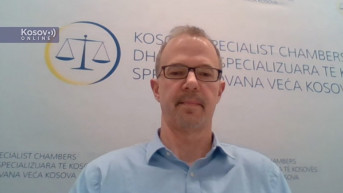
Witness protection is one of the highest priorities for the Specialized Chambers, and so far, we have seen that 120 witnesses have testified safely, Michael Doyle, Spokesperson for the Specialized Chambers of Kosovo in The Hague, told Kosovo Online.
Doyle further states that there is a specialized unit of the Specialized Chambers of Kosovo dedicated to the safety and well-being of witnesses before, during, and after the trial.
"Judges can order a variety of protective measures for witnesses, as we have seen in the past. These include, among other things, signing pseudonyms for witness names, using voice and face distortion, and having closed or private sessions. This was one of the reasons why the European Union and Kosovo agreed to establish the Specialized Chambers with trials outside of Kosovo, to protect witnesses. The law on the Specialized Chambers allows the Prosecutor's Office to indict those who have attempted to influence or intimidate witnesses. We have seen that two individuals have been convicted for this, and during the past year, four additional individuals have been arrested in Kosovo and transported to The Hague because they were suspected of obstructing the proceedings. We have also seen that witness protection is at the heart of the Court and central to justice," Doyle says.
When asked whether the Court has proven that it can protect witnesses and victims in Hague processes, Doyle points out that 120 witnesses have safely testified so far.
"As I mentioned, 120 witnesses have testified, including 54 in the trial of Thaci and others. This is something that is proven every day, and I assure you that the Specialized Chambers continue to work on witness protection and take it extremely seriously," our interlocutor says.
Doyle also believes that judges carefully balance witness protection and the public nature of the proceedings.
"This comes back to the issue of witness protection. When sessions are closed to the public, you see that this decision is made on a case-by-case basis, whether certain information should be kept private. In the case of Thaci and others, judges last November ordered greater transparency. Both sides were given a specific deadline to review transcripts to enable their publication. As a result, since November of last year in that case, we have seen 10 witnesses testify without protective measures, with known identities. There was an additional witness whose identity was not revealed but who testified publicly. We had 12 witnesses in closed sessions since last November, but some of their testimonies were made public. We see that judges are committed to making the process as public as possible. They also must carefully balance the public nature of the trial for the safety and security of witnesses who come to testify. We must not forget the contribution of witnesses to establishing the truth and their contribution to justice. It takes great courage for someone to come forward and tell their story in court, especially if they have suffered harm in the past. Therefore, witness protection is one of the highest priorities of the Specialized Chambers, as is making the trials as public as possible," Doyle says.



0 comments