
FAZ: Kosovo, a state without witness protection
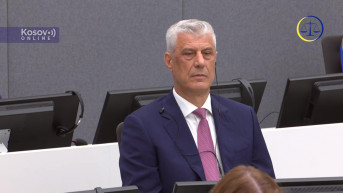
Former Kosovo President and former KLA leader Hashim Thaci is facing another judgment before the Kosovo Specialist Chambers in The Hague, having been accused of attempting to influence witness testimony. The charges are a reminder of why the Specialist Chambers were established in the first place: the risks faced by potential witnesses, which made it impossible to conduct proceedings against senior former KLA leaders in Kosovo, the Frankfurter Allgemeine Zeitung (FAZ) reports.
FAZ recalls that the Kosovo Specialist Chambers in The Hague sentenced Thaci to 25 years in prison for war crimes in mid-September and that his prison term could be extended by another six years today.
This second case, in which a judgment—also at first instance—is now expected, arose out of the original proceedings. Thaci was initially indicted in 2020 and, following a trial lasting more than 230 days during which 273 witnesses were heard, was found guilty. The court convicted him on charges encompassing 96 counts of murder and more than 300 instances of torture of detainees. These crimes were committed between 1998 and 2000, when Thaci was the KLA’s political spokesman and one of the organization’s founders, the newspaper states.
An additional indictment was filed in early 2024. It alleges that, while in detention between April and November 2023, Thaci repeatedly disclosed confidential information about witnesses and instructed his associates to influence their testimony. He allegedly dictated, down to the smallest detail, what witnesses were to say before the court. According to the allegations, Thaci used visitors to relay instructions to one witness, directing him to deny that Thaci had been present at a particular crime scene. As evidence supporting these allegations, the prosecution submitted 28 hours of intercepted conversations between the accused and visitors to the detention facility, FAZ notes.
These allegations serve as a reminder of why the Kosovo Specialist Chambers in The Hague were established in the first place: in Kosovo itself, the risks faced by potential witnesses had made it impossible to conduct judicial proceedings against senior former KLA commanders, something even some former leaders of the organization acknowledged.
“If it is concluded that Kosovo cannot protect witnesses, then international organizations should take on that task. It is difficult here. Western European countries are capable of doing so,” then-Acting President of Kosovo Jakup Krasniqi said in a 2011 interview with the Neue Zürcher Zeitung (NZZ).
If witnesses did not feel safe in Kosovo, Krasniqi argued at the time, “their safety must be ensured abroad.”
It can reasonably be assumed that he knew what he was talking about: during the Kosovo war in 1999, Krasniqi was one of the KLA’s leaders and was later sentenced, together with Thaci, to 25 years in prison, FAZ points out.
A comprehensive 2011 report authored by Dick Marty, the Swiss member of the Council of Europe, also pointed to the lack of witness protection.
“The report, entitled ‘Inhuman Treatment of People and Illicit Trafficking in Human Organs in Kosovo,’ contains significant shortcomings; its most sensational and best-known allegations remain unproven to this day. Marty’s allegation that the KLA removed organs from its prisoners for illicit trafficking has never been substantiated by evidence. On the contrary, there are legitimate doubts as to whether the insurgents even possessed the expertise necessary to perform such an operation. Nevertheless, other parts of Marty’s report are more credible,” FAZ states.
This applies particularly to the well-substantiated findings of the late Swiss investigator concerning the precarious and dangerous situation faced by certain individuals in Kosovo—people who had witnessed KLA crimes and could potentially testify about them.
“There were witnesses to these events who were eliminated, while others—simply because they had been questioned about these events—were so intimidated that they did not dare to testify,” the report states.
Such witnesses, Marty wrote, “have not the slightest confidence in any protective measures that might be offered to them.”
It was precisely these observations, rather than the allegations of organ trafficking, that led to the establishment of the Kosovo Specialist Chambers, their relocation to The Hague and the appointment of international staff.
Formally, however, the court remains part of Kosovo’s judicial system. It was the Kosovo Assembly itself that voted to establish the court, and there are now attempts to reverse that decision. The Democratic Party of Kosovo, which Thaci founded and led for many years, submitted a draft law after the court convicted its former president.
“The aim of this draft law is to render the court virtually ineffective. Its initiators intend to stipulate that the tribunal may deal exclusively with allegations of illicit organ trafficking—fully aware that those allegations are unfounded and therefore impossible to prove. Even more concerning is the proposal that all files held by the Hague-based court, including documents relating to witness protection, be handed over to the Kosovo authorities. This is a cause for serious concern because it would effectively amount to abolishing witness protection. Many witnesses dared to testify against Thaci and his co-defendants only because they were provided with a secure environment in The Hague,” FAZ notes.
It nevertheless remains unclear whether the proposed legislation, which FAZ describes as problematic in terms of domestic politics and damaging to Kosovo’s international reputation, will ultimately be adopted.
Kosovo President Justina Shiroka-Pula returned the draft law to the Assembly at the request of the Democratic Party of Kosovo, which cited the need for amendments. Since then, several attempts to place the legislation back on the agenda have failed due to a lack of quorum.
The European Union has warned Kosovo against adopting the legislation, stressing that doing so would breach the country’s international obligations and jeopardize witness protection, FAZ notes.

comments