
Pasic: Any testimony by Clark or Kouchner would not help clarify the facts
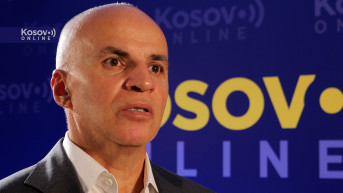
Attorney and former military prosecutor Dragan Pasic believes that any testimony by Wesley Clark, Bernard Kouchner, or William Walker—whom the defense of Hashim Thaçi previously announced as possible witnesses in the trial in The Hague against the former KLA leader—would not contribute to clarifying the facts.
The presentation of the defense’s evidence in the case against former KLA leaders Hashim Thaçi, Kadri Veseli, Rexhep Selimi, and Jakup Krasniqi before the Specialist Chambers in The Hague will begin tomorrow. Pasic underscores that it is the defense’s right to propose evidence, including witnesses who should be examined and whose testimony would establish certain facts, and that it is evident the Specialist Chambers in The Hague wish to ensure that the defense exercises that right.
However, as he says, from the aforementioned individuals—should they appear as witnesses—no direct knowledge is expected, “because they do not have direct knowledge of how the so-called Kosovo Liberation Army functioned or what role the four defendants played in the crimes against humanity with which they are charged.”
“It is expected that they will stick to their reports and findings already known to the public, so they cannot speak to direct observations, as the prosecution’s witnesses and the families of the victims—that is, the victims of those crimes—have done. I do not think their testimony would contribute to shedding light on the facts, but it is certainly the defense’s right to request it, and the court has accepted such a proposal, because international legal standards, as well as the applicable laws of Kosovo under which these four defendants are being tried, grant the defense the right to propose evidence,” Pasic notes.
If former representatives of NATO, UNMIK, the OSCE, etc., are among the witnesses, this lawyer’s view is that they will give testimony directly and appear in the courtroom. “The adversarial nature of the proceedings will be ensured, which also means the prosecution—not just the defense—has the right to examine them. There is direct and cross-examination, and then a complete insight is obtained into their knowledge of the crimes attributed to the four defendants,” Pasic points out.
Given that former U.S. Secretary of State Madeleine Albright—who, in the meantime, passed away—was also mentioned as a possible witness in this case, Pasic says that in such instances there is a possibility that a statement was taken earlier.
“If a statement by deceased persons was lawfully obtained, either by the defense or by the prosecution, then such a statement is presented to the court, and the court decides whether it will be admitted as evidence. In any case, such a possibility exists,” he explains.
Pasic recalls that by April 15, 264 prosecution witnesses had either been examined or their statements read, and he expects that the defense will also have “a considerable number of witnesses,” though not approaching the number presented by the prosecution and the victims’ representatives.


0 comments