
Pasic: Witnesses minimized Thaçi’s role in the KLA but did not answer questions about the crimes
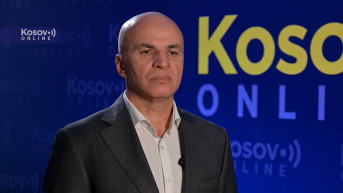
Lawyer and former military prosecutor Dragan Pasic stated that the defense witnesses of Hashim Thaçi and three other former KLA leaders, in the first two weeks of testimony, sought to minimize their roles before, during, and after the war in Kosovo. However, he emphasized that their testimonies have “no legal significance” because they did not address the crimes for which the defendants are indicted before the Kosovo Specialist Chambers in The Hague.
“Their testimony has no legal importance for the criminal proceedings against Hashim Thaçi and the three co-defendants. They did not answer the question of whether Thaçi or any of his associates committed a crime. They did not speak about crimes, war crimes, or crimes against humanity, but about their impressions, their relationships with Thaçi and other Kosovo leaders,” Pasic told Kosovo Online.
The first defense witness in the trial of Thaçi and three other former KLA leaders was former U.S. Assistant Secretary of State James Rubin.
After him, testimonies were given by Paul Williams, legal adviser to the Kosovo delegation during the Rambouillet negotiations, and British diplomat John Duncan.
“It is also striking that they downplay the significance of Hashim Thaçi, Kadri Veseli, Rexhep Selimi, and Jakup Krasniqi, shifting responsibility onto local commanders, commanders of operational zones—without naming those individuals. It even gives the impression, based on their testimonies, that Hashim Thaçi was part of the so-called ‘soft wing’ of the KLA. At one point, one of the witnesses even said that he (Thaçi) had more of a role as ‘foreign minister’ representing the Republic of Kosovo, rather than that of an operational or supreme military commander,” the lawyer observed.
Pasic disagreed with claims that Rubin’s testimony could “change the course of the trial.”
“I do not agree with that conclusion. Here we are dealing with concrete crimes, with the killings of more than 100 people—Albanians, Serbs, Roma, and others—along with torture, persecution… One could say that this testimony is simply a continuation of the policy that was prevalent in 1998 and 1999. Clearly, these were impressions of Hashim Thaçi and other leaders, not factual evidence. They did not even amount to indirect knowledge, so their testimony is irrelevant,” Pasic emphasized.
Asked whether the upcoming testimony of former head of Albanian intelligence Fatos Klosi could shed light on the role of Thaçi and the three defendants in this case, the former prosecutor was categorical that such expectations were unfounded, as international legal standards provide for the “privilege against self-incrimination.”
“This means that one cannot expect a defense witness to incriminate their associates, superiors, or peers. Therefore, I believe his testimony will also be irrelevant and will not provide key answers regarding the role of Hashim Thaçi and the three co-defendants in the war crimes they are charged with,” Pasic stressed.


0 comments