
Sensi Karate Club in Laplje Selo: A place where champions are made and character is forged
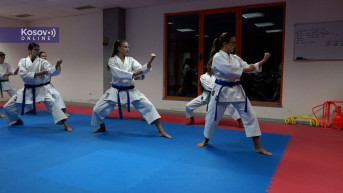
Sensi Karate Club in Laplje Selo, led by coach Milan Rasic, has for years brought together children and young people from central Kosovo, teaching them not only martial arts skills but also discipline, self-control and respect. Founded in 2010 as the first karate club in the area after the war, Sensi has over the years built a distinctive sporting identity and won numerous medals at domestic and international competitions. For Rasic, however, the greatest achievement is seeing his members leave the dojo healthier, more responsible and better people.
Sensi Karate Club has years of hard work, sacrifice and sporting achievements behind it. The idea of establishing the club grew out of Milan Rasic’s desire to pass on the knowledge and experience he had gained while practicing karate in Kraljevo to children in central Kosovo, who until then had largely been deprived of such an opportunity. Rasic is originally from Lepina, near Lipljan.
“Since the war, this has been the first club in the central part of Kosovo. There are karate clubs in Mitrovica, Zvecan and Strpce, but in the central area we were the first and remain the only club currently operating. As for how the idea came about, I am from this area, from these rural communities, where villages did not have the opportunity to have clubs. They were generally found only in larger towns. As circumstances would have it, after the bombing and the war, I lived in Kraljevo for a while. That was where I trained, was a member of the national team, competed and achieved good results in my disciplines. Ultimately, all of that brought me the results and success that enabled me to become a coach. I wanted to bring that opportunity here so that future generations could have what I was unable to have. I think I have fully succeeded in doing that,” Rasic said.
Quality over quantity
Children remain interested in sport, but the club’s approach has evolved over time. While the initial priority was to attract as many members as possible and identify future competitors among them, the emphasis today is on high-quality training and preparing those who want to pursue karate more seriously.
“Of course, at the beginning we needed as many members as possible so that some good competitors could emerge from among them. Now we already have good competitors, and there is always someone younger who stands out in the group. Children who enjoy training come here and find themselves in it, and those who really discover that karate is for them eventually join this group and want to work much harder, which ultimately produces results. Of course, there is room for everyone who is here recreationally, but we have reduced the number of groups, training sessions and everything related to quantity,” he said.
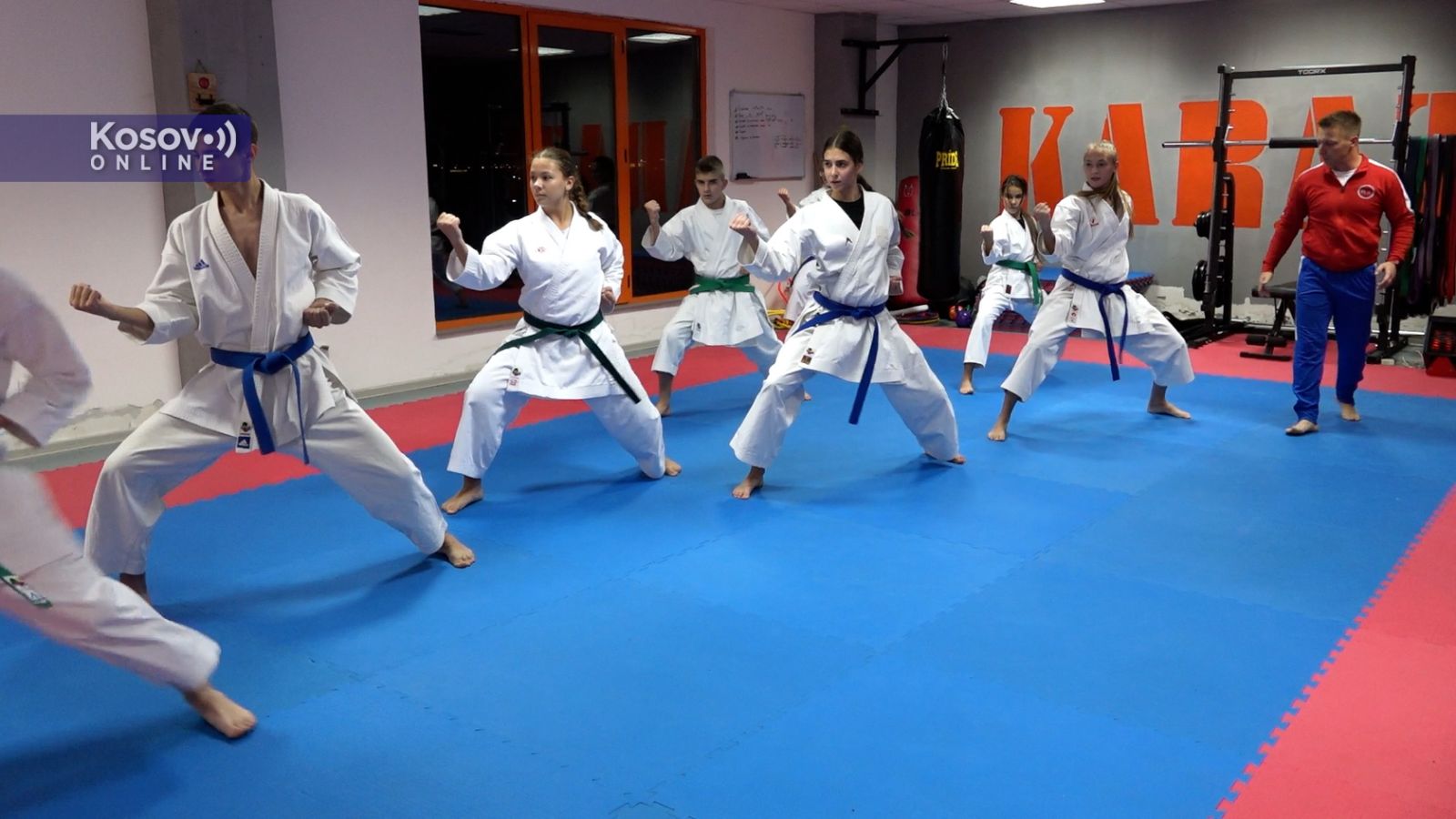
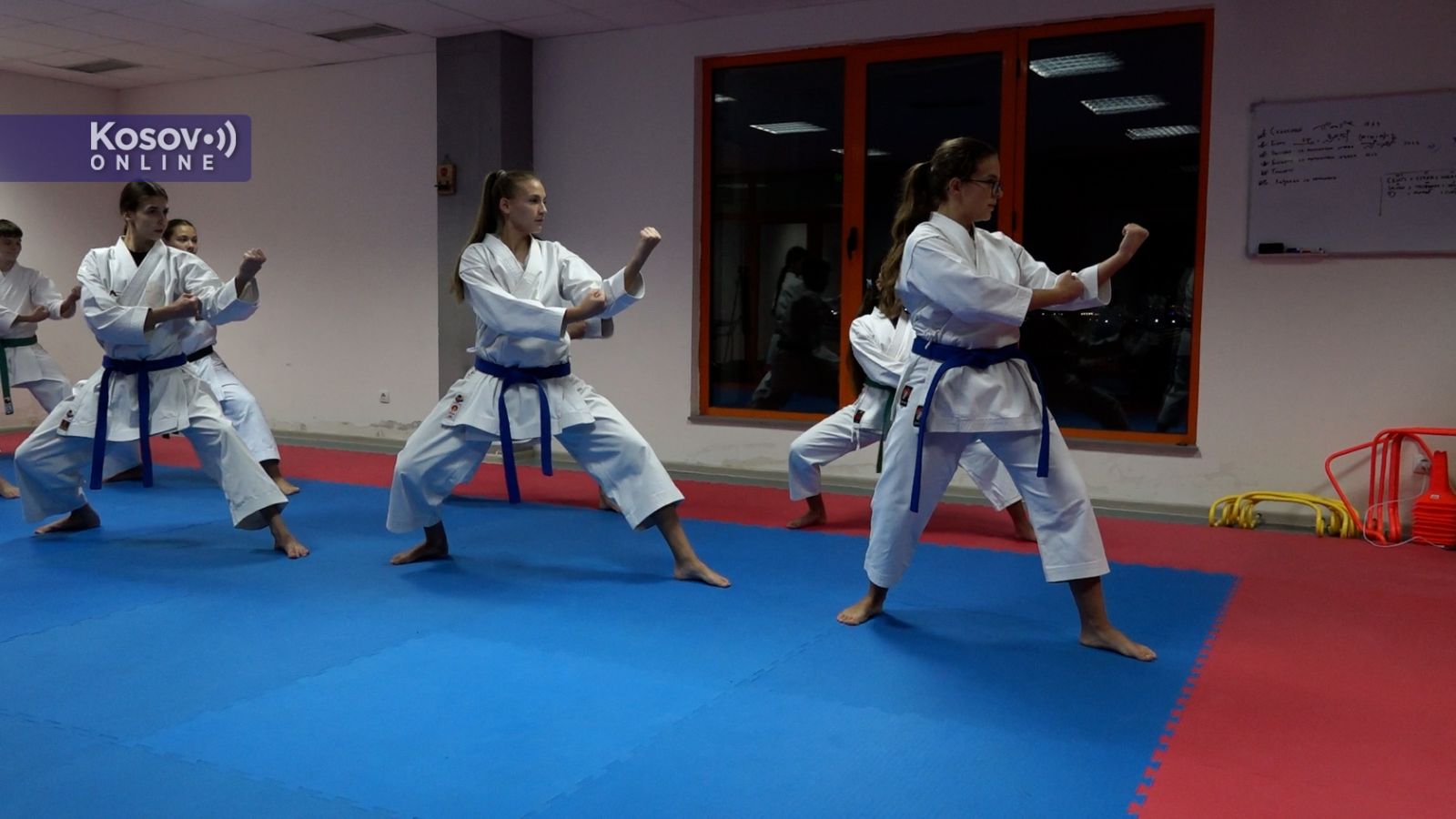
The club works with two age groups, although age is not the only criterion used to place members in a particular group. The knowledge and experience they have acquired, as well as their belt rank, which reflects their progress in mastering karate skills, also play an important role.
“We have a younger group, from the age of six to around 13. After that, of course, it also depends on belt rank whether someone remains in this group or moves to the other one. We have some youngsters here who are 11 or 12 but already have green belts. They started training when they were very young, at five or six, progressed to green belt and are now here,” Rasic said.
From youth categories to senior medals
Results have followed in both the younger and older categories. Winning medals at senior level, however, presents a particular challenge because young competitors from smaller communities often leave to study in other cities after completing secondary school.
“Results achieved by older competitors carry much greater weight. Of course, we are aiming for senior medals, but we face the same problem as any place that is not a university town: when our competitors turn 18 or 19, they leave to study, whether in Kosovska Mitrovica, Belgrade, Nis or elsewhere. So, in that sense, we have some difficulty with the senior category because, thank God, the children are successful and continue their education. But up to the age of 17 or 18, we have competitors who are genuinely capable of achieving major results,” Rasic said.
Sensi members also have new challenges ahead. Competitions in Greece, Bulgaria and Istanbul await them in the coming period, while the club also plans to continue cooperating with sports clubs across the region. For smaller clubs, however, every trip abroad presents a financial challenge, making support from the local authorities particularly important.
“When we travel to nearby countries, the municipality helps us, provides transportation and accommodates our needs. That is a tremendous help. We recently attended a camp in Montenegro led by the reigning European kata champion Enes Ozdemir and Ivan Rodic, a coach from Belgrade. It was an exceptional camp. We received support from the municipality. They were the hosts, invited us and we were their guests, and it really was wonderful. All of this gives the children an opportunity to discover the surrounding region, make new friends and acquaintances, while we also get to know new clubs. So, when we organize the Gracanica Trophy in 2027, we expect all those clubs from Montenegro, Croatia and North Macedonia, perhaps Bulgaria as well, and of course central Serbia, to come and be our guests at the competition,” Rasic said.
Medals matter, but health and character come first
Over the years, Sensi competitors have won numerous medals, including gold medals at national championships and cups. Nevertheless, the coach emphasizes that sporting results are not the only measure of success. He considers children’s physical development, proper posture, discipline and the habits they acquire through regular training to be far more important.
“There have been plenty of medals, of course. My greatest achievement is the club itself and the healthy children in it. That is my greatest success of all. We have corrected flat feet, poor spinal posture, scoliosis and kyphosis. The children who train here are healthy, well-mannered and disciplined. I would single that out as the gold medal, the greatest achievement. Of course, we have also won gold medals at national championships and cups. The karate athletes you see here—Stasa, Jovana, Irena and Petar—have all won medals. Most of those wearing blue belts have won medals at national championships in the younger categories. But, as I mentioned, as we move into the older categories, medals become harder to win. Nevertheless, we work hard, we make the effort, and I think that before the New Year we will bring home a medal from one of those stronger competitions,” he said.
Progress in karate is also reflected in belt color, from the white belt awarded to beginners to the black belt signifying a high level of knowledge and experience. Besides marking individual progress, belt rank also plays a role in organizing training sessions.
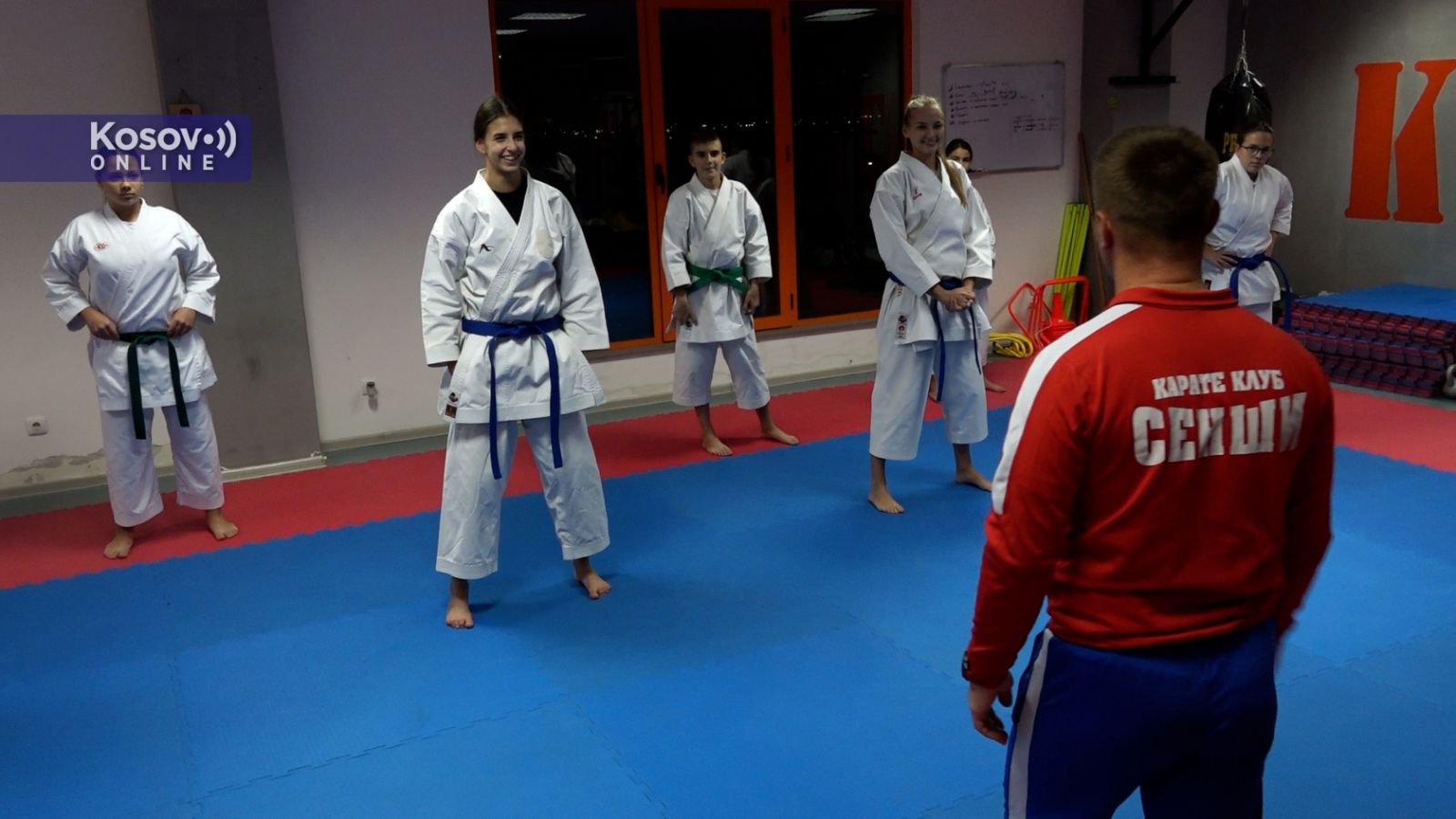
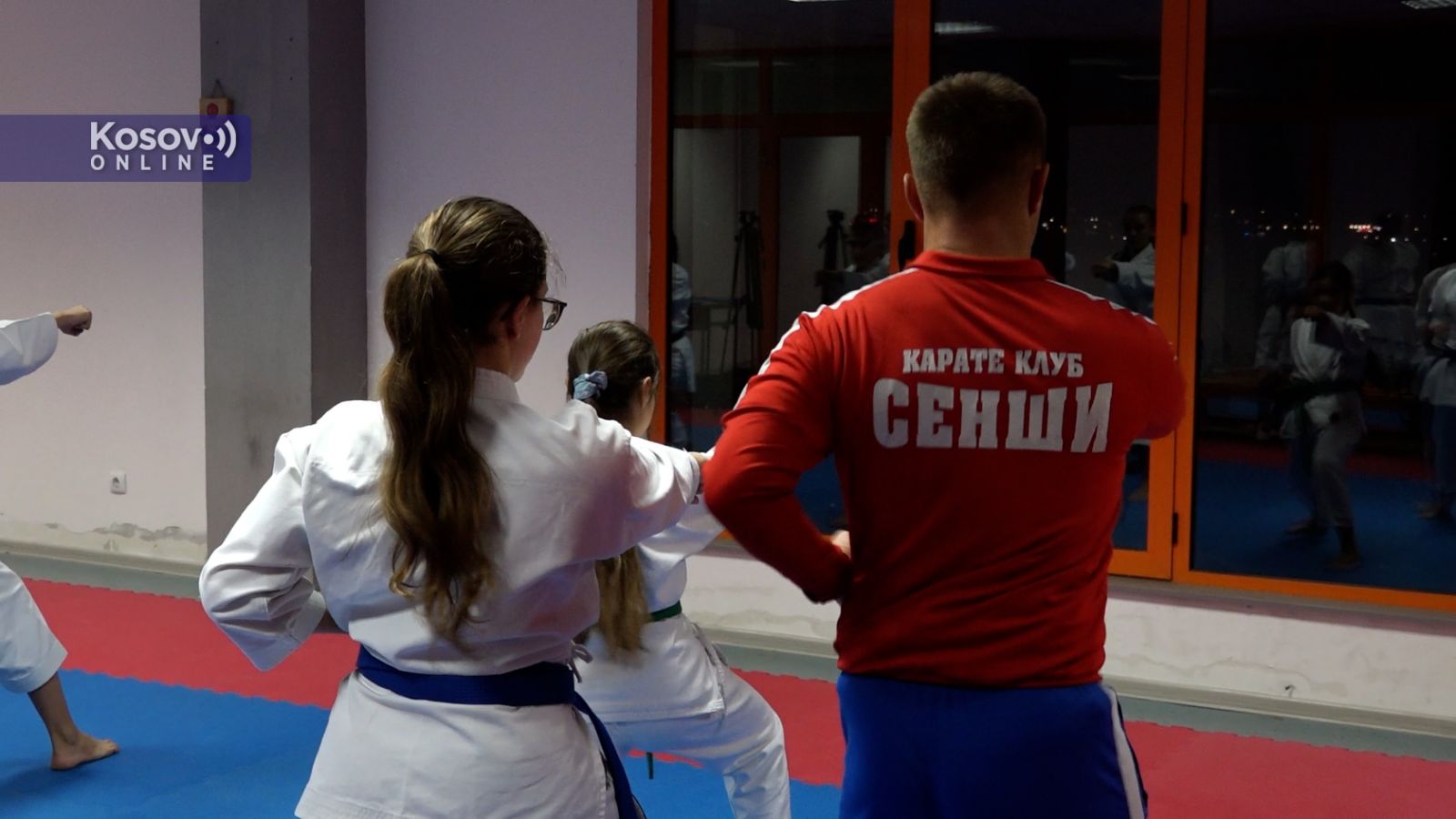
“The color represents the level of knowledge and training you have acquired over that period. Of course, we start with the white belt, which everyone receives when they first begin. Then come yellow, orange, green, blue, brown and black. Here we can see belts up to blue, but we also have competitors with brown and black belts. They are not at training tonight, but we certainly have plenty to be proud of in that respect as well. It is one measure of progress. Of course, we also observe a hierarchy during training. If, for example, I am not at training, the person standing first in line—if the blue belt is the highest-ranked person at that session—leads the training and starts the warm-up because training must not begin late. Regardless of whether one of the students is late or I am late, and we all try not to be, there is always someone there to start the session. That person may be younger than others in the group, but if they hold a higher belt, everyone follows their lead. There are no problems with that. It is a hierarchy that is respected,” Rasic said.
Training that builds people, not just competitors
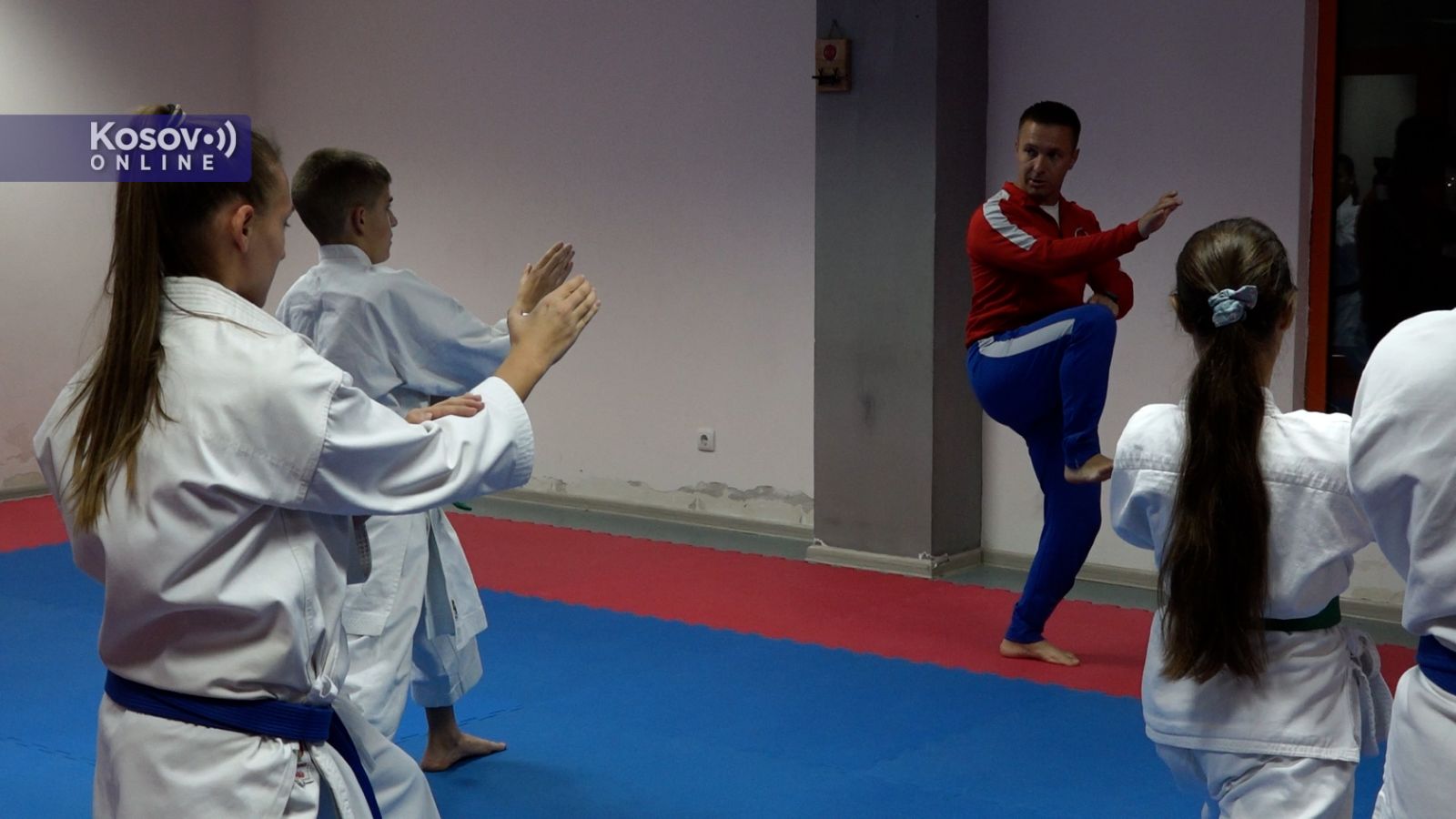
In addition to karate techniques and skills, Sensi places considerable emphasis on personal development. Rasic believes a coach’s task is to recognize the needs of each child and find the right way to motivate them so that they leave the dojo not only as better athletes but also as more responsible individuals.
“They learn discipline and organization in life. They learn from their mistakes and encourage themselves to think. We do not only train; we also work on psychological preparation. We are not a giant club, we are not a big club, and we do not have a separate strength and conditioning coach, a sports psychologist or another specialist to work with the children, although of course every club would benefit from that. We do not have those resources. I have to do all of that myself. I work hard with them, but I believe each one of them has to be approached differently, with a lot of love and a genuine desire for them to become, above all, good people and good competitors. Results are the least important measure for me in all of this, but when they achieve a result, it means success to them. They are not aware of how much they are building themselves throughout that process, but they know they have won a medal. They do not realize how much they have changed as individuals and as people, that they have developed principles of their own in life and learned the most important excuse of all: ‘I can’t, I have training.’ Once they have put all of that together in their minds, they eventually win a medal and say, ‘Yes, I won a medal.’ But they have no idea how much else they gained before that. The medal is merely an ornament around their neck,” he said.
Club membership fluctuates between 30 and 50, and Rasic points out that competitors from smaller communities often have to make a greater effort to compete on equal terms with members of larger, better-organized clubs. Nevertheless, he believes that success achieved despite such circumstances carries particular value.
“Strong clubs are always at an advantage. Clubs from Belgrade, Cacak, Novi Sad and other cities are always in a better position because national team coaches visit them and they attend training camps and so on. It is difficult to get to those camps, and when you receive an invitation, if you are not financially able to make it happen at that particular moment, you may find it difficult to receive another invitation the next time. So they have an advantage. It is much harder for us to win a medal. We have to compete against our opponent, against the referee and against all the pressure surrounding the event. But when we do win a medal, it means that much more,” Rasic said.
Nearly 27 years on the tatami
Rasic holds a third-degree black belt and has practiced karate for almost 27 years. He strives to pass his knowledge and experience on to younger generations through physical conditioning and technique, as well as discussions about competitions, nutrition and mental strength.
“Everything I know, everything I am able to pass on, I try to share with them. I genuinely keep nothing to myself. Whether it concerns medicine, sport, fitness or nutrition, I share everything with them. We also work on psychological preparation. Sometimes we have sessions where we sit down and simply talk about competitions, training and everything else. Then there are sessions where we do not say a single word—we just work, work, work. Everyone already knows what they have to do, and it really is not difficult to work with them now. When they were little, the challenge was teaching them left foot, right foot, but now we are tightening the small screws, refining the details, and it is all going very well,” he said.
Rasic encourages children and young people to try karate, stressing that the sport offers much more than learning martial arts techniques. He particularly emphasizes the importance of balanced development of the entire body, self-control and the responsibility an individual assumes when stepping onto the mat for a competitive bout.
“As a foundational sport, karate is exceptionally beneficial because the entire body is involved. We do a great deal of conditioning, stretching and strength work involving the whole body. We do not favor only the lower or upper extremities. I am not disparaging any sport, but in basketball or handball, for example, certain parts of the body may be emphasized somewhat more, whether the legs or the arms. In karate, we have to work the entire body. Karate is an individual sport; it is not a team sport or a game, but rather a skill. At the same time, it also has its competitive form. When you step onto the mat against someone, there is no teammate behind you to correct your mistake. Every mistake is yours, and you have to deal with it. Everything they do in those fractions of a second can backfire badly if they make a mistake, or pay off tremendously if they make exactly the right move at exactly the right moment,” he said.


Young competitors: Discipline, hard work and sacrifice on the road to medals
Among the club’s members is Jovana Filic from Lipljan, who has practiced karate since the age of four. For her, the sport represents far more than physical activity, while the gold medal she won at the Serbian Championships holds particular significance because, as she says, it required considerable hard work, effort and sacrifice.
“I decided that I wanted to practice karate when I was four, so I have been involved in the sport from a very young age. It is a sport that builds our character, strengthens and shapes it, while also developing our muscles, so it is the perfect combination. If I had to single out my favorite achievement, it would be the gold medal at the Serbian Championships. I won that medal a few years ago, and it is the one I am most proud of because I know how much effort, hard work and sacrifice I put into winning it,” Filic said.
Although she acknowledges that practicing karate requires commitment, she believes discipline and determination are crucial to progress.
“It is not easy, but discipline is the most important thing because, with enough determination and very good discipline, we can achieve anything,” she said.
Stasa Stanojevic, also from Lipljan, has had a similar experience. She began practicing karate at the age of five. Over time, she says, she found her place in the sport, while among her most significant achievements she singles out a silver medal and two bronze medals from national competitions.
“I started practicing karate when I was five. I was always attracted to sports like this and, over time, I simply found myself in it. Among my most significant medals, I would single out a silver and two bronze medals from national competitions. It takes a great deal of sacrifice, effort and hard work to achieve results like that, and I am very proud of those medals,” she said.
Stanojevic stresses that karate shapes character and helps young people develop healthy habits.
“Here we do not just learn kata or how to fight; we also learn discipline and, above all, how to be good people. Karate teaches us a healthier and more disciplined way of life,” she said.
Petar Stanojevic from Lipljan has been practicing karate for 13 years. What began as childhood curiosity developed into a long-term commitment marked by training, competitions, successes and challenges. Among his achievements so far, he particularly singles out third place at the national championship in Raska.
“I tried it when I was little because I wanted to—I was curious and wanted to give it a try. In the end, after 13 years of training, I am still here and I still love the sport. So, 13 years of continuous training, competitions, ups and downs, and I am still training at full intensity. I have won awards, and the most significant one for me is third place at the national championship in Raska. That is currently my best medal. I hope there will be many better and more prestigious medals to come,” he said.
For Petar, training is also a way to take a break from everyday obligations and focus on himself. He believes that, in addition to physical fitness, karate develops self-control and the ability to deal with challenges.
“Every sport is difficult in its own way, but when you enter the dojo, you forget everything outside it. We focus solely on the sport, and that is it. Every time I come here, I come to tire myself out, relax and, in a way, rest mentally as well. This is an ancient and very beautiful sport. You can learn all sorts of things, especially self-control and self-defense, which is the most important thing—not to be the aggressor, but to know how to defend yourself. That is something very valuable. I would invite all my friends to come and try it,” Stanojevic said.
For the members of Sensi Karate Club, every medal is recognition of the effort they have invested and an incentive to take on new challenges. Yet their coach’s message remains clear: sporting achievements matter, but discipline, health, mutual respect and character are values that last far longer than any medal worn around the neck.
0 comments