
The dispute regarding the formation of the CSM was transferred to the level of the Russian-American polemic
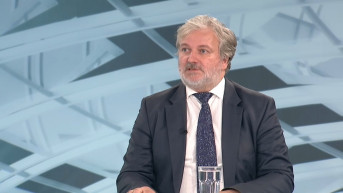
The dispute regarding the formation of the Community of Serb-majority Municipalities had been transferred to the level of the Russian-American polemic, so it had continued through the ambassadorial duel - Hill and Kharachenko, journalist Dragan Bisenic said, stating that the American ambassador had confidently announced that Serbia had already made a decision to join the Western countries in relation to Russia, while the Russian asked Hill where he had gotten the idea that the majority of the Serbs were against Russia.
The two have diametrically different views on Kosmet, and for the public, in Serbia, such differences are not unexpected, adds Bisenic, but he assesses that each statement jumped out at the ears of the public in Serbia: Hil's, with which he drew a parallel between Serbia and North Korea, and Kharchenko's about the fact that Moscow would be guided by the positions of Belgrade in its positions towards Kosovo in the UN Security Council, which sounded to some as if Russia was giving up on Serbia.
After a stormy week, there was calm in Belgrade and Pristina, but this does not mean that the solution to this issue is closer than it was before.
Disputes regarding the formation of the Community of Serb-majority Municipalities still do not end. After a telephone conversation with Albin Kurti on Friday, Derek Chollet "welcomed the decision of the Prime Minister of Kosovo to accept the EU proposal". From that, one got the impression that Kurti also finally agreed to form the CSM, but that seems to be just a deceptive impression.
The dispute was transferred to the level of the Russian-American polemic, so the ambassadorial duel (Hill - Kharchenko) continued. Although they have the same first letter of their surnames (in the Serbian language), the American and Russian ambassadors do not share any other similarities, except that the two are, one might say, old acquaintances and the only remaining active veterans of "Balkan politics" dating back to the time of the former Yugoslavia.
There are currently no diplomats in the world with more Balkan experience than Christopher Hill and Aleksandr Botsan Kharchenko.
The Russian ambassador arrived in Yugoslavia for the first time in 1979 and has been involved in all important events in the Balkans since then.
Ambassador Hill was already in Belgrade as a child in the 1960s, in the 1980s he served in the capital of Serbia, and from the 1990s he actively participated in diplomatic negotiations for the establishment of peace and negotiations on Kosovo. Ambassador Kharchenko was a long-time Russian member of the Contact Group and had the opportunity to meet with Ambassador Hill even then.
The two of them have diametrical views on Kosmet and expectations from Serbia's rule on the Franco-German proposal by which Serbia should enable Kosovo's statehood, without explicitly saying so.
The American ambassador confidently announced the news: the most important thing was that Serbia had already made a decision to join the Western countries in relation to Russia. The American ambassador emphasized that he believed and had no doubt that Serbia had already made a decision in many ways. "But just like in the business world, not everyone has been informed yet," Hill said.
"The message is clear. Serbia will be part of Europe, let me mention another dimension of this - the Atlantic structures. It is already happening. It's just a matter of pace and scope," Ambassador Hill concluded. "Serbia needs to keep a close eye on its own interests, on the fact that its moral compass always points to the west," the American ambassador warned. He said that the time for imposing sanctions on Russia was running out and that everyone had understood its message with Serbia's reluctance.
The Russian ambassador in Belgrade, Aleksandr Botsan-Kharchenko, reacting to the statements of the American ambassador, said that if "Franco-German ideas are put into practice, only Kosovo Albanians, more specifically Washington, will be in charge in the province". He asked the American ambassador in Serbia where he had gotten the idea that the majority of the Serbs were against Russia, because, as he stated, the facts showed the exact opposite.
For the public in Serbia, such differences are not unexpected, nor surprising, for the views of the representatives of the two countries, which today are confronted on numerous issues, but certainly, the most important and the biggest - the conflict in Ukraine. Hill and Kharchenko are masters of the diplomatic craft and both know the art of outmaneuvering.
Their statements, however, bounced off the ears of the public in Serbia: Hill's with which he drew a parallel between Serbia and North Korea, and Kharchenko's that Moscow would be guided by the positions of Belgrade in its positions towards Kosovo in the UN Security Council. To some, and more to those who do not have much sympathy for Moscow's support for Belgrade, this sounded as if Russia was giving up on Serbia and leaving it alone in the face of Western pressure.
"Serbia was, is, and will be on its own land. It's strange that someone thinks they have the right to deny that," Kharchenko said, and added that the final status of Kosovo would be defined "in other geopolitical conditions" and after the "conflict with West on the territory of Ukraine" in which "Russia will surely win".
This statement by the Russian ambassador brings a new dimension to the Kosovo issue and puts it back into the context of the conflict in Ukraine. This has already happened several times with the parallels of the Russian intervention with the American one in Kosovo and the status of Crimea and the status of Kosovo. And that is a big difference compared to the current approach, which is based on a "small" or "narrower solution" to Kosovo's status in Europe.
The Russian ambassador presents the possibility of a "wider solution" to the Kosovo issue, which will be connected to the Ukrainian, but probably also to the overall security architecture of Europe. Then, based on all this, it could be assumed that the Ukrainian conflict would end in the next few months of this year. If this does not happen, there may not be time for other solutions, so we work with what is on the table now.
The American Embassy in Pristina has already advanced in its preparations for the formation of the CSM and has already held two meetings with numerous participants. With that, she showed that the train had started. If Albin Kurti decides to stay at the departure station, he will not return for him. Kurti also realized this and therefore climbed onto the last carriage, but still very far from the driver.
Kurti, in addition to presenting his 6 conditions for the formation of the CSM, said this week that Serbian municipalities would thus have more rights than other municipalities and would be privileged. His conditions were summarily rejected by the German embassy in Pristina. The President of the Kosovo Assembly, Glauk Konjufca, announced two days before this conversation, on Wednesday, that the CSM would not be formed and that, otherwise, he was ready to go out on the streets with the citizens.
After this, the High Representative for Foreign Policy of the European Union, Josep Borrell, invited Vucic and Prime Minister of Kosovo Albin Kurti to Brussels to discuss the European plan for Kosovo and Metohija.
Now the dynamics and the imaginary framework of the dialogue are a little clearer. European representative Miroslav Lajcak and American mediator Gabriel Escobar stated that the Framework Agreement on the normalization of relations between Belgrade and Pristina should be signed by the end of 2023. On Monday, Lajcak was in Belgrade and on that occasion brought an invitation from the High Representative for Foreign Policy, Josep Borrell, for the President of Serbia, Aleksandar Vucic, to meet again in Brussels with the Prime Minister of Kosovo, Albin Kurti. Lajcak announced that "Kosovo has now accepted the proposal in principle" and announced the continuation of talks at "high-level" meetings. Another meeting could take place at the Munich Security Conference.
It is obvious that the US and the EU do not want to drop the strong pace they have achieved in the dialogue, but they want to transfer that busyness to the highest levels of Serbia and Pristina. In order for this to have a purpose, it is clear that the formation of the CSM is first necessary, which is still in the dark. Before that, there will be pointless attempts to make an agreement because they will not move the stranded boat of the Kosovo dialogue.
By: Dragan Bisenic, journalist
0 comments