
The appointment of Jim O'Brien and the Balkans
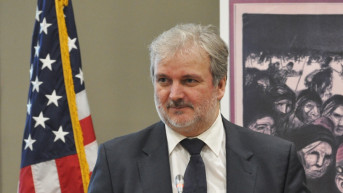
Writing for Kosovo Online: Dragan Bisenic, journalist
New life for the Holbrook team
With the appointment of James O'Brien to the position of Deputy Secretary of State for Europe and Eurasia instead of Karen Donfried, the group of Holbrook's "Balkan" diplomats who are today back on the same ground as they were 25 years ago has been completed. There is Christopher Hill as the American Ambassador in Belgrade, Gabriel Escobar as the Deputy Assistant Secretary of State for Central and Southeastern Europe, and at the same time the Special Envoy for the Balkans, the Special Envoy and Coordinator of the Center for Global Engagement, James Rubin and the State Department's Special Adviser Derek Chollet. Not to be overlooked are Secretary of State Antony Blinken and National Security Adviser Jake Sullivan who also floundered amid Richard Holbrooke's robust diplomacy.
In the nineties, O'Brien was most closely involved in the most important moves of American policy in the Balkans, the end of the war in Bosnia, he is one of the authors of the Dayton Agreement, the Kosovo escalation in 1998, then the Rambouillet negotiations, the bombings, and then cooperation with the new authorities in Belgrade, which succeeded Slobodan Milosevic after 2000. All this, along with Ambassador Hill, makes him currently the most qualified and competent American diplomat for the Balkans.
This group now has the task of completing the construction of the architecture of the Balkan region, which was started almost three decades ago by their ambitious boss, but also to eliminate some hot spots that he left behind. It is expected that Escobar could soon leave for the ambassadorial post, so he will be replaced by a person who will surely be O'Brien's complete choice.
All this, however, is happening now in much more complicated international, but partly also regional, circumstances than those that Holbrooke had before him. At that time, he did not have Russia and China in opposition, nor the US in an almost total indirect conflict with Russia and on the verge of such a conflict with China. As Henry Kissinger recently said - like before the Third World War.
He comes in a new role and in a week when all American subjects in charge of Balkan politics expressed great dissatisfaction with the latest actions of the Kosovo Prime Minister and the unilateral measures of entry into the premises of the municipal assemblies in the north of Kosovo. State Secretary Antony Blinken was among the first to react, announcing that "we strongly condemn the actions of the Government of Kosovo that escalate tensions in the north and increase instability." We call on Kosovo Prime Minister Albin Kurti to immediately stop these violent measures and refocus on the dialogue led by the EU - said Blinken. The "five" countries, twice within three days, also strongly condemned the behavior of the Kosovo government, and the Secretary General of NATO, Jens Stoltenberg, requested that Pristina stop taking unilateral and destabilizing steps. For America, one gets the impression based on all this, that the behavior of the Kosovo government is deeply frustrating.
O'Brien explained that for him Kosovo was a "transatlantic issue" and "the US must make it clear to the two new leaders in Kosovo that they must engage constructively, while the European side must make it clear to Serbia that there is a European future, but he has to do his part. For him, the most important thing is not that the United States supports Europe's future, but that it works with the European Union to make that future a reality. What I've heard everywhere outside the countries of the region is that they don't believe in this anymore and that gives power to some of the worst nationalist and populist impulses, but also some positive impulses," O'Brien concluded.
In 1992, James O'Brien was a junior clerk working in the little-known Office of the Legal Adviser at the State Department when he read the first press reports of atrocities and ethnic cleansing in Bosnia. Although the Balkans was not his field and he had only been at the State Department for three years, O'Brien was so struck by what he read that he began to wonder and think about what the United States knew about the claims of genocide.
As a law graduate from Yale, that's when he started lobbying to get something done. Everyone said it was impossible because it was too complicated," he later recalled. But I thought we should really do something."
With a small group of junior officers, O'Brien began exploring options. Although other more influential and famous lawyers had the same or similar ideas, within the State Department their work developed the idea and mechanism for establishing what was for decades the Hague War Crimes Tribunal, where hundreds of accused from the former Yugoslavia were tried.
He soon moved to Madeleine Albright's consulting firm as vice president, where he remained until John Kerry appointed him as the president's first special envoy for hostage issues, continuing after the role ended. After Biden's victory, he was nominated in October 2021 to head the Office of Sanctions Coordination, and on April 6, 2022, his nomination was confirmed in the United States Senate.
Vladan Kutlesic, a late member of the Serbian governing team at the negotiations in Rambouillet in 1999, told a completely new version. He said that a year before Rambouillet, he had secretly worked on formulating an agreement with O'Brien, and even during the conference in Rambouillet, but that it had been rejected by the Serbian side. At that time, O'Brien was one of the most important "brains" of American foreign policy towards the Balkans in the role of deputy director of the Department of Political Planning.
"One year before Rambouillet, in Belgrade, in absolute secrecy, we started talks with the Americans about Kosovo. Only four people know about it. In a very good and constructive atmosphere, in February 1998, Jim O'Brien, Madeleine Albright's special adviser and one of her most trusted people, came. He stayed in Belgrade continuously from February to May 1998 and the two of us worked on the text that was supposed to resolve the status of Kosovo. We worked slowly, we had no deadlines. I must say that he is a top lawyer. During that period, he only briefly went to the US, for about fifteen days, because his daughter was born, after which he returned. By July 1, we had done only the beginning of the agreement and talked about the contours of the final text. Our work went in the direction of expanding the autonomy of Kosovo. Then came the vacations, Jim returned to the US with an agreement to continue in August. However, it never came to that, because something happened on the field that I still don't know, but something that destroyed the good atmosphere between us and the Americans and stopped the work. Since then, there has been no cooperation and the work stops all the way to Rambouillet," Kutlesic said.
When the delegations met in Rambouillet, Kutlesic and O'Brien met again. After two days, he says, 'This is definitely not good, let's pick up where we left off in July.' I say - okay. He came to my room around 10:30 p.m. and the two of us started to handwrite the text of the agreement without the military part. The text of the agreement was at a weaker level than the 1974 amendment, but it implied increased autonomy, with parallel institutions and the Belgian model of federalism. That increased autonomy also provided for the division of police work according to the American model - federal and provincial police. It was an acceptable model," Kutlesic said. But it was not accepted.
O’Brian, in his capacity as an American envoy, was the first American official to visit Belgrade just 7 days after October 5, 2000. He then met with Vojislav Kostunica when there was almost no one in his cabinet. Kostunica's statement that he would find a way to cooperate with the Hague Tribunal sounded quite promising to him. He found a lot of good sides and encouraging moves in Kostunica, whom he said approached problems "very methodically and intelligently". Therefore, he concluded that it was necessary for Kostunica to gain "complete control" and for public opinion to develop sufficiently. As for Kosovo, O'Brien said that Kosovo should first gain self-government, "and then we will talk about its status". He stated that there were "conditions of resolution 1244" which Kostunica also supported. It was O'Brien who asked Kostunica "to find a way to solve that problem", as he believed that if some of these humanitarian issues were solved and people's lives improved, then the political context would become easier.
O'Brien, as you can see, is a person with a wider profile and greater maneuverability who are not always at the center of public attention. He is also a person of bipartisan consensus, a role that was possible even during Trump's tenure, which was particularly intolerant of the possibility of "divided loyalties." This was precisely the case in the creation of the "Mini Schengen" initiative, where O'Brien worked together with the then-American ambassador in Berlin, Richard Grenell. O'Brien remained a strong supporter of this initiative, which has since been renamed "Open Balkan" and participated in several of its meetings. He claims that such an initiative, which ensures the free movement of people and goods, was also the goal of the Berlin Process, since European countries, especially Germany, reacted nervously to its initiation. It can be expected that the Kosovo side will be under more pressure to join it and stop interpreting it as a "Greater Serbian" project. "I really hope that Kosovo will find a way to participate in this initiative," O'Brien said recently.
It can be assumed that he will not tolerate "meetings for the sake of meeting", which he once said had turned into a "political circus" that each side used for domestic purposes. Commenting on a failed meeting, he cited an example where everyone agreed to meet again, and both sides said, "Absolutely, because that's good policy at home."
It fits in with the fact that it will not be tolerant of other moves and actions that come off the negotiating table. The issue of Bosnia and Herzegovina deserves special attention and consideration, for which O'Brien played a key legal role during the Dayton negotiations.
Let's remember, one year before the bombing in 1999, Holbrooke announced that the then US ambassador to Macedonia Christopher Hill and special adviser Madeleine Albright, James O'Brien, would form the US team that would mediate between the Albanian and Serbian sides in talks about the political future of Kosovo. Then the mediation did not give results. Now the team is back together, the task hasn't changed, and the pressure to get a result from trying again, but in really complex situations, is much greater than last time.
0 comments