
Dialogue in Brussels in the shadow of new tensions: Do the US and the EU have a solution or are we at a dead end again?
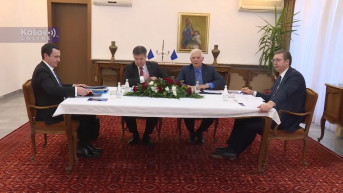
The dialogue between Belgrade and Pristina continues today in the shadow of new tensions, raised after the extraordinary elections in four municipalities in the north of Kosovo, which were boycotted by the Serbs, and the attempt to open the bridge over the Ibar in North Mitrovica. The meeting, Kosovo Online interlocutors assess, will be difficult, because the two sides are sitting at the table with diametrically opposite positions, but they say that it will depend on the US and the EU whether a step forward will be made or if the dialogue will reach a dead end again. They add that the solution is in the hands of the West, and that is the formation of the Community of Serb-majority Municipalities.
According to our interlocutors, constructive steps towards the creation of the CSM are the "key" that can lead the whole process forward. This most important part of the Brussels Agreement, which is essential for the survival and security of the Serbs in Kosovo, has been waiting for more than 10 years. Without it, as Belgrade officials have made clear several times, there is no discussion on other unresolved issues.
The director of the Center for Regionalism, Aleksandar Popov, has no doubt that America and Europe have a solution in their hands, and emphasizes that "the only question is whether they will activate it."
"Of course, they have the mechanisms to move forward, for that it is enough just to insist on the implementation of the agreement for the implementation of the Franco-German plan from Ohrid. It must be done in that order; with the fact that, of course, it had to be said what conditions had to be met for that. It is not possible through the elections, where 13 Serbs will participate, and the eventual arrival of Albanians at the head of the municipalities in the north, to create some normal atmosphere for the creation of the CSM as a starting point. This has been emphasized many times, both by Borrell and by Escobar, that it is the priority above all others," Popov points out.
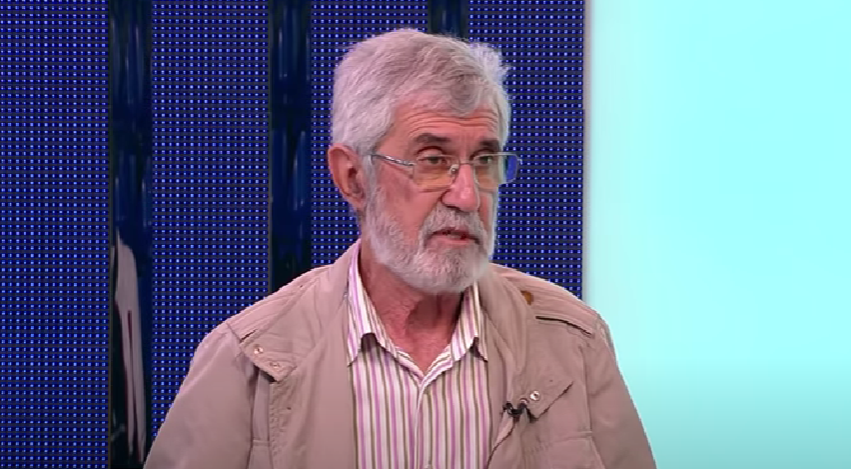
Today's meeting, he believes, will expose things to the end - either they will move toward the CSM, or the dialogue will again, for the umpteenth time, reach a dead end.
"If this turns into what Mogherini warned, into an unprecedented series of tea parties, then it really has no purpose and sense anymore. I understand that for Belgrade and Pristina the measures they need to implement are difficult because they are unpopular, but I am not surprised by them, but the US and the EU, who have the power to prevent such a game in which the parties would delay fulfilling their obligations. I am afraid that this meeting will also end without an epilogue, which would not be good," Popov says.
He indicates that since the barricades last winter, the acceptance of the Franco-German plan, and the plan for the implementation of the agreement, a lot has happened that is not in accordance with what was expected and what was announced.
"The question is what of all this is a game show, and what is really happening? It is complicated to be a forecaster. A month ago, I said myself that the US and the EU would not allow either Vucic or Kurti to 'get away' from the obligations they had to implement; however, things seem to be going in a different direction. It would be logical that some things are now set in such a way that there should not be any new crises and delays, but that things should proceed in order according to the implementation plan," Popov believes.
When it comes to the elections in four Serbian municipalities that further heated up the atmosphere, Popov says that according to what the representatives of the US stated, who, according to our interlocutor, have a greater influence on the entire process that takes place between Belgrade and Pristina than the EU, the first the thing that had to be done was the CSM.
"The elections that were held in the north make the whole story meaningless and I think that whatever happens here, people must be aware that the US and the EU have enough, not capacity, but enough power to be able to force both sides to do what was agreed upon. If a plan for the implementation of the Franco-German plan was made in Ohrid, then it had to go in that order, and not raise tensions again, which, in my opinion, suits both sides, because both Vucic and Kurti must introduce unpopular measures. We see how Kurti got away with the long nose of Pinocchio and the protests against the government when he accepted the CSM, and how, on the other hand, Vucic is constantly the target of attacks by right-wing organizations," our interlocutor says.
He also notes that it is clear to both Washington and Brussels that it is very unlikely that both sides will try to get away with it and once again postpone the resolution of the "urgent issues".
"It is to be expected, however, that such two powers will not allow themselves to lose credibility in such a way that two politicians will mess up their strings. If a word is given, which is the same as the signature in Ohrid, if the implementation is agreed upon, then, an environment must be created in order for this to be realized, and not to go from crisis to crisis," Popov says.
Dragan Djukanovic, professor of the Faculty of Political Sciences and president of the Center for Foreign Policy, tells Kosovo Online that at the moment it is difficult to give more precise forecasts in which direction the dialogue process will move.
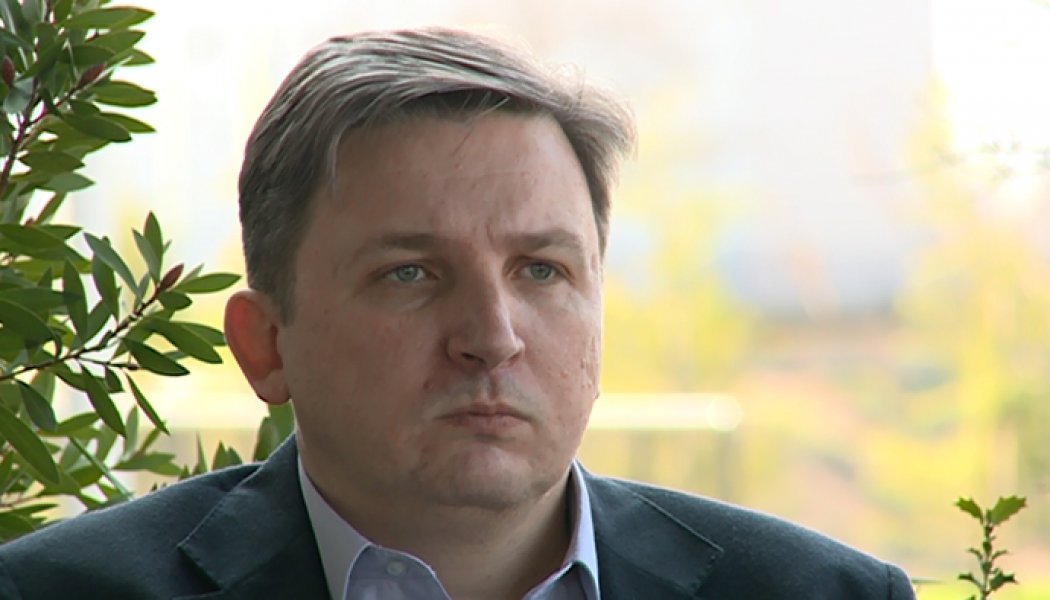
"It seems to me that at the moment the focus is on the formation of the Community of Serb-majority Municipalities and that the upcoming round of dialogue will be based on that. It is very difficult to predict in which direction it will go because we do not know how much progress has actually been made in that process," Djukanovic says.
When asked if both the US and the EU had just put all their trust in the formation of the CSM, counting on Pristina to give in and that would then calm the newly created tensions, he answers that this is the main challenge.
"Everything further depends on that, on the CSM. The latest moves that Pristina is taking, from the elections in the north in the Serbian municipalities that were boycotted by the Serbs, to the attempt to open the bridge on the Ibar, show that the dialogue is in a certain crisis that needs to be resolved in order to relieve the situation on the ground," our interlocutor explains.
The analyst from Pristina Shkelzen Maliqi also believes that the US and the EU are now on the move. He tells Kosovo Online that there is still an oral agreement on which the Western powers are counting and for which for the first time there are punitive measures if one of the parties does not fulfill the agreement.
"Again, the issue of the missing persons is on the agenda, that agreement has been finished for a long time, only certain wordings have been reviewed and fixed once more, and then the Community of Serb-majority Municipalities. This is where the direct and greatest pressure is on Kosovo. Well, now, if those two things pass, Vucic could also raise another issue - the withdrawal of Kosovo Special Police units from the north. It is currently a no-security zone, and practically only KFOR is present there. Kosovo Police Forces do some things legitimately when they go after criminals, but it is never clear whether we are talking about criminals, or as Belgrade interprets that it is pressure on the Serbs to move out, to be expelled. Vucic has so far mostly dramatized the situation, and Kurti is also interested in the same scenario in order to gain time." Maliqi says.
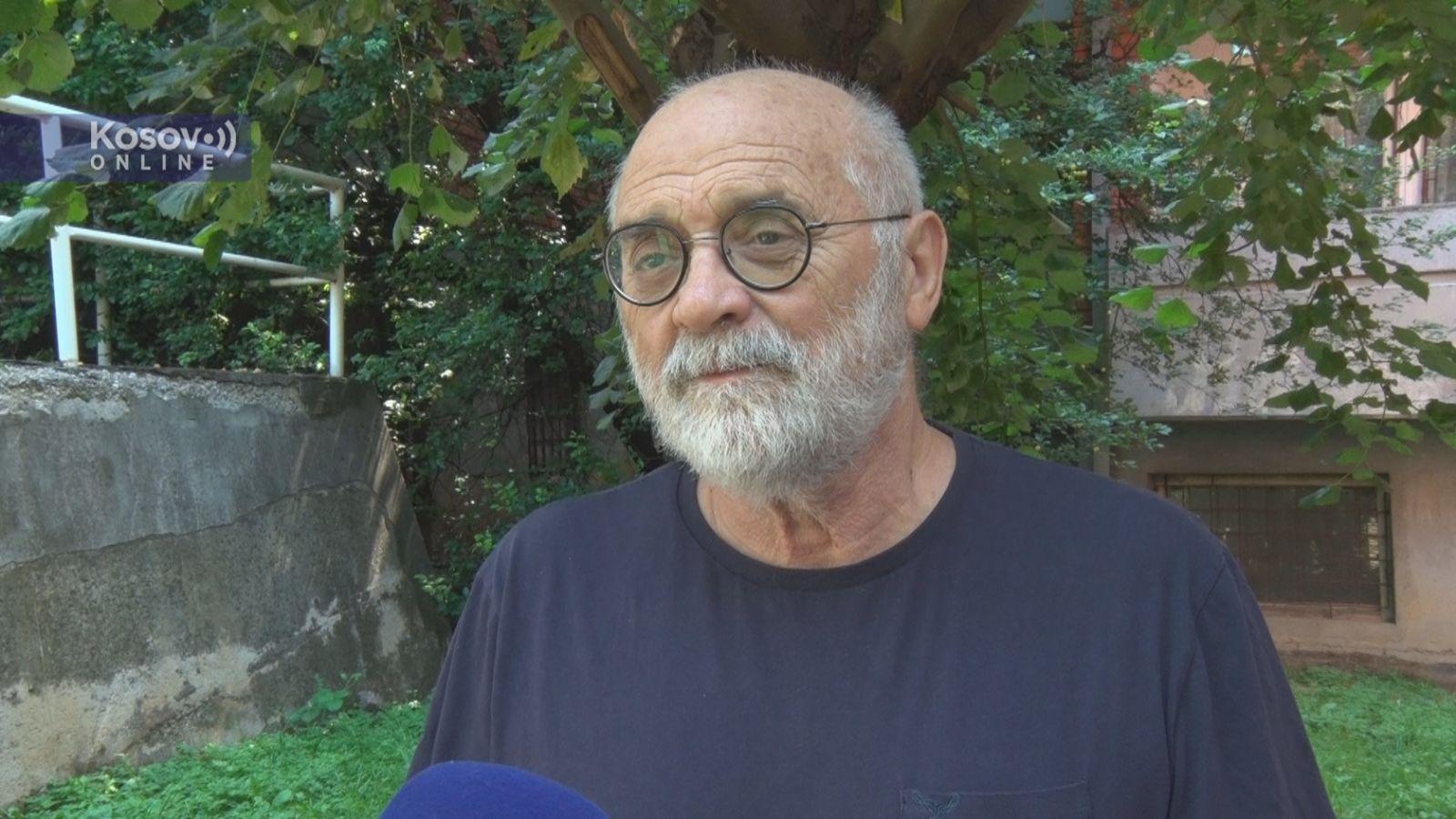
Maliqi describes the current situation as a stalemate and a game of who will be the first to make the wrong move and be punished. That is why, he adds, it is important how the US and the EU will position themselves.
"In my opinion, the Ohrid Agreement is not a great success, but the West insists on it and I think that the matter will be pushed further and that this situation cannot last indefinitely. There are no incidents like before, and both sides are cautious. Vucic controls the majority of the Serbs, but he does not allow more dangerous situations to arise when it looked as if a conflict would arise. And Kurti is afraid of his public, he is afraid of going to the elections, basically of that harsher position he had towards diplomats, he is now more obedient, he follows the instructions, and he "senses" what is profitable for him now. And when it comes to the elections in the north, all the smart people here advised him that it should not be done. An agreement should have been made first and elections should be held when the conditions for that are created. He still did not give up, he also had the support of Western embassies, which now say, well, you can't appoint mayors when they can't even form municipal assemblies," Maliqi says.
The Pristina analyst states that this may also be the topic of the meeting in Brussels. One of the options, he believes, is that if authorities are not formed in four municipalities in the north within a month, elections will be held again.
"Of course, in the meantime, some agreement should be reached in the negotiations regarding the CSM. The question is whether the concept of the CSM will be accepted, which has constitutional limitations when it comes to the level of self-government and requires the Community to have a symbolic executive power," our interlocutor says.
Maliqi also believes that the request for the opening of the bridge on the Ibar, which was voted on by the Albanian councilors in the Municipal Assembly in northern Kosovska Mitrovica, is premature.
"It's also some kind of game. Kurti talks about freedom of movement, but it can be seen that he is cautious, as is the other side. It will be difficult to open the bridge, because neither KFOR, the West, nor he will be allowed to go in that direction that causes conflict," he states.
Maliqi points out once again that the solution to calming tensions and making progress in the dialogue lies in the hands of the US and the EU.
"We will see what the outcome of the new round of dialogue will be. So far, the US and the EU have given in, in order to reach a verbal agreement in Ohrid. I think they can do one thing, because Kurti also agrees to it, and that is to start the formation of the CSM. So the concept of the CSM will probably be adopted and a deadline of a month or two will be given to start implementing it. But for that to happen, normal elections must be held and then it must be known which representatives of the Serbs should be in that Community," Maliqi said.



comments