
Petkovic: The CSM is the backbone of the dialogue; it's strange that even 10 years after the Brussels Agreement we are saying that Pristina must form it
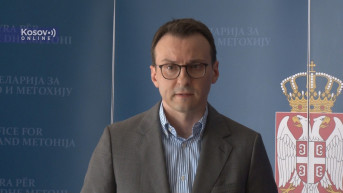
The Director of the Office for Kosovo and Metohija, Petar Petkovic, pointed out today that, although 10 years had passed since the signing of the Brussels Agreement, Pristina still refused to fulfill its main obligation - the formation of the Community of Serb-majority Municipalities, and that the international community bore special responsibility for such a situation.
Petkovic told RTS that the CSM was a necessary condition for the normalization of relations between Belgrade and Pristina.
"Belgrade fulfilled all its obligations and behaved in a constructive and compromising manner all the time, while on the other side, Pristina is constantly trying to obstruct the dialogue and make life even more difficult for the Serbs in Kosovo, which can be seen through constant incidents. When you look at everything that has happened in the last 10 years, the international community bears a special responsibility, which is obliged to put pressure on the establishment of the CSM. The CSM represents the backbone of the dialogue," he underlined.
Petkovic said that Serbia, through the Community of Serb-majority Municipalities, wanted to ensure collective, individual, and all other rights, which had been guaranteed to the Serbs in Kosovo by previous agreements.
He reminded that the Brussels agreement had been ratified in the assembly in Pristina, and it was, therefore, an international obligation for Kosovo.
"It is really strange that we are still talking about the fact that Pristina must form the CSM. If you look at the rhetoric in Pristina, you can see that they do not want to form it. They talk about the fact that maybe it can be formed, but that it will be some kind of shell without content, and we are only interested in what was agreed through the four agreements on the CSM and principles, in which it is clearly stated what the structure is, what the responsibilities are and what the financing methods are," Petkovic explained.
He said that today was the moment when all those who had pointed the finger at Belgrade, saying that Belgrade needed to fulfill something, but had not exerted the necessary pressure on Pristina, should be ashamed.
Everything that Kurti was doing clearly showed that he did not want to form the CSM, but that he only wanted crises, unrest, and ultimately expelling the Serbs from Kosovo, Petkovic stressed.
He reminded that since Kurti had come to power, 312 incidents had been registered, which clearly spoke of the climate in Kosovo and Pristina's attitude towards the Serbs.
In this connection, he pointed to the illegal bases of the Special Police in the north, as well as the fact that ROSU harassed the Serbs every day, shooting at innocent people.
This confrontation with the institutional violence of Pristina clearly showed that Kurti did not want the process of normalization of relations, Petkovic stated.
He said that the European Parliament's decision on visa liberalization was a reward for Kurti.
"We have nothing against visa liberalization, we said that freedom of movement was necessary, but the problem is that Kurti was directly rewarded with this decision yesterday. What is that for? For the expulsion of the Serbs, which non-stop generates crises? It is the same story with the Council of Europe," he said.
Petkovic said that in the effort for Kosovo to become a member of the Council of Europe, a key role was primarily played by Germany, which supported Pristina in all processes, referring to some agreements and arrangements that did not exist.
He explained that Germany referred to the versions of the Ohrid agreement that President Aleksandar Vucic had rejected, which stated that Serbia would not obstruct membership in the Council of Europe.
"They refer to something that is not accepted, and the opposition in Belgrade is doing the same," Petkovic said.
He reiterated that the CSM was a key condition for the further process of normalization, and pointed out that what had been agreed in Ohrid implied that the first obligation was the formation of the CSM - an obligation of Pristina.
“Instead we have different awards coming to Kurti. This is not for the formation of the CSM, because he does not want the essential competencies of the CSM, but to reduce it to the level of a non-governmental organization. And why did we travel to Brussels for years and made arrangements?" Petkovic asked.
He said that Belgrade insisted that everything that had been agreed should be respected.
When asked whether the CSM would be on the table on May 2, in the next round of dialogue at the highest level, Petkovic said that it had been agreed that the next round would be dedicated to the CSM, to enter into the most concrete steps of its establishment.
"But as agreed through the four agreements, not as Kurti wants. The first step is for the Management Team to present a draft of the statute, followed by a discussion on the proposed draft. The statute should contain all the provisions contained in the general principles from 2015. That is what we will insist on," he stressed.
Petkovic said that without the CSM it became impossible to discuss anything else.
"Instead of going towards normalization, Kurti is meeting with his mayoral candidates for four municipalities in the north on Wednesday and telling them how they will win. Is that democracy? How is it possible that two percent of Albanians should rule over 98 percent of the population in the north?" he said.
Kurti, he points out, wants to be the de facto mayor in the north so that he can say that these are not Serbian municipalities because they are run by Albanians, so there is no need for the CSM.
"He will try to do everything to prevent the formation of the CSM, and we will stick to the letter of the agreement. We will continue to fight for the Serbs, to insist that the CSM be formed, and President Vucic is the guarantor of such a policy," Petkovic stressed.
He said that the Serbs trusted only in the state of Serbia and what it did, and reminded of the investment program worth 30 million euros that had been agreed upon at the last meeting with the Serbs in Raska.
0 comments