
Nikki Haley's candidacy announcement: She followed Trump's views on Kosovo; she had no special interest in the Western Balkans
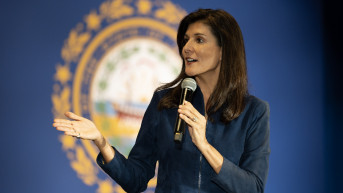
Hillary Clinton failed to become the first female US president; will the 51-year-old Nikki Haley, former US ambassador to the UN and governor of South Carolina, succeed? Her announcement for the Republican intra-party elections did not surprise those who follow the American political scene too much, and the interlocutors of Kosovo Online state that in addition to trying to win the presidential nomination, this move could "candidate" her for the position of US Secretary of State.
Haley, the daughter of Indian immigrants, was born in South Carolina, the American state where she became governor in 2011. She had no problem supporting Trump's opponents within the Republican Party, but in 2016 she accepted his invitation to be the US ambassador to the UN.
Many say that she is close to "big business", they find her connection with the Balkans in the fact that her husband is of Albanian origin, and our interlocutors say that she fully followed Donald Trump's policy when it comes to Kosovo.
Gordon N. Bardos, president of the Company for Strategic Consulting and Political Risk Analysis in Southeast Europe, tells Kosovo Online that "it's no surprise that Haley ran."
"It's been an open secret for a long time that she has presidential ambitions. However, she has a big challenge ahead of her. She's not very well known in the American public, at least compared to candidates like former President Trump, or potential candidate and current Florida governor Rick DeSantis. However, Haley has an interesting story; she is a child of immigrants and the first female governor of South Carolina. When she was elected, she was even the youngest governor in America. So far, she has proven to be politically capable and has some strong assets. Still, as I said before, the American public doesn't know her very well. For example, Haley is mostly recognized for her hardline stance on foreign policy. Critics often say she panders too much to neoconservatives with her hardline stances on Iran, Korea, Israel, and Russia. On the other hand, relatively little is known about what her domestic policy priorities would be. If the US enters a recession in the next 18 months before the election as predicted; American citizens are likely to be more attracted to someone who has a solution to domestic economic problems than someone who presents themselves as an expert on foreign policy. For example, during the 2016 campaign, only five percent of the questions presidential candidates received were related to foreign policy. But something could be added here - Haley is still relatively young, and perhaps this candidacy is just a trial balloon for her to better position herself for a job in the next Republican administration, either as secretary of state or as a vice presidential candidate. Maybe her candidacy this time is just preparation for an even more serious candidacy in 2028," Bardos says.
Bardos states that at the moment Trump and DeSantis each have around 40 to 45 percent of support among surveyed potential voters, and Haley has between four and eight percent.
"Of course, a lot can change in the next 18 months. But no matter how we look at it, she is not the favorite in the Republican race. And for now, the fact is that if there are more candidates, then it suits former President Trump better," our interlocutor points out.
When it comes to the Western Balkans, Bardos points out that it seems that Haley did not particularly deal with that European region while she was the US permanent representative to the UN.
"Of course, she pushed the standard US policy regarding the Kosovo issue, but I didn't notice that she had any special interest in the region. She was much more committed to the more important American priorities in East Asia and the Middle East. Of course, this is no surprise, in the last 15 years, the Western Balkans is not a region of particular interest to Washington," Bardos says.
Vladimir Marinkovic, one of the founders of the Serbian-American Friendship Congress, tells Kosovo Online that "During Donald Trump's mandate, Nikki Haley was one of his closest collaborators and served as the head of the US Mission to the United Nations for two years."
"She formed her political team very soon after the presidential elections in 2020, and therefore it was clear that she would continue to be involved in politics and that she would probably run in the elections within the Republican Party in their primary elections. Trump even refused to meet with her because he felt that she had not supported him in his fight to prove that he irregularly lost the election. Nikki Haley's rating within the Republican Party according to all surveys is not negligible, but she is far from Trump and DeSantis, and Mike Pence has much more support so it's like science fiction that she can win the presidential nomination. Theoretically, it can be said that she and potential Pence's candidacy can go in Trump's favor, given that his approval rating in the party is quite high and the focus on only one opponent can possibly lead to him being defeated in the internal party elections," Marinkovic says.
Marinkovic points out that there were several people in the Trump administration who were seriously concerned with the Western Balkans and who definitely had a sensibility for Serbia and especially Serbian legitimate interests in Kosovo and Metohija.
"She fully followed the policy of President Trump and did not stand out with statements that could be interpreted as pressure on Serbia. I think that if she became the president of the US, she would be much more focused on China, Russia, and traditionally on the Middle East, i.e. support Israel, which she was very committed to during her tenure at the UN, but which she will promote during her campaign for the nomination in order to gain the support of Jewish organizations in America. I also think that her approach to the Western Balkans would be more relaxed and pragmatic since she is, like Trump, against the auto-pilot foreign policy of pre-Trump administrations," he says.
When asked whether Haley's entry into the White House as the first female US president would affect Washington's policy towards Belgrade and Pristina, Bardos states that he doubts that any candidate who wins the elections will drastically change American policy towards the Balkans.
"That's an interesting question because you're implicitly asking what influence one individual has on a specific policy. I personally doubt that she (or any person who wins the election next year) would change American policy in the Balkans much. The US currently has much larger foreign political problems in the world - Ukraine/Russia, China, Korea, and Iran... Plus let's add a possible economic recession in America in the next 18 months. So the next American president will have neither the time nor the inclination to deal too much with the Balkans. I know that it is speculated that since Haley's husband is of Albanian origin, she would be more concerned with Kosovo, but I don't think that if Haley becomes president of the US, she would significantly change the main framework of American Balkan policy," Bardos believes.
Republicans or Democrats in the White House, is there a difference in the approach to the Western Balkans?
"I don't see any big difference between Republican and Democratic policies towards the Western Balkans in the last 30 years. In this period, we had three Democratic administrations and two Republican ones, and I don't see any significant differences. Trump did have a different approach, but he was not a typical example of the republican establishment, and in any case, it has not had any significant successes in the region. So I think it is a misunderstanding of how American foreign policy works, especially towards the Western Balkans. I personally do not think that any eventual, potential success in the dialogue between Belgrade and Pristina depends on whether a Republican or a Democrat will be in the White House. Much more depends on whether the next president, as well as the next secretary of state, will be willing to commit to the problem, discard counterproductive positions, and accept new positions and policies that could open up the possibility for success in dialogue. This is not a criticism of diplomats who are currently engaged in the dialogue between Belgrade and Pristina, but it seems to me that the solution to this problem requires some more serious decisions at the highest level. If we compare the current diplomacy around the Kosovo problem with the efforts to end the war in Bosnia, for example, it is important to remember that in the summer of 1995, the top of the Clinton administration, from the president down, struggled for weeks with the American policy towards Bosnia, the questions of which principles must be kept, what concessions must be made... I don't see any similar process in Washington right now, which is not a surprise considering other problems in the world. But I am also not sure that the Kosovo problem can be solved if the current diplomatic efforts remain at the scale and parameters they are in today," Bardos says.
On the other hand, Marinkovic points out that the policy of the White House towards the Western Balkans also depends on whether Republicans or Democrats will be at the head.
"It will certainly depend on that factor, but the Republican candidates also differ in their foreign policy priorities. It will not be the same if Trump eventually wins, whose closest collaborators, for example, Grenell, O'Brien are familiar with the problems and interested in solving them, or DeSantis, who as the governor of Florida, didn't say much about geopolitics, so it would take time for him to decide, and primarily everything would depend on personal choices in the State Department and the National Security Council," Marinkovic concludes.



0 comments