
Recognitions, withdrawals, and accessions: Where is Kosovo's diplomacy?
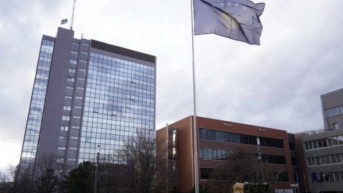
Kosovo marked the 15th anniversary of its self-proclaimed independence, but in the last few years, Pristina's diplomacy has not had concrete successes as it happened immediately after February 17, 2008. Meanwhile, the official Belgrade announced that 27 countries had withdrawn their recognition of Kosovo, which meant that 90 remained on the list, but the website of the Ministry of Foreign Affairs in Pristina still had the old information about 117 countries.
It is interesting that even after 15 years, Kosovo has developed diplomatic relations with only 33 countries, which gives the opposition in Pristina the right to criticize the current government for its failure on the foreign policy front.
Where Pristina stands in international relations is a question that is often raised by political parties in Kosovo.
The last country to recognize Kosovo is Israel as a result of the Washington Agreement of September 4, 2020.
Membership in the United Nations, UNESCO, Interpol, World Trade Organization, World Health Organization, OSCE, and many other relevant institutions is still unattainable for Pristina. An attempt to join the Council of Europe is underway. NATO and the EU are a great desire of Pristina, but all roads lead through dialogue with Belgrade.
As the last "diplomatic success", Pristina cites the fact that the Kosovo Ministry of Foreign Affairs managed to establish diplomatic relations with East Timor last year, 10 years after that country formally recognized Kosovo's independence.
Minister of Foreign Affairs Donika Gervalla said then that 2022 would be "interesting" when it came to new recognitions. But it turned out that nothing happened. There are no new recognitions, and at the same time announcements about new withdrawals are coming from Belgrade.
Kosovo's ambassadors in certain countries have tried in the past few months to establish contacts with diplomatic representatives of countries that have withdrawn recognition but to no avail. Notes on withdrawals of recognition remained.
Gervalla recently reminded that Togo had withdrawn its recognition of Kosovo back in 2019. But, on the official website of the Ministry of Foreign Affairs of Kosovo at that moment, Togo was still on the list of countries that recognize Kosovo's statehood.
There are examples like Egypt, which at one time formally adopted the recognition of Kosovo, but never started diplomatic relations and has no intention of doing so.
The opposition in Kosovo blames Kosovo's diplomacy for the withdrawal of recognition, because, as they state, instead of deepening relations and working to obtain new recognitions the current government closes those doors that were open.
Muhaxhiri: Organizations more important than the number of countries
Analyst and sociologist from Kosovo, Artan Muhaxhiri, believes that "quality is more important than quantity" when it comes to withdrawing independence.
"The battle for the withdrawal of recognition is populist, sensationalist, and directed towards the militant part of the electorate. It serves to create an artificial idea of returning to a historical process, although realistically it is not possible to have anything concrete. De jure recognition can be withdrawn when a state loses any essential element of statehood, which is not the case with Kosovo. When it comes to recognition - quality is sometimes much more important than quantity. If a state with a high level of corruption and deep structural problems in its functioning withdraws its recognition, it will not affect international relations and the image of Kosovo. Of course, it's a completely different situation if the country that withdraws recognition is powerful, which has not been the case so far," Muhaxhiri told Kosovo Online.
According to him, Kosovo did not invest enough political or financial resources in foreign relations and relied on its allies.
"For the development of international relations, Kosovo relies more on the support of its main allies, such as the United States of America, Germany, and France, than on its own diplomatic forces. Kosovo does not invest a lot of political and financial resources in foreign relations because the main focus is on dialogue. Diplomacy is very expensive and requires consistent and large investments to achieve significant goals," he added.
As he stated, it was more important for Kosovo to become part of the relevant international institutions.
"The Ministry of Foreign Affairs officially states that Kosovo is recognized by 117 countries. For Kosovo, it is more important to achieve membership in relevant international organizations, because separate recognitions represent a more difficult path to strengthening national identity. Currently, the quality of Kosovo's international relations almost exclusively depends on the level of constructiveness and engagement in dialogue," Muhaxhiri concluded.
Bozinovic: Stone in the shoe
The President of Serbia, Aleksandar Vucic, announced recently that another country was ready to withdraw the recognition of Kosovo's independence, without specifying which country it was. Former diplomat Milovan Bozinovic assessed for Kosovo Online that the withdrawal of recognition did not fundamentally speed up the resolution of the Kosovo problem, but it was an indication that the issue had not yet been resolved.
"Serbia's work on withdrawing recognition is an interesting political idea, but I'm afraid that it does not substantially speed up the resolution of that problem. It helps that the policy, which Serbia does not accept, is not supported as quickly and strongly as Kosovo expects. It is not a small matter that some of the countries say that they made a mistake and that they are withdrawing recognition. This psychologically affects the political situation, but essentially we must strive for an agreement with those who are really asking - which are the great powers," Bozinovic said.
As he added, the withdrawal of recognition was a "stone in the shoe", and the Kosovo issue was becoming more and more difficult not only for Serbia but also for the countries of the world.
"It is more proof that the problem of Kosovo is big and that it is not so simple to solve that issue. An interesting political initiative worthy of praise, but it is an addition to the core of the problem, which is a dialogue with the great powers. Withdrawing recognition will not significantly change things, but it is part of the general impression that many countries are far from us, that doubt Kosovo's independence," Bozinovic said.
According to him, the policy pursued by Serbia bothered those who supported Kosovo's independence.
"There is something in politics that is a good political joke, and it bothers everyone who wants Kosovo to be independent, and the whole world applauds them, but that is not the case. The whole world does not applaud them, there are even those who, under these conditions, i.e. depending on how the dialogue process will proceed - will not recognize Kosovo," Bozinovic said.
He emphasized that Kosovo was a non-independent political creation, which did not build political relations with states by itself.
"Kosovo is a product of those who created it and it does what its creators, namely the Western countries, expect and ask of it," Bozinovic said.
He believes that only the former president Hashim Thaci, who led a radical policy of independence for Kosovo, differs from the leader of Kosovo in this matter, but that this can only go as far as the "political authors" allow.
"Kosovo does not have its own diplomatic relations with the states, except to the extent that they are told to have," Bozinovic concluded.
Hoxha: Any withdrawal of recognition is harmful
Political analyst Leart Hoxha believes that any withdrawal of recognition harms Kosovo and that bilateral relations with some countries are not at such a high level.
According to him, Kosovo's diplomacy was focused on membership in international organizations.
"In principle, the attitude of Kosovo's diplomacy is such that more effort is devoted to membership in international organizations, and this can be seen from the requests submitted for membership in the Council of Europe, the EU, and this year it was announced that a request for membership in NATO would be sent. International organizations are being chased. Bilateral relations with some countries may not be at the diplomatic level we all would like them to be at," Hoxha said.
He added that the statements from Belgrade and Pristina differed on the issue of withdrawing the recognition of Kosovo's independence.
"At the same time, there are two different versions of what official Belgrade claims and what recognitions Pristina claims that were withdrawn. Any withdrawal of recognition will destroy Kosovo without further ado, but I think Kosovo should focus on international organizations more than any withdrawal of recognition of an individual country," Hoxha concluded.

0 comments