
Davenport: There is still a lot of work to be done to improve the position of minority communities in Kosovo
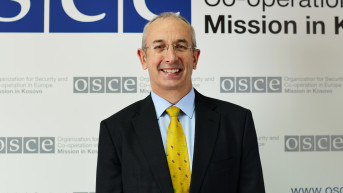
There was still a lot of work to be done to improve the position of minority communities in Kosovo, although there had been some progress in respecting their rights and protecting their interests, Michael Davenport, head of the OSCE Mission in Kosovo, said in an interview with Euronews Serbia.
As problems, he cites the problems surrounding the expropriation of land in Leposavic and Zubin Potok, the refusal to register the land of the Visoki Decani monastery in the cadastre, and compliance with the law on the use of language. He emphasizes the importance of the integration of the Serbs into Kosovo's institutions, stating that it is very important that both police officers and judges return to the institutions, and in this context, he cites the participation of the Serbs in the elections in the North as one of the biggest problems at the moment.
What is the current position of minority communities in Kosovo?
I think we can say that there has been some progress regarding respect for the rights and interests of minority communities by Kosovo institutions, but we must remind that there is still work to be done on the remaining existing challenges. The protection of community rights is included in all activities of our mission as well as in the engagement of the OSCE Mission in Kosovo. I will mention a concrete example - the OSCE Mission in Kosovo supports the Office of the Commissioner for Languages.
What about the Language Use Act? You, and we who live here, know that this law is not respected. A huge amount of money has been invested by the international community, including your mission, and compliance with that law is still not at the required level.
Respect for the Law on the Use of Languages is an important area in which the OSCE mission has been working for many years. I mentioned the cooperation with the commissioner for languages in the Prime Minister's Office. We very actively support the commissioner's work and I can even tell you that together with the ambassador of Switzerland, I met with the prime minister on Friday to jointly push the process of establishing a new government unit for translation and harmonization of the language of legislation.
You said in your answer to the first question that the rights of non-majority communities had relatively improved. However, this year we had quite a number of attacks on members of the Serbian community, and there is also a problem with the preservation of cultural heritage - you know that there have been burglaries and looting of Serbian cultural and religious buildings. How do you interpret that and what can the OSCE do?
As a Mission, we monitor all these incidents and regularly report to all OSCE members in Vienna. When incidents of this type occur, we do everything to ensure that they are prosecuted within the framework of Kosovo's legislation. Regarding the cultural heritage, I can tell you that last year we as a mission published, as you probably saw, a quite comprehensive report on the protection of the cultural heritage in Kosovo and we made the necessary recommendations in this regard.
When it comes to cultural heritage, it is related, you also monitor the work of the judiciary. We have the decision of the Constitutional Court on the return of land to the Visoki Decani monastery.
The position of the mission is completely clear regarding the implementation of the verdict of the Constitutional Court. Since 2016, we have continuously called for the implementation of this decision of the Constitutional Court, and I would like to repeat the appeal even now that this land is being put into the cadastral books as soon as possible.
The situation worsened in the north of Kosovo - the Serbs left the police as well as the political institutions. Do you think that the presence of such a large number of members of the special police in the north is necessary?
After the decision to leave both police officers and judges from Kosovo's institutions, there is a new, bad situation in the north of Kosovo. The integration of the police and the judiciary is a very important result of the dialogue between Pristina and Belgrade, and I am very sorry that these decisions have been reached. I think it is very important that both police officers and judges return to the institutions.
When you talk about return, do you expect the Serbs to vote?
I think that it will be one of the biggest priorities now that they return, in order to continue the process of integration of representatives of all Kosovo communities, in this context - Kosovo Serbs.
The expropriation of land in the municipalities of Leposavic and Zubin Potok also caused problems.
We are concerned about the respect of property rights within the expropriation of land. I raised this issue and expressed my concern to the government. I also shared the views of the OSCE mission with the Kosovo Serb leaders. I can tell you that I pointed out to the Government the importance of providing official information about the purpose of these expropriations and we expect the Government to do so as required by the legislation in this area.
All eyes were on Ohrid last Saturday. Do you have any opinion on the formation of the Community of Serb-majority Municipalities, given that it seems to be the main stumbling block, and it is about the rights of the community?
I know that it was one of the biggest and most important topics in Ohrid. I don't think I can add anything to that. It must be implemented, of course, that is the message from Ohrid.

0 comments