
BBC: How minorities live in Kosovo and why hardly anyone sees a future for children there
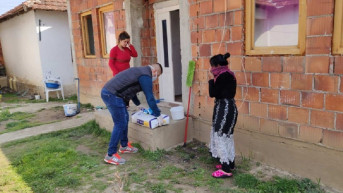
All major problems are reflected in the lives of minorities. This is especially reflected in Kosovo. Twenty-two years since the conflict and 15 years since the declaration of independence, the Serbs and Albanians have always been at the center of negotiations on the status of Kosovo, and rarely the lives of their neighbors from minority communities, BBC reports in Serbian.
The Constitution of Kosovo recognizes the Albanian, Serbian, Bosniak, Turkish, Roma people, Egyptian, Ashkali, and Gorani people communities, and members of the Montenegrin and Croatian communities also live in Kosovo.
"It has to be better because the Albanians have to understand that Kosovo is not theirs, it is also Serbian and Bosniak and Turkish and Gorani and Montenegrin – however someone wants to declare itself. We didn't come from nowhere, we were born here, we don't have any other motherland, a neighboring country, but Kosovo is our country and no one has the right to determine your fate based on the percentage," the Deputy Prime Minister of Kosovo, Emilija Redzepi, the first Bosniak in history of Kosovo in such a high position, says for the BBC in Serbian.
Kosovo Bosniaks, for the most part, do not see Bosnia and Herzegovina as their own state, unlike the Albanians and Serbs who mostly recognize their motherland in neighboring Serbia and Albania.
"Only with joint efforts can we build this society properly. If we move forward as a single nation, we won't even reach the neighboring house, let alone the neighboring country," she adds.
Divided cities and shared destinies
However, the classification into national camps can be seen in the north of Kosovo, where the entire city of Mitrovica is divided into southern - Albanian and northern - Serbian, all the way to the extreme south, at the foot of Sar Mountains, where the Gorani people live.
Dragash, a town at an altitude of a thousand meters above sea level, is not only adorned with clean air and a view of snowy peaks, on which thick velvety clouds seem to sit but also its division.
In a low voice, those who did not want to speak publicly, say that the upper part of the street where the municipality, banks, cafes, and the elementary school are Albanian, and that the lower part is Gorani.
On the street in that lower part, we meet a Gorani Arif Hoxha.
On a cold and clear February day, when the temperature was seven degrees below zero, he was one of the few who was ready to talk about life in Gora.
This medical technician is employed in the health center in Krusevo, where a dozen health workers provide care for thousands of people.
Krusevo is one of 19 Gorani villages in the southernmost Kosovo municipality of Dragash, which is surrounded on two sides by North Macedonia and Albania.
"In the winter, it's a little more difficult here, especially because of frequent power shortages, in our villages up towards Sar Mountains, since the power grid runs through forests and mountains. Breakdowns often occur due to snow and wind, and as soon as there is no electricity, there is no internet, heating, television, and other things," he describes.
Due to the question of jurisdiction between the Kosovo and Serbian systems, it was often the topic of Brussels negotiations, and last year temporary restrictions were introduced due to the global energy crisis - for every six hours of electricity, they were in the dark for two hours.
"It's nice here in the spring when St. George's Day is celebrated and those activities from the first of May to October. Then there are a lot of people, they come from the diaspora, from all parts of the former Yugoslavia and Europe, Gora will be full," Hoxha says with joy in his eyes.
The medical expert who didn't leave
Arif Hoxha has been working in healthcare for 38 years, and the hospital in Krusevo operates according to the Serbian system.
There they have a laboratory, an ECG, and a pharmacy, to provide basic health care.
He did not leave Gora, but his sister and many relatives did - they are mostly in Germany, Italy, Austria, Belgrade, Novi Sad, Zagreb, and Nis.
"With us, the problem is because of passports, you can't go with Kosovo passports because you need a visa, but we also have another handicap, we have Serbian passports, which are issued by the Coordination Center in Krusevac, and you can't travel again. It's not fair, our movement is limited," Hoxha says, adding that there is a long wait for visas.
Visa liberalization, which would allow citizens of Kosovo to travel to EU countries without visas, was discussed many times in Brussels, but it has not yet come into force.
The European Commission approved it, but the European Parliament is waiting for that decision to be confirmed.
"If they gave a visa-free regime for Kosovo, at least another 30, 40 percent of the population would certainly leave," Hoxha estimates.
He describes himself as an enthusiast who wanted to stay, even though he could go anywhere because he speaks German and is a medic.
"I didn't want to do it on purpose because of these people, because we cover four villages, it was especially important during the pandemic," he says, while holding in his bag the certificates from professional seminars, which he needs to renew his work license. We stay here, we cannot take Gora with us, it stays there," Hoxha says with a smile.
When asked how the people from Gora live, he points with his hand down the street in the direction where the bus stops for students from Dragash to the school in the village of Mlike, which "the whole Gora" attends.
"My children also went there, it's not the best, but we survive. His children are grown up, still living in Gora, but not for long. We are just waiting for the opportunity for them to get married and normally, like all other children and youth - to move, there is no other alternative," says Hoxha.
A restaurateur who returned
Further down the street are a bakery, cafes, and a gas station.
We enter one of the cafes and the restaurateur Senad Ajridini tells me how nice it is to live in Dragash, "among our own people".
He is a Gorani from Dragash, like many compatriots, he lived in Belgrade for a while but returned to his native region.
"I'm not going to lie to you, about 70 percent of people leave, mostly young people," this 37-year-old says.
He is especially proud of the beauty of the mountains that surround them.
"The nature here is the best, there are no factories, there is nothing, everything is clean," Ajridini adds.
He worked as a waiter for years, and then became the owner of the cafe Lucky pub, at the entrance of which there are two transparent balls with goldfish, like those from cartoons.
Inside, there are a wooden bar and checkered tablecloths and only a few tables for sitting, at which there are men.
Ajridini points out that they do not serve alcohol, but they do offer coffee and tea.
As he says, one can "live well" in Dragash with one salary.
"It's a good life, it's peaceful, nobody interferes; you can work. Only education and healthcare should be better," he says.
He adds that sometimes they have to go to Prizren, Pristina, Gracanica, and even 600 kilometers away to Belgrade for treatment.
They did not always have security there
It has been peaceful in the Gora region for years, but it was not like that during the conflict.
Albanians, who are now twice as many as Gorani people in Gora, resent their neighbors' traditional preference for official Belgrade.
"They regularly perished in wars and conflicts that were not theirs and in which they wanted to stay aloof. In better cases, another religion or another language was imposed on them. In worse situations - murders, bombings, and persecutions followed," Vreme writes in the article about the Gorani people as "nobody's people".
It states that from 1999 to 2006, 11 members of this community were killed, and the perpetrators were not found.
Restaurateur Ajridini lives with his wife, who is a housewife, and his daughter, but because of school, he does not see himself staying in Dragash.
"It's a bit more difficult, there are primary and secondary schools, but there aren't any other," Ajridini says, adding that those who want a university education mostly choose Kosovska Mitrovica.
He studied at the Faculty of Law and reached the fourth year, but there was no money to continue his education.
People who want to work, he adds, can find work, but many still live on social aid.
Of the approximately 33,000 inhabitants of the municipality of Dragash, as many as there were according to the last population census, more than 1,500 regularly receive social aid, according to data from the United Nations Development Program.
A politician who can talk
The inhabitants of Gora are divided, not only between Belgrade and Pristina but they are further divided.
This is one of the reasons why not only ordinary people but also Gorani politicians sometimes bypass the media, explains Nedzmidini Sejdilar, a municipal councilor in Dragash.
"After the war, there are two political currents in Gora, one representing the Bosniak community and the other representing the Gorani community, which has maximum support from Belgrade," Sejdilar says, a representative of the third option and a member of the Movement for Gora.
In the municipality of Dragash, the division between the Kosovo Bosniak and Gorani communities is porous, as both communities share a certain number of key characteristics, and the main thing that separates them is their political commitment, according to the report of the Organization for Security and Cooperation in Europe (OSCE).
Even today, Gorani people "stick together" wherever they go, the problem is that they are divided at home, adds Sejdilar, although he supports the existence of different political views.
"People are afraid to say what they think because they are afraid that tomorrow they will be called from one side or the other, and they may lose the benefits they have. That's the biggest fear at the moment because bullying happens; a person who doesn't have any protection can lose its benefits," the politician and businessman says.
This owner of a company that installs cameras and security devices adds that "instilling fear into the electorate" most often happens in the pre-election atmosphere, on both sides.
"Someone comes and says 'you have to vote for me, otherwise you will not receive social aid, there will be no child benefit, you will lose your job," Sejdilar says, whose address once was in Austria and Hungary.
He speaks Hungarian and German and is fluent in English and Albanian, which he shows by casually greeting acquaintances.
He finished high school in 2003 according to the general model of UNMIK before the education system was divided into the Kosovo and Serbian models.
As he points out, the security situation in Dragash is now good, but there is fear in minority communities "like everywhere else in the world".
"But the economic situation in our municipality is catastrophic for everyone, we cannot exclude the Albanian community in this crisis. Emigration is present in higher percentages among Albanians than among us, we emigrated as much as we could," Sejdilar says.
For decades, the people of Gora were considered "season workers", they went after the money from Gora, immigrating to numerous cities of the former Yugoslavia, as well as the whole of Europe.
They are known as hard-working and honest workers, often excellent confectioners, with the corner of their eye always turned to their homeland, which the BBC previously wrote about.
Nevertheless, Gorani people are appropriated by almost all the more numerous people in the region, says Sejdilar, from Macedonians, through Serbs, to Bulgarians.
"It's becoming a problem, because of so much selfishness; we now don't know who we are closer to. I have information that the Bulgarian community submitted a request to the Assembly of Kosovo to recognize us as a community, in addition to that, they took a petition with 600 signatures, of which 98 percent of the signatories are from Gora," he says.
He adds that he "never knew a Bulgarian from Gora".
"I didn't know a Serb from Gora, an Albanian, a Macedonian from Gora, or a Bosniak until after the war. Now I have to admit that they all exist because determination is an individual thing,” this 39-year-old politician says.
A Roma woman who was not discriminated against
From Gora, I go through Prizren to Gracanica, a municipality next to Pristina, on winding roads, passing the viewpoint from which you can see the Sar Mountains’ peak Ljuboten.
The Roma woman Nadjija Gradina is waiting for us there, she is from a wealthy family, lives here with her daughter, and works as a nurse.
When asked how the Roma people live, the answer is "depends".
"Those who work, have a better life, those who do not work and live on social aid, have a slightly less good life. Some do not have the right to social aid, because they do not have documentation, and they do not work anywhere, I really do not know how they live," a member of the non-governmental organization Roma Initiative says.
Gradina points out that the number of such people invisible to the system was much higher until five years ago, but with the existence of organizations that come to the field and help them get ID cards and register, that is changing.
And the issue of discrimination, which is one of the biggest challenges for the Roma community, does not affect everyone equally.
"For myself, I can't say that I was ever discriminated against, I really wasn't, I didn't feel insulted or hurt. Some people really are, that exists in healthcare and employment," Gradina says, who has 11 years of experience in a hospital under the Kosovo system.
However, she does not see a future in Kosovo for her 12-year-old daughter, she says flatly.
"As far as I'm concerned, there's no problem, but as far as my child is concerned - yes. She's in puberty now, she can't think much, so we don't talk about those serious things," the 38-year-old mother says with a laugh, but she hopes that will change in a few years. Maybe high school will be here, but university – I don’t think so, if health and finances permit us, I want her to be in Serbia or abroad. If there is an opportunity, I'm the one who will give my child wings to fly, and my arms will always be open if she wants to come back," Nadjija says warmly.
They live in a nice house in the center of Gracanica, a municipality with a Serb-majority, and only 500 meters away is the Romska Mahala settlement, which looks completely different.
It alternates between old houses and garages, and some have two or three floors with a facade.
Aid comes from international organizations from abroad, and the state also invests in order to reduce the problems of poverty and housing, but not enough to eradicate them, notes Orhan Butic from the Voice of the Roma, Ashkali, and Egyptians (VORAE) organization.
The majority population views Roma, Ashkali, and Egyptians as one community, even though they are separate and have different cultures and traditions.
What they have in common is the discrimination they face.
"In Albanian, a gypsy is called 'madjup'." When those from the majority community see someone with darker skin, they call them insultingly - 'madjup,'" Butic describes.
The Government of Kosovo also adopted a new Strategy for Improving the Lives of Roma, Ashkali, and Egyptians 2022-2026 year, but it is important to wait to see the implementation, he notes, while we are talking in Pristina.
An activist who experienced discrimination
These three communities together count 35,000 people.
They have four deputies in the Kosovo parliament - two Roma and one each Ashkali and, Egyptian.
For the first time, there is a member of the government from the ranks of the Egyptian community - Elbert Krasiniqi is the Minister for Local Self-Government.
But in addition to that, there are still examples of Roma people not being served in catering facilities, of the bus not stopping when it sees them waiting, as well as in the case of employment, Orhan Butic enumerates.
"There were also examples of segregation, during a celebration at a school in Peja. They celebrated the Day of the Alphabet, and children from the community of Roma, Ashkali, and Egyptians were separated in one part of the hall so that they could not participate with their peers," Butic tells an example from the Kosovo education system.
It is similar in the Serbian system.
In Gjilan, classes take place in a private house, where classes are attended only by Roma children.
This university-educated member of the Roma community with 15 years of experience in the non-governmental sector has personally experienced discrimination.
When he went to the store in his old clothes after working around the house - they didn't want to serve him.
When he went again with a new wardrobe that changed.
Because of all such cases, their organization launched the "anti-Gypsyism" campaign, which was later supported by the Government of Kosovo, enabling online anonymous reporting of discrimination.
Out of 22,000 teachers, only 22 were from the Roma, Ashkali, and Egyptian communities, local media reported.
The vicious cycle of poverty
One of the many problems faced by the Roma people is language because they mostly live in enclaves with the Serbs, so in addition to their native Roma language, they speak Serbian, but not Albanian.
Furthermore, just as Belgrade does not recognize diplomas from the Kosovo system, Pristina does not accept diplomas from the Serbian system.
All this leads to the fact that Roma people who have finished school in Serb-majority municipalities cannot get a job in Kosovo's institutions.
"Most people in non-majority communities are employed in jobs such as cleaning the city or physical jobs, not administrative," Butic points out.
Because they are often unable to find better-paid work, members of minority communities remain in a vicious cycle of poverty.
This is clearly seen in the way of life and housing.
"We live in the 21st century, and still some people do not have the most basic conditions for life. Households still do not have a bathroom and hot water in the house or live in shantytowns without conditions," Butic says.
Families struggling to survive often do not see their children's education as a priority or cannot afford the conditions for living and learning.
According to the latest statistics available to VORAE, from Roma, Ashkali, and Egyptian children up to the fourth grade, i.e. the fifth grade according to the Kosovo system, 85 percent of children attended school in 2021.
"This means that 15 percent do not go to school, and the number continues to decrease. From the fifth to the eighth or from the sixth to the ninth, we have 65 percent of children who attend school, in secondary only 30 percent of the children, the trend can be seen to be decreasing," Butic says.
Laws, but also implementation
VORAE appealed to domestic and European officials to include minorities in the negotiations, such as those on the formation of the Community of Serb-majority Municipalities, at least by mentioning them.
"Other communities are not mentioned anywhere, except the Serbs and Albanians. Any policies that are signed, if other communities are not mentioned, then there is a very high probability that they will be excluded from the program," Orhan Butic says.
And even when there are programs and strategies, implementation is often problematic.
The law on civil service in Kosovo stipulates that 10 percent of jobs in public institutions must be filled by members of minority communities, but implementation is still slow.
Out of 22,000 teachers, only 22 were from the Roma, Ashkali, and Egyptian communities, local media reported.
A Bosnian woman who is the deputy prime minister
All minority communities are formally the department of Emilija Redzepi, in charge of minority issues and human rights.
As a Bosniak, she believes in the equality of people and advocates for good interpersonal relations both as a politician and privately.
"I say this as someone who grew up with the Serbs and lived with Albanians in Prizren and whose neighbors are Gorani people, Roma, and Turks, my children constantly live, work, and function with them. That's what Prizren is like as a city, where you can see the diversity of all people and hear different languages," Rexhepi says, in the office in the glass multi-story building of the Kosovo Government building in Pristina, where we end the tour.
As someone whose best friend was Turkish, Redzepi is convinced that there is no alternative to that policy, especially not in the Balkans.
"We are all people first and foremost, we can differ by nation, religion, ethnic group, language, but the basic thing that unites us is humanity and in that spirit, we must live together," the politician, whose ancestors have lived in Zupa for 200 years, in the surroundings of Prizren, the most culturally colorful city in Kosovo, says.
In that spirit, she also notes that there are no other flags and coats of arms for her, except those of Kosovo, pointing to the yellow-blue flag of Kosovo in front of the framed portrait of the current Kosovo president, Vjosa Osmani.
Many Albanians do not perceive that flag as their own, so Albanian national flags are flying all over Kosovo - a black double-headed eagle on a red background, and the Day of the Albanian Flag is celebrated as a national holiday.
The Muslim religion unites Bosniaks with Albanians and the Bosnian language with the Serbs.
"You always have to justify who you are, what you are, where you're from, which is absurd. Why should we justify to someone whether we are Bosniaks, Serbs, or Albanians," the deputy prime minister asks.
The government of which she is a member works to suppress discrimination, but also hatred between people, which, she says, still exists due to the painful past.
During the conflict, Bosniaks were in a particularly ungrateful position, because to both sides, they were possible allies of the enemy.
And Redzepi was in Kosovo before, during, and after the war, with her family, then her husband and two daughters, her son was born later.
First, she says, they were attacked by Serbian, then Albanian forces.
"We had a problem with the Serbian paramilitary forces because the area where I live is near the barracks, the army was there; there were all these different currents in our streets, but we survived it. Then, after the war, various people came who pretended to be actors, and they harassed us for speaking another language," Redzepi explains.
She stayed with her family in Prizren until today.
Multiculturalism as inevitability
Even when she was a deputy in several mandates in the Assembly of Kosovo and later, she has been traveling to Pristina every day for 15 years.
She grew up in Yugoslavia and was educated in the Serbo-Croatian language and notes that multiculturalism is a feature of modern European and Balkan countries.
And Bosniaks, she says, can be with everyone and can be a "bridge" of different cultures, no matter how difficult it may have been at times, adding that she "interfered" several times at meetings by herself as soon as she saw tensions between the Albanians and Serbs.
"After everything that happened in Bosnia and Herzegovina, then in Kosovo, Bosniaks can be the link between Albanians and Serbs. Sometimes they don't want to, and they can't do it themselves," Redzepi says.
0 comments