
Kurti's impossible parallel between the CSM and the association of minority municipalities in Serbia
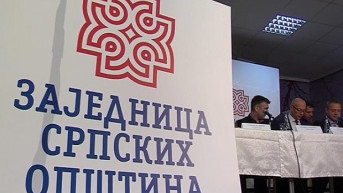
In the demands to establish reciprocity in the rights of minorities between Kosovo and Serbia, the Prime Minister of Kosovo, Albin Kurti, who has been trying for a long time to bring to the Brussels negotiating table, the same one where the Community of Serb-majority Municipalities was agreed upon, the issue of the position of Albanians in the three municipalities in the south of central Serbia; now he went a step further.
He raised the question of why Serbia does not allow Hungarians, Bosniaks, and Bulgarians to form uninational associations of municipalities. Such a comparison, according to the interviewees of Kosovo Online, is inappropriate on several grounds.
Kurti also made a table showing how many municipalities in Serbia are headed by non-Serbian mayors. He says - 11.
"Why doesn't Serbia enable them to form uninational associations of municipalities, and in Kosovo, they are asking for something like that?", Kurti asked.
The director of the Center for Regionalism, Aleksandar Popov, tells Kosovo Online that the comparison made by Albin Kurti is inappropriate.
"According to the same system, Kurti could say why France does not create a community of Muslim municipalities where Muslims live as a majority or refer the question to Germany. This is about Kosovo, not Serbia. Kosovo has yet to establish itself as a state because it is not internationally recognized, and it has obligations that it has undertaken in accordance with that and that the international community has imposed on them. The CSM is an obligation that was taken on by the Brussels Agreement, on two occasions in 2013 and 2015," Popov says.
He adds that the issue is not the reorganization of Serbia as a country.
"Serbia has its own Constitution and its own system, and Kosovo, according to Ahtisaari's plan, ruled the Constitution, and municipalities with a Serbian majority were created there. Moreover, Ahtisaari's plan did not refer to Serbia but to Kosovo. On that basis, municipalities with a Serbian majority were created and an exception was made," our interlocutor explains.
As for Serbia, Popov says that by the nature of things, there are two municipalities where Albanians are the majority - Bujanovac and Presevo, while in Medvedja they are in the majority only on paper because many have left there and come only to vote.
"Those municipalities operate according to the same system as in the north, where Hungarians are in the majority in Senta or Kanjiza, and Bosniaks in Sandzak; they function in accordance with the Law on Local Self-Government and other laws. So they are equally subjected to the applicable laws. It is impossible to make comparisons between Kosovo and Serbia," Popov concludes.
Balint Pasztor, head of the parliamentary group of the Alliance of Vojvodina Hungarians in the Parliament of Serbia, believes that the position of the Serbs in Kosovo and Metohija cannot be brought into any relationship with members of national minorities in other areas of the Republic of Serbia. He notes that when he says that there is no room for comparison, he is not referring only to Hungarians, but to all national minorities in Serbia in general.
"We as the Alliance of Vojvodina Hungarians have legitimate political representatives in Serbia, we have been in the parliament since 1990 and we don't need Kurti or anyone else to explain to us what we should be looking for. We had requests, and a lot has been done, and in this way, within the institutions, we are trying to fight for the position of national minorities, including the Hungarian one. I think a lot has been done in previous years," Pasztor told Kosovo Online.
And he reminds that the Community of Serb-majority Municipalities in Kosovo is an obligation stipulated by the Brussels Agreement and that it exists for ten years.
"There is absolutely no reason to make any comparison, but what was signed and accepted ten years ago should simply be applied. This is certainly the first step in order for the talks between Belgrade and Pristina to lead to some results and to make progress. It is Albin Kurti's obligation that he must fulfill," Pasztor says.
Miroslav Gacevic, Assistant Minister for European Integration in the Government of Serbia pointed out the perhaps key reason why the CSM was not comparable to the way in which minorities were organized in Serbia. He pointed out that the idea of creating a Community of Serb-majority Municipalities had been the result of continuous intimidation and attacks on the Serbs and their property.
"Of course, there are no such associations, simply because all our minorities are not really threatened, and their rights are fully protected in the existing legal framework," Gacevic said.
Asked to comment on Kurti's statement that there were 11 mayors of municipalities in Serbia who were not of Serbian nationality and did not have special communities, Serbian President Aleksandar Vucic called it foolishness and insolence.
"He would like to identify the legal, political, and state-legal status of Serbia and what he calls the Republic of Kosovo. But we are having discussions because they are not the same. You have nothing to discuss about central Serbia. We have one topic and it is the only one on the table What should you do when someone thinks he has the right to be arrogant because he thinks he has great protectors," Vucic stressed.


0 comments