
Petkovic: The CSM is the first and basic obligation of Pristina in the dialogue
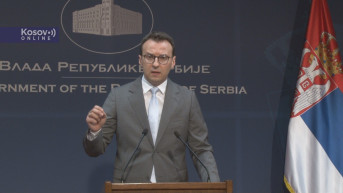
The director of the Office for Kosovo and Metohija, Petar Petkovic, pointed out that Serbia had fulfilled its obligations and that it had been waiting 10 years for the formation of the Community of Serb-majority Municipalities, and added that it was clear that Pristina did not want dialogue, peace, and agreement, but, as he says, clearly insists on it to provoke an inappropriate reaction from the Serbs with unilateral moves, Blic writes.
In an interview for Blic, Petkovic talked about the meeting with the representatives of the Serbs, the problem with the license plates but also the next steps when it comes to the dialogue between Belgrade and Pristina.
Political representatives of the Serbs from Kosovo came to Belgrade and spoke with President Aleksandar Vucic. What did they talk about during the meeting?
The Serbs from Kosovo and Metohija spoke first of all about the situation on the ground, what they face every day. They talked about that violence, political and any other violence that is happening on the part of Pristina against the Serbs. About incidents, attacks, arrests, the illegal presence of ROSU police in the north of Kosovo and Metohija, and many other things. When you look at the atmosphere and the unilateral decisions, when you see what Pristina is actually doing, it is clear to you that they do not want dialogue, they do not want peace, that they do not want us to agree on anything, but they clearly insist only on causing some inappropriate the reaction of the Serbs, so that the Serbs or Belgrade would then be accused by the international community or whoever, of being unconstructive in the dialogue. In fact, all these years, and even recently, the constructive one is Belgrade. It insists on peace, insists on stability. So, many things were discussed at the meeting. President Aleksandar Vucic thought and offered his suggestions, how he saw things, what conclusions would be good to come out with, how to move things forward, to move in the direction of normalizing relations. When he listened and heard what all our people were saying, when he heard the demands of the political representatives of Serbs from Kosovo and Metohija who were stronger and stronger, they wanted to go much further in certain measures, the president gave up his proposal. So the agreement is that we have to continue talking, to see what we are going to do in the political sense, but also in the economic sense, first of all, to see what the state of Serbia can do even more today to help the people of Kosovo and Metohija. We will prepare the plan, measures, and economic development program, so the agreement is to meet next week and make final conclusions there.
At the beginning of the week, another round of negotiations was held in Brussels. What specific steps were discussed when it comes to the formation of the Community of Serb-majority Municipalities?
We insisted, like every time we are in Brussels, first of all on the formation of the Community of Serb-majority Municipalities. You know that this is the first and basic obligation in the dialogue, it is Pristina's obligation. The EU, Pristina, and Belgrade signed the Brussels Agreement. We have fulfilled all our obligations and now we have been waiting for the formation of the CSM for 10 years. The incidents on the ground, every kind of political, institutional, and every other kind of violence that goes from Pristina in the direction of Serbian communities, according to Serbs, all of this would not exist if we had a Community of Serb-majority Municipalities. The first step in this direction is for the management team that drafted the CSM statute to have that work, i.e. a presentation, when the next high-level meeting is scheduled when the CSM statute will be discussed in detail. This means that it must be in accordance with the agreements signed in 2013 and 2015. We also talked about energy, and about the missing persons, there was an agreed text of the declaration about the missing persons, which should be officially adopted at a high-level meeting.
The Pristina negotiator said that self-government for the Serbian community had been agreed upon in Ohrid and Brussels, not the formation of the CSM. How do you comment on that?
Kurti will not form CSM, he does not want it. They say every day that the CSM must be in accordance with the so-called Constitution of Kosovo and that it must not have executive powers. Bislimi now mentions in public some five criteria, which were not even discussed. So, not one word was spoken by Kurti about any criteria. The criteria were determined in the agreements from 2013 and 2015, what the Community should look like, what are its competencies, essential competencies, what is the goal of the community, what is its structure, and how it will function. Serbia has the right to finance the CSM, which is defined in item 16d of the general principles. It looks good; it just needs goodwill to implement it.
One of the important topics that worries the Serbs in Kosovo is license plates. What specific proposals have been made on this matter?
When we talk about the license plates, we had those crises that Kurti generated, and then we had an agreement on September 30, 2021. Based on that agreement, it was agreed that stickers should be placed on all license plates, including KM plates. It's a complicated matter. After that, Kurti, instead of respecting it, starts again with new unilateral decisions, you remember the introduction of trial RKS plates, which the Serbs in the north of Kosovo did not want to accept. So again a new crisis. We are solving that crisis by deciding on November 23 that Kurti will stop with all his punitive measures and that we will stop, temporarily, until we find a permanent solution, as agreed, with the issuance of new license plates. And instead of respecting that, what does Kurti do - he makes a new decision, to stop all vehicles with KM plates, whose registration expired on November 23, when that agreement was made. He took it actually as a kind of "deadline" deal on the license plates. After that, you have, among other things, the statement of Derek Chollet, the special adviser of the State Department, who says that Kurti has no right to stop with KM plates. We will talk about concrete proposals when it comes to license plates when the time comes, so as not to reveal our full position now, what, and how to proceed.
It was announced that the next high-level meeting could take place after April 20. Has an exact date been agreed upon and will the negotiating teams meet again before then?
Now it all depends on the European Union, they are the hosts of all those meetings in Brussels. They send an official invitation, and we respond to it. Of course, it is necessary to agree on all the terms of Mr. Lajcak and Borrell, especially when it comes to the high level, on the other hand Mr. Vucic and Kurti. When all that is agreed, I expect that a new invitation for a high-level meeting will arrive in the coming period. We will let you know as we always do, when this happens.
0 comments