
Rohde: Kosovo must fulfill its ten-year-old commitment and establish the CSM

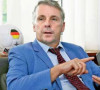
German Ambassador to Kosovo Jorn Rohde pointed out that Kosovo had to fulfill a ten-year-old obligation and allow the establishment of the Community of Serb-majority Municipalities and expressed his belief that all EU member states would recognize Kosovo if relations between Beobrad and Pristina were normalized.
In an interview with Radio Free Europe, he encourages the leaders of Kosovo and Serbia, Albin Kurti and Aleksandar Vucic, to use the March 18 meeting in Ohrid to reach an agreement on the implementation of the EU plan for the normalization of relations.
In the absence of constructive parties, Rohde warns of the possibility of sanctions from the EU, but also that the parties have been promised additional investments as a reward for progress in the dialogue.
He emphasizes that Kosovo must fulfill the ten-year-old obligation to establish the Community of Serb-majority Municipalities.
This weekend, the leaders of Kosovo and Serbia are expected to meet in North Macedonia to discuss the implementation annex of the agreement, known as the EU proposal. You said the parties should not "miss the boat" for this upcoming meeting. Why?
Because time is not on the side of Kosovo and Serbia. We must overcome this constant confrontation with crises. All 27 EU countries and the US have invested a lot. Last week you know that the Prime Minister of Italy, the President of France, and the German Chancellor sent a letter to the two leaders in which they emphasized the importance of this agreement.
I am glad that on February 27, the President of Serbia, Aleksandar Vucic, and the Prime Minister of Kosovo, Albin Kurti, agreed in principle on this European proposal, which was initiated by France and Germany.
However, we heard different expectations from the leaders of Kosovo and Serbia for the meeting in Ohrid. How do you comment on this?
And we have to overcome this continuity, “I know what I don't want”. I think that's the dynamic we're trying to build into the parties. We must agree on what we can achieve together. This is a good thing. We have a base. And now we have an implementation annex. We made it clear what we expected from Kosovo, just like the European Envoy for dialogue between Kosovo and Serbia, Miroslav Lajcak, who works hard and has our full support, who made it clear yesterday that without the formation of the Community of Serb-majority Municipalities, there was no agreement.
On the other hand, Serbia must also agree that Kosovo is a neighbor and has a European future. And Kosovo has a lot to gain.
Past experience has taught us that many agreements reached in Brussels have not been implemented. There were many subsequent agreements and guidelines for their implementation. Why do you think the EU plan will be different?
Because I think the glass is half full now. I mentioned before some of the leaders who support it, that there is full synchronization between the EU and the US. We made it clear that time was of the essence. We have a war in Europe. We can no longer endure this constant confrontation with crises, tables, barricades, and elections.
So we need an agreement on March 18th. This is an agreement, which is on the table and must be implemented.
I fully agree with you that many agreements in the past have not been implemented. That's why we're so eager to make it work this time. For this reason, the highest political level stands behind this agreement.
Can the parties from this proposal choose what to implement and what not to implement?
Of course, it ultimately depends on the parties involved, but the basis is what was agreed upon on February 27th. And now, the more detailed implementation comes. Of course, there are sequences, and there are more nuances, which can be discussed, but the implementation annex, given by Lajcak, is the basis of the agreement. I emphasize again that it is important for Kosovo to establish the Community of Serb-majority Municipalities, which is an almost ten-year-old obligation.
You made it clear to everyone and our friends here, in Kosovo, the red line that there was no possibility of another Republika Srpska.
Any solution must be in accordance with the Constitution of Kosovo and must be the basis of the 2013 and 2015 agreements ratified by Kosovo. Another thing we see is that we already have parallel structures and the situation has not gotten better, but worse. Kosovo Serbs left the institutions, so we have a bad situation. By founding the Community, we hope to integrate Kosovo Serbs into the state. This is a good development; I see it from this perspective.
You mentioned that there could be an enforcement sequence. Do you think there is room for renegotiation, for example for the Community?
I can't speak for the actors, but I said that the details should definitely be discussed. The various details are all based on what Lajcak developed. And, as I said, Kosovo had a lot to gain; de facto recognition, territorial integrity, recognition of all state documents and symbols, and overcoming the past based on European values. This is a big step forward; it is not the end, but I think it puts both sides on the European path. And, I repeat, to overcome continuous crisis management.
One of the articles of the European proposal states that Serbia will not oppose Kosovo's membership in any international organization. But Serbian President, Aleksandar Vucic, said that he would never accept Kosovo's membership in the United Nations.
I do not comment on what is not possible, but I want to comment on what is possible. And when Serbia and other actors accept the paragraph that they will not block Kosovo's membership in international organizations... I am not aware that Serbia has a veto in the United Nations.
What can you say about other international organizations?
We can't talk about it, but I think if there's a dynamic that the two countries agree on, I don't think third parties would contaminate it. Earlier it was said that some countries did not recognize Kosovo within the European Union. I have a lot of hope and we are constantly in contact with them. I hope a positive result on March 18 will unlock that issue as well. There are no guarantees, but I see no reason for non-recognition when Serbia and Kosovo have de facto recognition.
Were there any internal discussions or was there any tangible change in the attitudes of the countries that did not recognize Kosovo in case the agreement was implemented?
You would have to talk to these countries, but I have 100% hope based on my own national experience. I grew up in a divided Germany and as West Germany; we did not recognize East Germany.
But as soon as the basic agreement between these two states was reached, all the states that did not recognize East Germany then did so. All the states that did not recognize Kosovo said that, if there was a positive dynamic for the normalization of relations, they would reconsider their position.
So that's pretty much a "smack" for me. If you have an ideal result, there will be countries that will recognize Kosovo, I am very sure. That was why it was very important to cross the line and not miss the boat, as I said before.
Can we talk specifically about Germany? Did Germany promise Kosovo aid for membership in international organizations?
You see, we are among the closest allies of Kosovo. We also invest a lot on a human level, we have close relationships. You know, almost half a million Kosovar Albanians live in Germany. We are the biggest foreign investor, the biggest source of remittances, trade partner... Of course, we talk to our partners and that's why I hope.
However, I cannot give guarantees, each country decides for itself. But at first, it is difficult to answer hypothetical questions.
First, we have to cross the lines on March 18 in Ohrid and both sides are required to be willing to give more - for Kosovo, regarding the Community of Serb-majority Municipalities, and for Serbia, to accept that Kosovo exists and has a European perspective.
We talked about the benefits. What could be the consequences for both countries if they are not constructive in these meetings?
Again, that's a hypothetical question. But of course, there are consequences. I mean, in the last few months, the leaders in Europe have invested a lot. There were meetings and you have to take into account the geopolitical situation, we have a war in Ukraine.
There are many challenges and therefore the Western Balkans belongs to Europe, but we really have to put an end to this continuous crisis management. There will be consequences, there will be less focus. If you cannot resolve the conflict, then why should our leaders continue to do so?
It's war again and now we've seen that a solution is on the table and I think they expect both sides to accept it and work hard on it.
In a previous interview with RFE/RL, Prime Minister Kurti said that possible consequences had been discussed if the parties were not constructive in the dialogue. Is there anything concrete that was said to Serbia or Kosovo as an incentive for constructiveness in the dialogue?
There is a promise of additional support and investment. And if there is a failure, then there is no additional support. And, you know, it's just a consequence.
Will it be easier to access international organizations? No, it won't be. It will be more difficult. The road to Europe is between this proposal and we want both countries to be part of Europe. The entire Western Balkans belongs to the EU. Most countries are already in NATO.
Kosovo wants to become part of NATO. To achieve this, you must convince all member countries that you are a constructive partner.
The proposal, as announced, did not mention the "de jure" recognition of Serbia. Do you think normalization is possible without mutual recognition?
Everyone made it clear that this was an intermediate step, but a very important one because it set in motion the dynamics leading to full normalization.
Mutual recognition is the final stage for us. But, for now, this is the best deal you can get and it has many benefits, which I mentioned to you, and it is the end of Serbia's attempt to block Kosovo from joining international organizations.
0 comments