
Armistice Day in World War I – Remembering one of the greatest ordeals in the history of the Serbian people
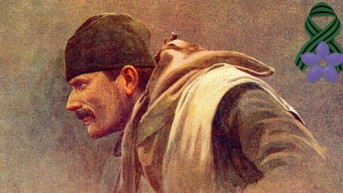
On the day when an armistice with Germany was signed in the forest near the French town of Compiegne, bringing the Great War to an end, the world remembers the victims and celebrates the freedom won in what had until then been the largest conflict in history. Although the Serbian Army continued fighting on the Salonica Front even after November 11, 1918, Serbia also marks this day as a reminder of a tragedy permanently etched into its collective memory—Serbia paid a heavy price for its freedom, emerging from the war having lost 28 percent of its population.
Written by: Jovana Jovanovic
On this day in 1918, an armistice between the Central Powers and the Allied Powers was signed in Marshal Ferdinand Foch’s special railway carriage near the French town of Compiegne. The armistice remained in force until the final peace agreement was concluded at Versailles on June 28, 1919.
On the Western Front, it meant a ceasefire, the withdrawal of German troops, the exchange of prisoners, as well as agreements concerning war reparations and the destruction of German warships and submarines. The Serbian Army fought on the Southern Front, where it achieved the greatest breakthrough accomplished by any of the Allied forces—the breakthrough of the Salonica Front.
Serbia was the first country attacked in the war, achieved the first Allied victories at Cer and Kolubara, and was the last to conclude its military operations. In proportional terms, it suffered the greatest losses among the countries that participated in the First World War.
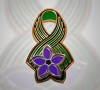
The symbol of the holiday is the Natalie's Ramonda, also known as the phoenix flower, because even after completely drying out it can revive following rainfall or a small amount of water. It was named after Queen Natalie.
Of particular significance to the Serbian people
Historian Milos Spasic told Kosovo Online that the date held particular significance for the Serbian people, adding that younger generations were showing growing interest in researching history and preserving the memory of events that shaped Serbian history.
“The emblem or symbol of Armistice Day is the Natalie's Ramonda, featuring the flower named after Queen Natalie. It is a most beautiful flower. Queen Natalie herself is also considered to have been one of Serbia’s most beautiful queens. Around the Natalie's Ramonda is a black-and-green ribbon, the same colors found on the Albanian Commemorative Medal. Black symbolizes mourning, while green represents the color of the olive trees, like those found on the island of Vido,” Spasic explained.
He pointed out that younger generations were showing increasing interest in researching history and preserving the memory of events that had shaped the Serbian people.
“This date has been commemorated since 2016, and since then young people have become more familiar with Armistice Day, or, as it is also known among the Serbian people, Victory Day, because it is said that the Serbs did not simply lay down their arms or reconcile themselves to defeat—they emerged victorious from the First World War. Among younger generations in particular, there is a new drive to explore history further and preserve the memory of the historical events that shaped the Serbian people,” Spasic stressed.
According to him, the date is also important for preserving national consciousness and passing the memory of historical victories on to younger generations.
“This date is extremely significant for the Serbian people, precisely because of the victory in the First World War, but also because it marks Armistice Day, when the guns fell silent and the armies ceased fighting. This subsequently gave rise among Serbs to renewed efforts to preserve and commemorate our victories in the First World War. Most importantly, among younger generations as well as older ones, there is a growing national awareness of the need to preserve commemorations such as this,” Spasic added.
One of the greatest ordeals in the history of the Serbian people
Historian Petar Ristanovic noted that Armistice Day in the First World War represented one of the most significant dates in the modern history of the Serbian people, as it symbolized the restoration of Serbian statehood, victory after immense suffering and the fulfilment of a generational dream of unification.
“Today we celebrate the day when Serbia formally restored its statehood and, after going through the hell of the First World War, emerged victorious. The Serbian people emerged victorious and, in a sense, fulfilled their generational dream—that all Serbs, as well as the neighboring peoples who were regarded at the time as brotherly Slavic peoples, should be united in a single common state,” Ristanovic told Kosovo Online.
He said the holiday commemorated one of the greatest ordeals in the history of the Serbian people, particularly in their modern history.
“This is a holiday that speaks of what was perhaps the greatest ordeal in the history of the Serbian people, certainly in their modern history. In 1914 and 1915, the Serbian state essentially ceased to exist, although our government and king never acknowledged this. What followed was an epic ordeal rarely seen anywhere in the world: the government and the king, even the relics of saints, the entire National Assembly and the people went into a collective exodus, from which freedom was reborn after three long years of warfare,” Ristanovic said.
According to him, this bears witness to the extraordinary perseverance, determination and will of the Serbian people to defend the land on which they have lived for centuries and on which they wish to remain.
Speaking about relations between Serbs and Albanians and their differing perceptions of the events of that period, Ristanovic noted that during the First World War, as in the wars that preceded and followed it, the two peoples were largely on opposing sides.
“As far as Serbs and Albanians specifically are concerned, in that war, as in the subsequent war and the earlier period under Ottoman rule, they mostly found themselves on different sides. There are therefore different perceptions of the events during and after the war, although those differences are far less pronounced than they are regarding the events of the Second World War,” he said.
Ristanovic added that for Serbs, the end of the First World War represented the fulfilment of a generational dream, while Albanians viewed the events of 1918 differently.
“For the Serbs, it was the fulfilment of a generational dream, while Albanians view what happened in 1918 as a historical injustice, completely disregarding the fact that they found themselves on the side that did not emerge victorious from the war,” Ristanovic said.
Residents: We paid a heavy price in lives for victory; the day should be commemorated
Armistice Day in the First World War, observed as a national holiday and non-working day since 2012, is also a day off for employees of institutions operating within the Serbian system in Kosovo, while private businesses operate as usual. Residents of North Mitrovica themselves express differing views on the importance of commemorating the date and on whether it should also be a non-working day within the Kosovo system.
Marko Aleksic will spend the day off at home.
“Today is Armistice Day. We commemorate victory in the First World War. We paid for it with many lives. It is only natural that it should be commemorated as a holiday,” Aleksic said.
Unlike him, a vendor at Mitrovica’s small market said that there were no days off for people like him and that he would continue selling his produce the following day.
“What was it again—Liberation Day, what was it? I’ve forgotten. It’s on the tip of my tongue, but I can’t remember. We’ll work tomorrow as well. There are no days off for us. For a farmer, for someone who works the land, there can be no day off. I’m no gentleman. I knew which holiday it was, but I’ve forgotten,” he said.
Abedin Osmani, an Albanian who was walking through North Mitrovica, expressed a different view on whether Armistice Day should be a non-working day in Kosovo. He believes that the holiday should be commemorated throughout Europe, including by both Serbs and Albanians.
“The whole of Europe was at war, so this is a holiday for everyone. We defeated fascism. We were together with the Serbs and with other nations in Europe, and thank God we won, but afterwards we began destroying things ourselves. We already have so many non-working days in Kosovo that it would be good for this one to be included as well, because we observe every European holiday—even some that we perhaps should not, and that they themselves do not observe, while we do. That is why I think that, since there are already so many, this one should also be a non-working day,” Osmani said.


0 comments