
Armistice Day commemorated; Spasic: Of particular significance to the Serbian people
Serbia and countries around the world are marking Armistice Day today, commemorating November 11, 1918, when the signing of the armistice between the Allied Powers and Germany brought the Great War to an end, a conflict in which more than 17 million people were killed and around 20 million wounded. Historian Milos Spasic told Kosovo Online that the date held particular significance for the Serbian people, adding that younger generations were showing growing interest in researching history and preserving the memory of events that shaped Serbian history.
The armistice between the Allied and Central Powers was signed at 11 a.m. on November 11 in Marshal Ferdinand Foch’s special railway carriage near the French town of Compiegne.
“The Allied Powers included the Kingdom of Serbia, Great Britain and France, while on the opposing side were Germany, Bulgaria and Austria-Hungary, the principal enemy of the Kingdom of Serbia. Following the breakthrough of the Salonica Front came Armistice Day, after Germany’s capitulation,” Spasic recalled.
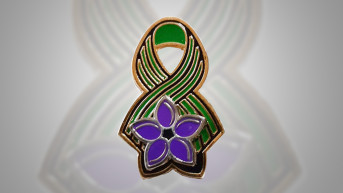
One of the most recognizable symbols of the commemoration in Serbia is the Natalie's Ramonda, a flower worn in remembrance of the suffering and victory of the Serbian people in the First World War.
“The emblem or symbol of Armistice Day is the Natalie's Ramonda, featuring the flower named after Queen Natalie. It is a most beautiful flower. Queen Natalie herself is also considered to have been one of Serbia’s most beautiful queens. Around the Natalie's Ramonda is a black-and-green ribbon, the same colors found on the Albanian Commemorative Medal. Black symbolizes mourning, while green represents the color of the olive trees, like those found on the island of Vido,” Spasic explained.
He pointed out that commemorating Armistice Day helped younger generations learn more about significant historical events and fostered remembrance of the past.
“This date has been commemorated since 2016, and since then young people have become more familiar with Armistice Day, or, as it is also known among the Serbian people, Victory Day, because it is said that the Serbs did not simply lay down their arms or reconcile themselves to defeat—they emerged victorious from the First World War. Among younger generations in particular, there is a new drive to explore history further and preserve the memory of the historical events that shaped the Serbian people,” Spasic stressed.
According to him, the date is also important for preserving national consciousness and passing the memory of historical victories on to younger generations.
“This date is extremely significant for the Serbian people, precisely because of the victory in the First World War, but also because it marks Armistice Day, when the guns fell silent and the armies ceased fighting. This subsequently gave rise among Serbs to renewed efforts to preserve and commemorate our victories in the First World War. Most importantly, among younger generations as well as older ones, there is a growing national awareness of the need to preserve commemorations such as this,” Spasic added.
The armistice remained in force until the final peace agreement was concluded at Versailles on June 28, 1919.
On the Western Front, it meant a ceasefire, the withdrawal of German troops, the exchange of prisoners, as well as agreements concerning war reparations and the destruction of German warships and submarines. The Serbian Army fought on the Southern Front, where it achieved the greatest breakthrough accomplished by any of the Allied forces—the breakthrough of the Salonica Front.
Serbia lost 1.24 million people in the First World War, equivalent to 28 percent of its total population according to the 1914 census.
It was also the first country attacked in the war and achieved the first Allied victories at Cer and Kolubara. Serbia was the last to conclude its military operations and, in proportional terms, suffered the greatest losses of any country in the First World War.
The symbol of the holiday, the Natalie's Ramonda, is known as the “phoenix flower” because even after completely drying out, it can revive after rainfall or a small amount of water.
It is an endangered species that grows in eastern Serbia and on Nidze Mountain, including its highest peak, Kajmakcalan, where the Serbian Army, under the command of Field Marshal Zivojin Misic, fought fierce battles while creating the conditions for the eventual breakthrough of the Salonica Front.
In Serbia, a country that lost almost one-third of its population in the First World War, November 11 has been observed as a national holiday since 2012, while the United States marks the date as Veterans Day in honor of all military veterans.
In the United Kingdom, Canada, Australia and France, the day is dedicated to remembrance of veterans of both the First and Second World Wars.
Particular attention is devoted to the commemoration in the United Kingdom and other Commonwealth countries. In the period leading up to the day, a large proportion of the population—particularly government officials, public servants, media professionals and other members of the public—wear stylized poppy flowers on their lapels.
The red-and-black wild poppy, which according to poetry and tradition was among the first flowers to grow after the war on the fields of Flanders, where millions of soldiers lost their lives, is also distributed to foreign participants attending commemorations at military cemeteries.
Russia marks Victory Day in the Second World War in a similar manner, when volunteers, generally young people, distribute orange-and-black St. George ribbons—the colors associated with the Order of St. George—on city streets.



0 comments