
Military cemetery in Pristina: A place of remembrance and sacrifice, but also a site of political disputes
The Serbian-French military cemetery in Pristina, where soldiers killed in the Balkan Wars and the First World War are buried, bears witness to a shared history, suffering and alliance, but also to attitudes toward the past. This became particularly evident in 2023, when the relocation of a memorial plaque dedicated to Serbian soldiers prompted public reactions and raised questions about the preservation of historical memory.
Written by: Milena Maksimovic
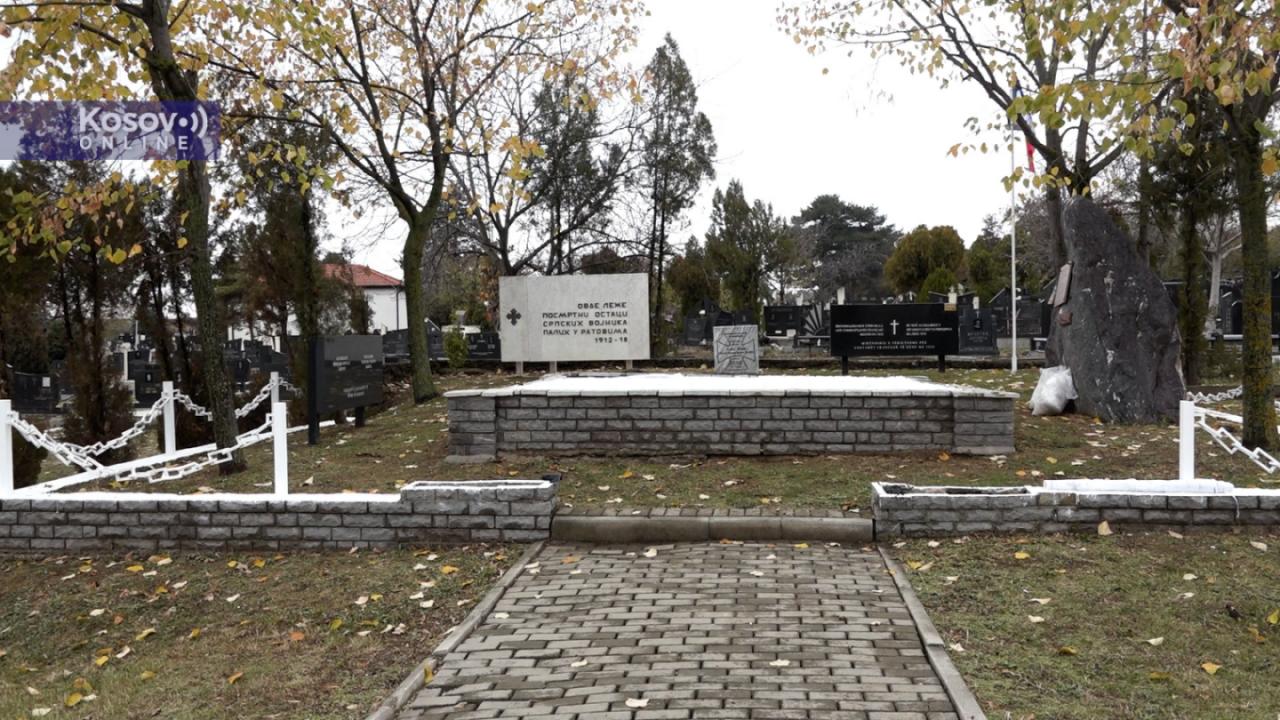
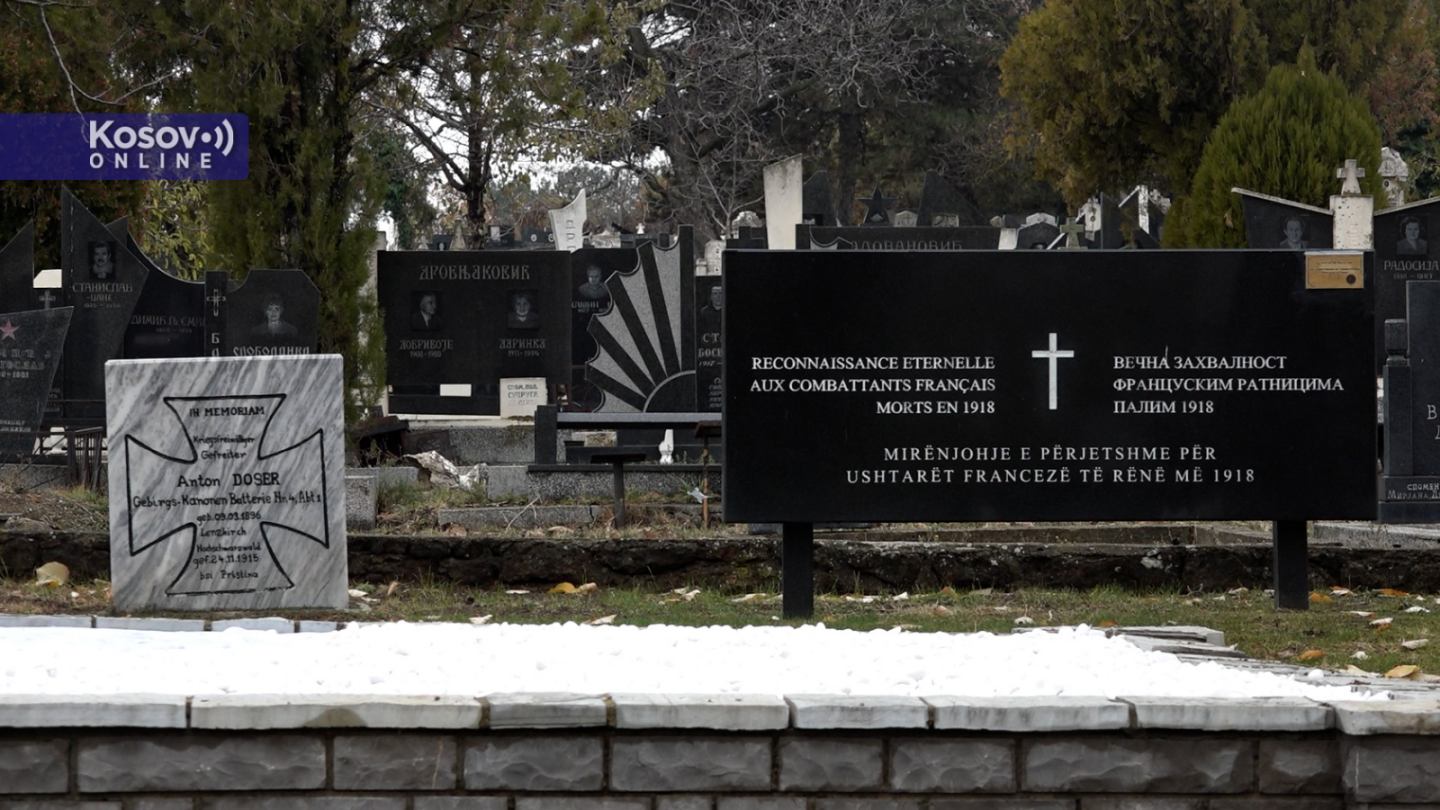
The Serbian-French military cemetery in Pristina, located within the city’s Orthodox cemetery, is a unique memorial complex containing the remains of Serbian soldiers killed in the Balkan Wars and the First World War (1912–1918), alongside members of the French forces who lost their lives in Kosovo during the First World War and, much later, as part of the post-war KFOR peacekeeping mission, as well as one Austro-Hungarian soldier, Anton Dozer.
Historian Aleksandar Gudzic points out that after the First World War, considerable public attention was devoted to the military cemetery, but that following the Second World War the memorial complex lost much of its significance.
“It was not until 1984 that it was properly arranged and a memorial plaque was installed. Up until the war, the local association dedicated to preserving the memory of the wars of liberation from 1912 to 1918 had a specific plan and program and commemorated the anniversary of the end of the First World War at the cemetery,” Gudzic said.
The complex is also notable as the site where the French and German embassies jointly commemorate Armistice Day in the First World War every year on November 11.
“Serbian and French soldiers are buried there, as is one Austro-Hungarian soldier, Anton Dozer. We also have material evidence confirming that he was buried there. Following the Second World War, France placed great emphasis on friendship with Germany, and the French ambassador considered it appropriate for the French and German ambassadors to appear together at the military cemetery in Pristina on Armistice Day. In a sense, this was intended as a political message of Franco-German friendship. In fact, the event demonstrates that the culture of remembrance is an important resource in politics, including day-to-day politics,” Gudzic said.
Historical memory in the shadow of politics
He recalled the events of 2023, which caused confusion and concern among the Serbian public, when, at the initiative of the French and German embassies in Pristina, the memorial to soldiers who fought in the Balkan Wars and the First World War was relocated ahead of the November 11 Armistice Day commemoration, without the knowledge of the Diocese of Raska and Prizren.
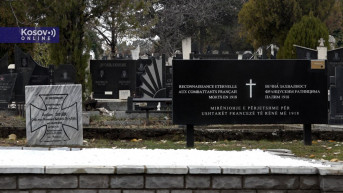
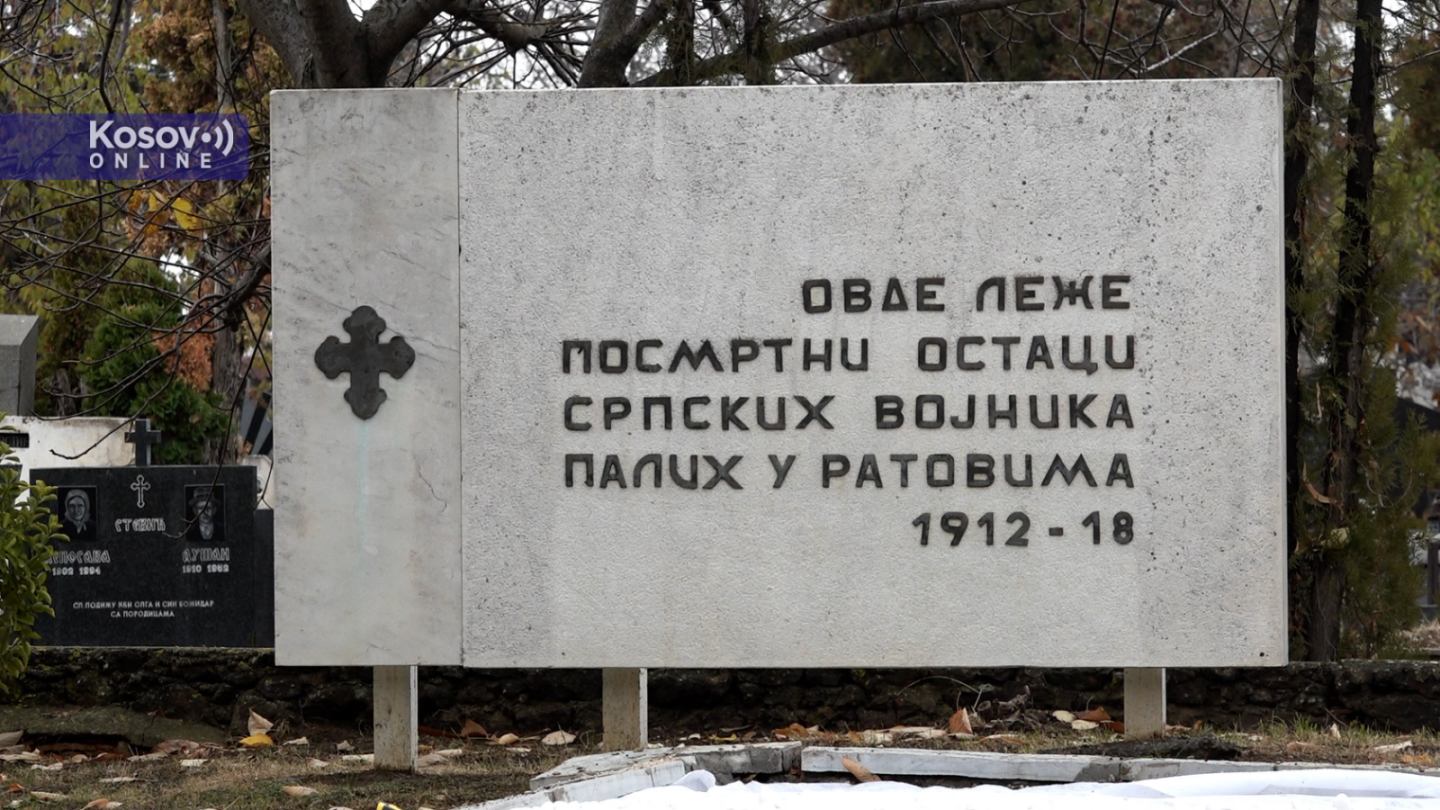
At the time, the white memorial plaque dating from 1984, which bore a cross and the inscription, “Here lie the mortal remains of Serbian soldiers who fell in the wars of 1912–1918,” was replaced by a black marble plaque bearing an inscription in French, Serbian and Albanian reading: “To the French soldiers who fell in Kosovo.”
“They installed a plaque at that location intended to preserve the memory of French soldiers who lost their lives in the First World War in this region, but also of KFOR soldiers who died after 1999,” Gudzic recalled.
Following public pressure and a petition launched by a group of non-governmental organizations and individuals, the white memorial plaque was returned to its original location.
Gudzic stressed that history in Kosovo had long been subject to political misuse.
“Albanian media in Kosovo seek, through linguistic discourse and narrative, to carry out a form of historical revisionism, concerning both the more distant and the more recent past,” he said.
A cemetery that still bears the scars of war
Gudzic also noted that the cemetery in Pristina was maintained to some extent, but that the consequences of the wars of the 1990s remained visible in the Orthodox cemetery.
“There are many destroyed monuments, and traces of the wars of the 1990s, when the cemetery was bombed, are also visible. We can say that the local authorities in Pristina maintain the cemetery, but traces of everything that happened during the 1990s can still be seen there,” he said.
Gudzic stressed that the First World War, and consequently the monuments commemorating that major historical event, represented an important element of Serbian collective memory.
“If we accept Ernest Renan’s view that a nation is a community of memory—that nations are founded upon shared memories—then history is an important resource for every nation. What defines and identifies us as Serbs is precisely the memory of great victories, but also great defeats, of immense suffering, but also great periods of advancement in the past. The First World War is an important event in the history of the Serbian people. It forms part of the national identity. It marked immense suffering, but also the resurrection of Serbia and a great victory,” Gudzic said.
Pristina as Serbia’s wartime center in 1915
He also noted that Pristina had considerable strategic importance during the First World War.
“During the First World War, particularly in 1915 and during the famous retreat of the Serbian Army, Pristina played an important role as one of the centers and cities through which the Serbian Army withdrew. At one point, Pristina was also Serbia’s wartime capital. For a period in 1915, King Peter, Regent Alexander, the government and the army were all in Pristina—the entire state and its administrative apparatus were there. Following the withdrawal of the Serbian Army, Pristina was occupied by Bulgarian units of the Central Powers, and was subsequently placed under Bulgarian control as part of the Bulgarian occupation zone,” he said.
Later, during the Second World War, following the collapse of the Kingdom of Yugoslavia in April 1941, Pristina became part of the Italian occupation zone.
“It was under Italian occupation. In fact, it formed part of the puppet Greater Albania, which itself was a puppet of Fascist Italy. Following Italy’s capitulation in 1943, Pristina came under the German occupation zone. The city again assumed considerable importance in 1944 during the withdrawal operations of German army groups in the Balkans as they retreated from Greece toward Germany. At that point, Pristina had exceptionally important strategic significance for the Axis powers,” Gudzic concluded.



0 comments