
The Brussels Agreement 13 years on – high expectations, today “further away” than ever
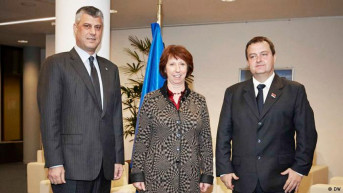
The Brussels Agreement, signed on this day in 2013 and at the time described as “historic,” raised hopes that relations between Belgrade and Pristina—and above all between Serbs and Albanians in Kosovo—would improve. However, even 13 years later, Pristina has not established the Community of Serb-majority Municipalities (CSM), which constitutes the core of the document, while the European Union, as guarantor of the agreement, has been unable or unwilling to compel its implementation. As a result, analysts conclude that expectations were high, but that today “we are further away from the Brussels Agreement than ever.”
Written by: Katarina Saicic
The CSM was conceived as the most important political instrument for protecting the collective rights of Serbs in Kosovo. However, the implementation of the six points relating to it effectively stalled shortly after the agreement was signed, when then Kosovo President Atifete Jahjaga referred the issue to the Constitutional Court for review of its constitutionality.
While the Pristina side “lowered the barriers,” Belgrade fulfilled all of its obligations. Nevertheless, this did not lead to progress.
From today’s perspective, Serbian President Aleksandar Vucic acknowledged in an interview for Kosovo Online that it is “embarrassing” to note that six out of ten provisions of the agreement relating to the CSM remain unimplemented—although, he stressed, the responsibility does not lie with him but with those who guaranteed the agreement, namely the European Union.
Recalling that 13 years have passed without implementation, he described 19 April 2013 as a difficult day marked by compromise under near-impossible conditions, adding that the Brussels Agreement was “the least bad option” available at the time.
Kosovo Prime Minister Albin Kurti rarely mentions the agreement, but his position is well known—he has opposed the establishment of the CSM since its inception and, since coming to power, has taken no steps toward its creation.
Between these two positions stands the European Union, from which calls are frequently heard urging implementation of agreed obligations, but without tangible consequences for Pristina—something that is evidently interpreted as tacit permission for inaction.
EU Interest
Program Manager of the NGO “New Social Initiative,” Milica Andric Rakic, says that the Brussels Agreement remains primarily an issue for the EU, as it has the strongest interest in resolving relations between Belgrade and Pristina in order to proceed with enlargement in the Western Balkans.
“Almost everyone mentions the Brussels Agreement. It is still a topic in Belgrade, Pristina, and the European Union—perhaps most of all for the EU, because both Belgrade and Pristina have lost motivation for dialogue. Belgrade has not been able to gain anything from it for some time, while Pristina achieves more through actions outside the dialogue. In practice, it is the EU that has the greatest interest in resolving relations so that it can continue the enlargement process,” she said.
However, she adds that the frequent references to the agreement do not mean that the dialogue is in a “good phase”—on the contrary, it has effectively ceased to function.
High Expectations
Former Kosovo diplomat Silje Ukshini recalls that expectations were high on both sides at the time the agreement was signed.
“When the agreement was signed, I worked at the Ministry of Foreign Affairs. Expectations were high in both Serbia and Kosovo. Politicians believed that dialogue would lead to normalization, but there were two problems,” Ukshini said, noting that the Self-Determination movement, then in opposition, opposed the CSM, while Aleksandar Vucic understood that a final agreement on normalization was necessary.
He also referred to the ongoing trials of KLA leaders in The Hague, assessing that if convictions occur, no prime minister would have the political courage to establish the CSM, given the perception in Kosovo that the Special Court represents “betrayal.”
Although he considers the Brussels Agreement a solid foundation, Ukshini believes that the EU, Serbia, and Kosovo have lost momentum following global crises—from the war in Ukraine to conflicts in Gaza and the broader Middle East.
“International developments are not working in our favor, and I am somewhat skeptical about progress in the dialogue,” he said.
“Kurti Will Never Implement the CSM”
Historian Stefan Radojkovic has no doubt that Pristina does not intend to implement the agreement and that the government of Albin Kurti will neither move toward nor implement the CSM.
“It seems Serbia mentions the agreement the most, while the EU does so to a lesser extent, even though it should guarantee its implementation. Pristina not only avoids referring to it but is actively working to strip it of meaning and to alter realities on the ground so that it becomes irrelevant—a dead letter,” Radojkovic said.
He added that, despite EU insistence—partly driven by concerns over its own credibility—the agreement ranks relatively low among EU priorities given its broader security and foreign policy challenges.
“There will be a form of shuttle diplomacy by EU representatives such as Peter Sørensen, but there are fewer and fewer levers and incentives—whether through sanctions or rewards—to encourage Pristina to adhere to the agreement. Legally speaking, Serbia could, if it chose, withdraw from these agreements,” he emphasized.
Nevertheless, he notes that this remains a matter of political judgment, stressing that Kurti has consistently adhered to his ideological positions since 2004.
“From him and his government, one cannot expect any movement toward establishing the CSM. It is illusory to believe otherwise,” Radojkovic concluded.


0 comments