
Brussels assessed Kosovo as the worst in the region, far from candidate status
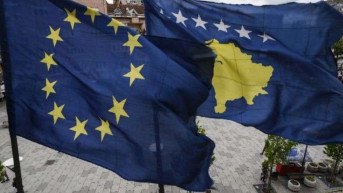
The European Commission was very critical of Kosovo in this year's report, stating that the situation in key areas such as the judiciary, the fight against corruption and crime remains worrying, and that relations with the Serbian community have "significantly deteriorated". However, representatives of the Kosovo Government complain that they have been unfairly rated worse than everyone else in the region. They argue that it is unfair for Bosnia and Herzegovina to have already been granted candidate status, and now a recommendation to start negotiations, while Kosovo is still "on hold". Kosovo's Deputy Prime Minister Besnik Bislimi went a step further, claiming that Kosovo did not need to recognize five EU member states to achieve candidate status.
Experts speaking to Kosovo Online see the negatives recorded by the European Commission against Albin Kurti's Government as another form of pressure on Pristina to make progress in the dialogue with Belgrade. They view Bislimi's "optimism" solely as a message for the domestic audience.
However, Bislimi includes increased budget revenues and employment, reduced levels of public debt, and improvements in the free movement of goods, services, and capital among the successes of the Kosovo Government.
The President of the Commission for European Integration, Rrezarta Krasnicqi, stated that Kosovo was the last in the integration process among the ten countries aspiring to join the EU, assessing that it was very difficult to understand why Bosnia and Herzegovina deserved candidate status, but Kosovo did not.
The European Commission had a different view of Kosovo's progress, noting "limited progress" (which is a negative assessment in the European Commission’s language) in the judiciary, the fight against corruption and organized crime. It was also stated that the Kosovo Government's relations with the Serbian community "significantly deteriorated". The report highlighted the particularly concerning state of media freedom in northern Kosovo, where the majority of the population was of Serbian nationality. The dialogue with Serbia was emphasized as crucial for progress on the European path.
The President of the Democratic Party of Kosovo, Memli Krasniqi, said that the word "corruption" was mentioned 99 times in the 133 pages of the European Commission's report on Kosovo. He stated that Kosovo was experiencing "institutional corruption, enrichment of state officials, civic poverty, and the regression of the state".
A researcher at the Institute for European Studies, Petar Milutinovic, says that the latest report from the European Commission on Kosovo, where it was rated the worst in the region with a significant "minus" for not fulfilling obligations in the dialogue with Belgrade, objectively reflects the situation. He suggests that the authorities in Pristina should take this into account if they want progress towards the EU.
Milutinovic, speaking to Kosovo Online, points out that the report is clear that Kosovo has not achieved what it was supposed to do regarding the normalization of relations with Belgrade.
"This would mean that the implementation of the agreements from Brussels and Ohrid from this year should have finally started. We see that the Pristina authorities are not interested in that, unfortunately, they prefer to declaratively fulfill the form, and the substance is not the main issue", he says.
Asked whether this confirmed the thesis that Kosovo Prime Minister Albin Kurti was causing numerous political and security crises in the north to hide failures in key areas of reforms, Milutinovic stated that "he is a skillful politician who wants to gain the trust of his voters because it seems that the end of his political career is approaching, so he is very interested in making very radical moves".
"They are not in the spirit of regional cooperation and good neighborly relations. This is also an important imperative that the entire region is geopolitically oriented towards EU accession. It is of paramount importance to form the Community of Serb-majority Municipalities, as insisted by the US, and It is now on the ground for Albin Kurti, of his Self-Determination, to finally gather the Serb List, to bring back the Serbs to institutions, legislative, judicial, security, and then to meet Belgrade in forming the CSM, with the conduct of elections in the four municipalities in the north", our interlocutor emphasizes.
He claims that Bislimi is not correct when he says that Kosovo does not need recognition from five EU member states to obtain candidate status.
"The consensus among all 27 EU member states is necessary when it comes to enlargement. Bosnia and Herzegovina obtained candidate status last year at the European Council, which brings together heads of state and governments. For now, Kosovo has received visa liberalization, which will come into effect on January 1, as a form of a 'carrot' before obtaining candidate status. Of course, this depends on the five EU member states that have not recognized Kosovo. Spain, Romania, Greece, Cyprus, and Slovakia must present a stance at the European Council for Kosovo to obtain candidate status. Until that happens, Kosovo should be satisfied with visa liberalization", our interlocutor emphasizes.
He states that the European Commission report on Kosovo shows some limited progress in six areas, which are now divided into clusters according to the new, revised enlargement methodology agreed upon by the Pristina authorities.
"In all of these domains, and in the domain of the internal market and external relations, Kosovo has made some limited progress, which is a relatively poor, low grade. When we look at the European Commission report on Serbia, limited to certain progress is noted, which is a better rating, a better indicator of progress", Milutinovic points out for Kosovo Online.
Regarding Kosovo, he points out that in many areas, there is still some room for improvement, especially in the reform of democratic institutions, the fight against crime, and terrorism, and judicial reform.
"This is the condition of all conditions in the entire accession process and based on which the progress of the entire society is further measured. In other words, the statehood that exists there, we cannot say that there is a state in the true sense of the word, but a form of contested statehood functions. There is a special political system, with legislative, executive, and judicial power de facto, and that is something that allows Kosovo to base its sovereignty, which also exists according to the Stabilization and Association Agreement from April 2016. That agreement is completely different from ours; it envisages a political dialogue that should be conducted between EU member states and Kosovo, but also recommendations for reforms", Milutinovic says.
Sociologist and political analyst from Pristina, Artan Muhaxhiri, emphasized that "limited progress" was the phrase most frequently mentioned in the European Commission's Report on Kosovo, and he saw it as a kind of warning for the Kosovo Government. He believes that dialogue with Serbia is the foundation for Kosovo's progress towards the EU.
"The European Commission's reports show two elements. First, they are quite realistic, based on objectivity, and it is very difficult to refute them. Then, they show indicators for the European orientation of countries in our region, the conditions they should meet, standards, criteria, and corrections to progress on their European path. This report is good because it reflects the situation, and it should be an additional motivation for the government to do even more. The phrase that is most repeated is 'limited progress', and that is the reality. Even though Kurti's party had a significant advantage after the elections, in the context of the parliamentary majority, the composition of the government, and the presidency, extraordinary progress has not been achieved. But in many areas, certain shifts can be observed. This report is a welcome reminder for Prime Minister Kurti to work even better and more dynamically in the next mandate", Muhaxhiri stated for Kosovo Online.
As he pointed out, without reaching an agreement with Serbia, there would be no substantial progress. Therefore, it was crucial for the international community to motivate the parties with a well-known method - "carrot and stick".
"Effective dialogue between Kosovo and Serbia is the foundation for European progress and the main condition and prerequisite to move forward because without reaching an agreement between Serbia and Kosovo, there will be no qualitative progress in the region. Kosovo and Serbia are politically and emotionally connected to neighboring countries: Albania, Bosnia and Herzegovina, and Montenegro. The effect of an agreement between Kosovo and Serbia would be very influential geopolitically, and that's why the insistence of the international community - 'carrot and stick' - is significant to motivate the governments in both Pristina and Belgrade to engage more concretely. Any slowdown in progress on the path will be very harmful to Kosovo, Serbia, and the entire region", Muhaxhiri added.
In response to the question of whether Kosovo politicians have a valid reason to express dissatisfaction over Bosnia and Herzegovina being given the green light to start EU membership negotiations while Kosovo has not even initiated talks for candidate status, Muhaxhiri states that the situation between Kosovo and Bosnia and Herzegovina is entirely different.
"Kosovo and Bosnia and Herzegovina cannot be compared. Bosnia and Herzegovina has progressed on the European path, while Kosovo has issues with five EU countries that have not yet recognized it. Bosnia and Herzegovina is a member of the United Nations, whereas Kosovo is not, and so on. Therefore, I believe it is not realistic to expect Kosovo to progress in this comparative dynamic. Instead, Kosovo needs to be maximally engaged in dialogue. The gains from the dialogue should be achieved in such a way that, after its conclusion, both Serbia and Kosovo have a European integration agenda as their primary orientation, as without that, political normalization in our region will not be established", Muhaxhiri said.
He believes it is unrealistic to expect Kosovo to obtain EU candidate status until all five EU member states recognize Kosovo's independence. He emphasizes that any progress toward the EU is linked to the dialogue process.
"I think the statement of Deputy Prime Minister Besnik Bislimi is not realistic because we know how slow things progress in the European integration process. The idea is that Kosovo must fulfill many other tasks, and complete the dialogue effectively because without concluding the dialogue, there are no further concrete discussions on this issue. The dialogue is the alpha and omega of any progress. Politicians can make pompous and pretentious statements about the European future, but in reality, everything is connected to the dialogue. Nothing significant on the European path of Kosovo, as well as Serbia, will be possible without this process. The sooner the dialogue, as a crucial historical stage, is completed, the more realistic the European future of the two countries will be", Muhaxhiri concluded.
Analyst Dragoslav Raseta from "New Thir Way" points out that Bislimi's statement that Kosovo does not need recognition from five EU member states to obtain candidate status is a message for domestic use, and he notes that this year's European Commission report on Kosovo's progress was expected.
He adds that the Kosovo Government led by Prime Minister Kurti is causing numerous crises, both political and security-related, with its moves to hide failures in various other reform areas.
"When you look at what the opposition is saying and the European Commission report on Kosovo, there is a certain stagnation in terms of progress and achieving the necessary European standards, especially in the judiciary; constitutional reform is also needed. However, economically, we see that the Government of Albin Kurti has recorded modest economic growth in the last few years, leading to the strengthening of the opposition in Kosovo. Both sides use escalatory methods to draw attention away from some internal problems. This is a modus operandi for both Pristina and Belgrade", Raseta emphasizes for Kosovo Online.
He points out that Banjska and September 24 reminded Europe that there could easily be an outbreak of an armed conflict, regardless of whether it is ultimately determined that "the state of Serbia had control over it, or worse, that it did not".
"Now that we have a war in Ukraine and see what is happening in the Middle East, the Balkans can quickly catch fire, so the emphasis is placed on focusing primarily on the agreement reached in Ohrid. The European integration of both Kosovo and Serbia will be closely linked to the progress they achieve in the process of normalizing relations", Raseta says.
He notes that "Kosovo's goal now is to achieve visa liberalization, which was expected to take effect from the New Year".
"But, after the events in Banjska, and even before that, we had, I will remind you, problems with license plates; there is resistance from certain EU countries, even those that recognize Kosovo's independence, such as the Netherlands and France, to play it out so quickly". Raseta points out.
Regarding the European Commission's report on Kosovo, which does not recommend it for candidate status, unlike, for example, Bosnia and Herzegovina, which is proposed to start accession negotiations, Raseta says that the document places a significant emphasis on aligning foreign policy with Brussels, which brought a somewhat positive assessment, but on the other hand, many criticisms are mentioned.
"It is said that little has been done in the reform of electoral laws, in the judiciary. These are the main criticisms for both Bosnia and Herzegovina and Kosovo, but when we look at Chapter 31, Bosnia and Herzegovina is still far ahead of Kosovo. Achieving candidate status is more symbolic when we look at the geopolitical circumstances in which Europe finds itself, the acceleration of expansion, looking to preserve both Ukraine and Moldova. It is a long way from gaining candidate status to starting negotiations, let alone making progress in those negotiations", Raseta emphasizes.
He recalls that Bosnia and Herzegovina applied for candidate status almost ten years ago and only received it last year.
"A long road is ahead for Kosovo. First of all, it is impossible because the procedure itself requires unanimous agreement by all states in the European Council on the recommendation of the European Commission. Therefore, it is difficult to see in today's circumstances that states like Spain and Cyprus would agree to it, even some states that recognize Kosovo. Serbia can lobby with Hungary or others because there are certain factors. Europe must also rally within its ranks and carry out a certain reform, especially when it comes to the issue of vetoes, for expansion to happen. So, I think Kosovo and statements like the one given by Bislimi serve to raise tensions to force Europe not to give up on visa liberalization. Bosnia and Herzegovina is far ahead of Kosovo, and the main candidates and those closest to meeting the standards demanded by the EU are Montenegro, and right behind it is Serbia", Raseta concludes.
Political scientist Ognjen Gogic believes that the European Union, through the Franco-German plan, is trying to ensure that Serbia de facto recognizes Kosovo, and according to their calculation, this would lead to countries that have not done so far recognizing it, opening the way for Kosovo to start EU accession negotiations. He assesses that the latest report from the European Commission on Kosovo is a message that due to the policy pursued by Pristina, they have exhausted their credits.
"When it comes to the progress report that the European Commission publishes for all actors in the region aspiring to accession, they are not always an authoritative document", Gogic says for Kosovo Online, adding that they do not always reflect the EU's policy.
As he emphasizes, these reports are often much more positive and optimistic than how individual EU member states view the situation in the region to which the report refers. He explains that the European Commission, through the report, generally tries to encourage candidates on their path to the EU.
"So, it is indicative that the European Commission report, which is almost always by nature optimistic and positive, is quite critical regarding Kosovo. This shows that there is dissatisfaction with Kosovo's policy throughout the EU and its bodies. I believe that this report primarily reflects the stance that emerged in the EU regarding Kosovo during May and June when attacks occurred in Zvecan, which the EU actually blamed on the Kosovo Police, as well as criticizing the Kosovo Prime Minister's decision to send special police to the north. These reports are created much earlier than they are presented to the public and reflect the situation that arose long before they were presented. Therefore, I think it refers to that period because 'that was the last straw'. Both the US and the EU saw too many moves by the authorities in Pristina. It is a warning message to Kosovo that there is no more credit, that no one in the EU is willing to turn a blind eye to them anymore", Gogic notes.
When it comes to Kosovo's request for EU membership and complaints from Pristina because they have not yet obtained candidate status, unlike, for example, Bosnia and Herzegovina, Gogic says that Kosovo is making a mistake and shows that it does not sufficiently understand the accession process.
"A few years ago, Kosovo signed the Stabilization and Association Agreement, and that was actually the last agreement it could sign in its current state, considering that five EU member states do not recognize it. For Kosovo to become a candidate for EU membership and to start accession negotiations, it is necessary to have the consensus of all EU member states. This consensus cannot be achieved until all EU member states recognize Kosovo as a state, and that is not on the horizon", Gogic says.
He believes that the Franco-German agreement being offered and insisted upon for acceptance is likely an attempt to find a way to secure consensus within the EU.
"I believe that Germany and France, which promote this agreement, actually count on that if Serbia accepts this agreement, which implies de facto recognition of Kosovo, recognition by the five non-recognizers—Spain, Greece, Romania, Slovakia, and Cyprus—will follow. Then, conditions would be created for the EU to reach a consensus in a subsequent step to grant Kosovo candidate status for EU membership", Gogic concludes.

0 comments