
Karanovic: Perhaps some disturbance on the global stage could lead the Hungarian government to withdraw its recognition of Kosovo
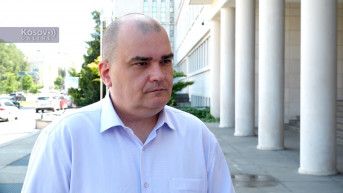
Analyst at the Center for Social Stability, Ognjen Karanovic, tells Kosovo Online that relations between Hungary and Serbia are at a historic high and that Hungary is a sincere friend of Serbia, however, he does not believe that Hungary will withdraw its recognition of Kosovo. He does leave some room for possibility, adding that perhaps some disruption on the global scene could prompt the Hungarian government to withdraw this recognition.
"We must be aware that there are practically no relations between Hungary and the temporary institutions in Pristina, especially not substantial ones. Hungary recognized this false independence in Pristina, and that remains its position. Prime Minister Orban has repeatedly stated that the then-Hungarian government made a big mistake in recognizing the independence of the false state in Kosovo and Metohija. Perhaps a disturbance on the global political scene could prompt Orban's government to reverse the decision and formally legally withdraw that recognition," Karanovic said.
However, he notes that the decisions of previous governments in Hungary are binding on the current one, and Serbia understands that Hungarian position.
"Everyone in Serbia knows that relations between Hungary and our country are at a historical peak, which does not mean that there is no room for expanding these collaborative, partnership, and, we can say, allied relations, not in a formal-legal sense but in the substantive sense, which is much more important. Hungary and Serbia are strategic partners. Hungary has well recognized that Serbia is the backbone of political stability in the Western Balkans, and Hungary and Serbia, along with perhaps a few other countries on the European continent, primarily Slovakia, pursue a sovereigntist policy that places the principle of preserving territorial integrity and sovereignty and the inviolability of internationally recognized borders of each state individually at the forefront," Karanovic said.
Serbia, as he explains, firmly stands on these positions, while Hungary is in a more difficult position because Ferenc Gyurcsany's socialist government recognized the unilaterally declared independence of Kosovo 16 years ago.
"Hungary is also a member of NATO and the European Union, and it has obligations to these supranational integrations, primarily to NATO. The European Union, considering that five countries have not recognized the independence of the so-called Kosovo, maintains a status-neutral stance, but we know very well that one of the conditions for Serbia's entry into the European Union is the recognition of false independence in Pristina. There is an interesting circumstance that all countries in Hungary's surroundings, where there is a significant number of members of the Hungarian national community, have not recognized the false state in Pristina. Neither did Slovakia, nor Romania, certainly not Serbia, nor Ukraine. So, the direction of Hungary's foreign policy, and actually national orientation, is clear – respecting internationally recognized borders, and they will remain firm in that," Karanovic said.
He also emphasizes that cooperation between Hungary and Serbia should represent a model of cooperation or partnership between states, "especially at this moment when there is a general madness or psychosis of global war in the whole world."



0 comments