
Consequences of Kurti’s relations with the U.S.: Electoral defeat or stronger mobilization of his base
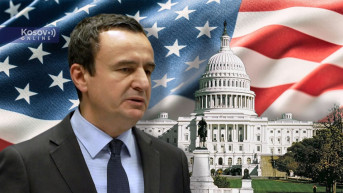
Worsened relations with the United States could negatively affect the results Albin Kurti will achieve in the upcoming extraordinary elections, continuing the trend of declining support for Self-Determination, analysts tell Kosovo Online. On the other hand, they note that the caretaker prime minister may be able to turn U.S. criticism to his advantage by mobilizing his base more strongly, capitalizing on actions in the north and on the distrust many Kosovars feel toward U.S. Republicans.
Written by: Jelena Novakov
The U.S. Embassy in Pristina suspended the strategic dialogue with Kosovo indefinitely in mid-August, saying that Kurti’s actions and statements posed challenges to the progress achieved up to that point.
Earlier this month, during a hearing of the U.S. House Committee on Foreign Affairs, experts described Kurti as “obstructive,” while his main rival in the upcoming elections—Democratic Party of Kosovo (PDK) leader Bedri Hamza—visited Washington just days earlier, announcing the renewal of the strategic partnership.
Commenting on criticism voiced in the House, Edward Joseph, Senior Fellow at the Johns Hopkins School of Advanced International Studies, said that Kurti has been a destructive figure even during Joe Biden’s administration.
Before becoming prime minister, Joseph recalled, Kurti reassured the Serbs in Kosovo that they had nothing to fear because “they had done nothing to him, nor he to them,” but in the meantime, “he has indeed done something to them.”
“Kurti was obstructive even when the United States—under the Biden administration, with a very friendly U.S. Embassy—provided support. Kurti continued with provocative actions. He has been a destructive figure. Before he became prime minister, he told the Serbs they had nothing to fear because they had done nothing to him, nor he to them. Now he has done something to them,” Joseph noted.
At the same time, opposition parties—including the PDK and the Democratic League of Kosovo (LDK)—have previously criticized Kurti’s economic policies and his actions against Serbian institutions in the north as unilateral, uncoordinated with the U.S. and EU, and jeopardizing not only progress but Kosovo’s future. Former ambassador Gjergj Dedaj shares this view.
Beyond his base in Kosovo, Kurti enjoys significant support from the diaspora, with 80–90% of diaspora voters casting ballots for Self-Determination in diplomatic missions on February 9, and the party winning around 78% of diaspora votes in 2021.
Analysts attribute this support to a populist, ethno-nationalist narrative that peaked with Pristina’s actions in the north, as well as “propaganda” targeting the diaspora, which relies heavily on television and messaging that emphasizes anti-corruption efforts and patriotism.
U.S. Criticism Does Not Affect Kurti’s Core Voters
Dragoslav Raseta of the Novi treći put organization stated that U.S. assessments of Kurti’s government have little influence on voter sentiment and that Kurti may actually use American criticism to motivate his base to turn out in large numbers on December 28. He added that the U.S. could easily find another constructive partner in Pristina.
Raseta believes that criticism from the House shows that both Democrats and Republicans see the caretaker prime minister as an obstacle to U.S. interests in the Western Balkans.
“When his first government fell after significant U.S. pressure, he returned with even greater support. So Kosovo—although it relies heavily on both European and American backing in diplomacy and foreign policy—is not a country like South Korea during the coup, where everything depended on what the U.S. president said. It’s quite the opposite,” he told Kosovo Online.
Distrust Toward U.S. Republicans
According to Raseta, a sense of distrust is developing in Kosovo, especially when Republicans are in power. When Republican officials criticize the prime minister, Kurti can use this to rally his base and increase turnout.
“This can have the opposite effect of what Washington expects, but such criticism affects functional relations between Pristina and Washington more than voter sentiment,” Raseta concluded.
He added that current U.S.–Kosovo relations show a lack of progress, with American investments this and last year almost minimized, and with Washington not defending Kosovo’s interests in international organizations—particularly because multilateralism is not a priority for the Trump administration.
Self-Determination Is Not Irreplaceable for the U.S.
With PDK leader Bedri Hamza’s visit to Washington, the Democratic Party of Kosovo may attract new voters. Raseta described the visit as both branding and a demonstration of political connections, since securing such a meeting at this moment is itself significant.
“The U.S. employs hedging strategies. There are very few countries in the world—perhaps only Japan with its Liberal Democratic Party—where the U.S. openly and consistently supports one political option. It is in Washington’s interest to show that Self-Determination is not irreplaceable and that the U.S. can easily find a new partner in Pristina. This is obvious: any option coming to power now or in the future in Kosovo will need good relations with Washington. So it is not hard to find someone more constructive than the current government,” Raseta noted.
Loss of U.S. Support Would Be the End for Kurti
Petar Ivic of the Pupin Initiative stated that strained relations with the U.S. will negatively influence Kurti’s electoral performance and that losing American support would be fatal for him, given that around 80% of Kosovo’s citizens are pro-American and view the U.S. as Kosovo’s protector.
“Most people in Kosovo see America as the main patron and benefactor of their statehood. Alienating such an actor as the U.S. cannot result in a good electoral outcome,” he told Kosovo Online.
Ivic pointed to the suspension of the Kosovo–U.S. strategic partnership, the congressional hearing where experts labeled Kurti obstructive, and criticism from the U.S. Embassy over his limiting of Serbian political participation—all of which work against the caretaker prime minister.
He said the roughly 10% decline in Self-Determination’s support since the February elections will likely continue, but emphasized that much depends on the opposition.
“It’s not enough to be against someone. The opposition must translate voter dissatisfaction—already visible in Self-Determination’s decline—into political gain,” Ivic said.
For Kurti, U.S. Support Is Crucial
Ivic noted that Kurti’s policies toward the north are aimed at drawing closer to his base, but stressed that U.S. support remains decisive and that losing it would be fatal for him.
Regarding Self-Determination’s prospects on December 28, he said it is difficult to predict percentages because many factors are at play, particularly whether Kurti’s voters will reward him for his actions in the north and how effectively the opposition capitalizes on his decline.
“The two opposition actors with the strongest support—LDK and PDK—have great potential to capitalize on Self-Determination’s fall, not ideologically, but by criticizing Kurti. In general, Kosovo’s parties are not highly ideological; they operate on more everyday issues. All parties are nominally pro-U.S. and pro-EU, but this is not evident in practice. I see coalition potential between LDK and PDK if they can successfully counter Self-Determination and take a large share of its voters,” he said.
He added that the best opposition strategy would be to highlight U.S. criticism and the poor state of relations between Pristina and Washington.
“Highlighting poor ties with the U.S. appeals to 80% of the population. But there are many other issues—economic inefficiency, low living standards, and emigration. There is no shortage of topics on which Kurti can be criticized, and the opposition has considerable space to maneuver,” Ivic concluded.
Important for Kurti to Repair Relations with the U.S.
Political analyst Artan Alijaj said that PDK leader Bedri Hamza’s visit to the U.S. does not mean Kurti cannot rely on American support, but emphasized that the caretaker prime minister must renew Kosovo’s approach to its relationship with the U.S.
Alijaj told Kosovo Online that Kurti’s political opponents have deliberately misinterpreted the recent congressional hearing.
“The Committee did not conclude that Prime Minister Kurti is obstructive. Rather, that was the assessment offered by three witnesses who stated that the U.S. State Department views his approach as obstructive,” Alijaj explained.
Still, he stressed that it is clear Kurti must adopt a renewed approach to relations with the U.S., as Pristina cannot afford strained ties with its main strategic ally.
“As U.S. officials and Kosovo’s political leaders have often emphasized, the partnership between Kosovo and the United States goes beyond any individual leader and must be preserved and strengthened,” Alijaj noted.
Influence of Washington on Voters
He added that messages coming from Washington inevitably influence voters in Kosovo, but it remains uncertain whether this will affect the outcome of the December 28 elections.
“Voters in Kosovo generally recognize that recent tensions between Prime Minister Kurti and the international community—particularly the U.S. and EU—stem largely from developments in the north and the lack of progress in dialogue with Serbia. Whether this will influence the upcoming elections remains uncertain. However, based on the results of the February elections, Self-Determination still represents the strongest political force in Kosovo,” Alijaj said.




0 comments