
Joseph: Kurti has been a destructive figure — Let voters decide how important relations with the U.S. are to them
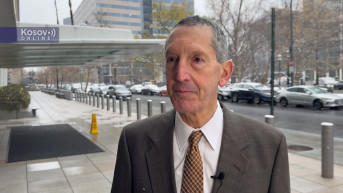
Senior Fellow at the Johns Hopkins School of Advanced International Studies, Edward Joseph, stated—regarding recent criticisms of Kosovo’s caretaker Prime Minister Albin Kurti voiced in the U.S. House of Representatives—that Kurti was a destructive figure even during the administration of President Joseph Biden, which, together with a very friendly U.S. Embassy in Pristina, had extended support to him, and that he later continued with provocative actions.
During a session of the House Foreign Affairs Committee a few days ago, several experts—Joseph himself, as well as Luke Coffey and Maks Primorac—answered affirmatively when Congressman Keith Self asked whether “career bureaucrats in the State Department view Kurti’s approach as obstructive.”
In a statement for Kosovo Online, responding to the question of why Kurti is considered obstructive, Joseph recalled that before becoming prime minister, Kurti had told Serbs in Kosovo they had nothing to fear from him, as neither side had done harm to the other—but that, in the meantime, he had done something to them.
“Kurti was obstructive even when the U.S., under the Biden administration, along with a very friendly American embassy, was offering support. Kurti continued with provocative acts. One could justify them as intentions to push back Serbian institutions in Kosovo—which is understandable—but they were completely uncoordinated and not designed in a way that would build trust with the Serbian community,” Joseph explained.
He emphasized that the effect was quite the opposite.
“Kurti has been a destructive figure. Before becoming prime minister, he told Serbs that they had nothing to fear since neither side had wronged the other. Now he has, in fact, wronged them,” Joseph noted.
When asked whether U.S. officials view the new PDK leader, Bedri Hamza—who recently visited Washington and announced efforts to “renew the strategic partnership”—as a constructive and credible partner, Joseph replied that he did not wish to engage in any kind of political promotion, particularly given that elections in Kosovo are approaching.
“I won’t answer that question because I will not engage in political promotion here, especially with elections in Kosovo just weeks away. I responded to a question about Kurti because it was raised during the hearing. I will not comment on other political figures, as that would clearly constitute interference in Kosovo’s elections,” Joseph said.
He stressed, however, that the people of Kosovo themselves must decide how important good relations with the United States are to them.
“My point concerns the administration. The mistake of both the Biden and Trump administrations—and here they perhaps fall into the same trap—is that they hold only Pristina accountable for provocations, and not Belgrade. As I said during the hearing, that approach is what led to Banjska. Now, with the strategic dialogue with Kosovo suspended and the strategic dialogue with Belgrade continually paused, the administration could fall into the same temptation,” Joseph said.



0 comments