
Raseta: Criticism from the US affects Pristina-Washington relations more than it affects voter sentiment
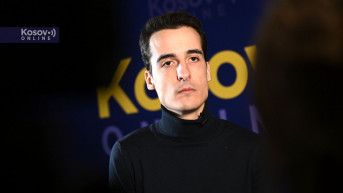
Criticism from the United States directed at Albin Kurti and his government affects the functional relations between Pristina and Washington more than voter sentiment itself, says Dragoslav Raseta from the New Third Way organization. He also notes that although the US sees Kurti as a “blocking factor” for the advancement of American interests in the Western Balkans, the Self-Determination leader can still use this to “ignite” his voter base and motivate them to turn out for the elections in greater numbers.
“From the criticism that came from the House Foreign Affairs Committee, and that had also arrived in previous months, in which Albin Kurti and his government were repeatedly characterized as unconstructive, we can see that both Democrats and Republicans view him as, to some extent, a factor slowing down potential progress of American interests in the Western Balkans. But, as we saw when his first government fell, after America applied pressure, he returned with even greater support,” Raseta told Kosovo Online.
He points out that in Kosovo, although it depends heavily on both European and American support regarding foreign policy, the dynamic is not the same as, for example, in South Korea – where much depends on what the American president says. In Kosovo, it is actually quite the opposite, especially when Republicans are in power in the US.
“A kind of distrust emerges, especially when Republicans are in office, and even if you attack the prime minister in Pristina, he can use that to ignite his base and push them to turn out in as large numbers as possible to support him. From that perspective, it can have the opposite effect of what Washington expects,” Raseta said.
That is why he believes that criticism from the US affects the functional relations between Pristina and Washington more than voter sentiment.
As for current relations between Kosovo and the US, he says there is no progress, noting that American investments in the previous year and this year have been almost minimized, while the US has not been spending its diplomatic capital to help Pristina with membership in international organizations, partly because multilateralism is not a priority for the Trump administration.
“From that perspective, there is a break in communication between Washington and Pristina,” Raseta observes.
With the visit of the leader of the Democratic Party of Kosovo, Bedri Hamza, to Washington, that party may attract voters, and according to Raseta, this is also a matter of branding and showing that certain political connections exist, since a visit of that caliber could be arranged at such a moment.
“America uses hedging strategies. There are not many countries in the world, maybe only Japan and its Liberal Democratic Party, where America firmly and almost openly supports one political option. So it is in Washington’s interest to show that Self-Determination is not irreplaceable and that the US can easily find a new partner in Pristina, which is obvious, because any option that comes to power now or in the future in Kosovo will have to maintain good relations with Washington. So it is not difficult to find someone who will be a constructive partner in Pristina, unlike the current government,” Raseta said.



0 comments