
Economic strategy or pre-election PR – Does Kurti have the support of the diaspora?
Due to unilateral actions, Albin Kurti's government is increasingly under criticism from the international community, and the measures that Kosovo is suffering as a result have caused significant economic damage. As analysts tell Kosovo Online, Kurti is turning to the diaspora to mitigate the losses and stay in power, offering them various benefits in exchange for their trust. However, few believe he will succeed, viewing his actions as pre-election propaganda.
Written by: Petar Rosic
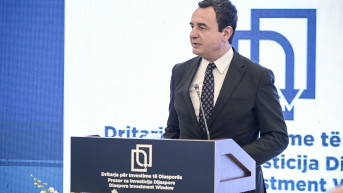
In July, Kurti opened the Diaspora Investment Window in Pristina, hoping to attract the diaspora to return and invest money in Kosovo.
Through various funds, he offered them guarantees on investment loans, and in the same month, the Office for Diaspora was opened, the "Thank You Diaspora" festival was organized, and he provided them with free insurance policies during their stay...
At a Self-Determination gathering last week, dedicated to emigration, Kurti stated that no one in the world has a diaspora more connected to its homeland than Kosovo.
Milos Pavkovic, a collaborator of the Center for European Policy, says that Kurti is gradually entering the campaign for parliamentary elections and tells Kosovo Online that by turning to the diaspora, he is trying to revive the economy to gain as many voters as possible.
Pavkovic states that the Kosovo economy primarily depends on two key sources of funding – foreign humanitarian aid and money from the Kosovo diaspora.
"The government of Albin Kurti is trying, in a way, to encourage more investments from the Kosovo diaspora and to enhance their role, not just in terms of sending money to Kosovo but by encouraging people to return and try to start businesses there, which brings multiple benefits. Simply put, in that economic model, it is not just about the direct money; through business and investments, that money is multiplied, people return, and in that way, there are multiple benefits for both the Kosovo government and the economy of the citizens who live there," our interlocutor says.
He emphasizes that there is a kind of internal Albanian struggle for leadership between Edi Rama and Kurti, but when it comes to the diaspora exclusively from Kosovo, Kurti has strong support.
"He is aware of this support and seems to be trying to attract people who are originally from Kosovo but live in Western Europe and America, not only to help Kosovo through funding but also to return, live there, start businesses, invest, and continue living and working in Kosovo," Pavkovic says.
He adds that parliamentary elections are approaching in Kosovo, and Kurti is offering a multitude of benefits to the diaspora to gain as many voters as possible.
"We are entering the last six months before the elections, which, as it is said, could happen as early as this fall and at the latest in February 2025. So, with these moves, Kurti is already slowly entering the campaign for parliamentary elections, and in this way, he is trying to gain as many voters as possible through these economic measures," Pavkovic assesses.
Agim Shahini, President of the Business Alliance, agrees with Kurti's statement that there is no diaspora in Europe more connected to its homeland, but he tells Kosovo Online that this doesn't mean Kurti has their support.
"If we look back, we will see that our diaspora has always supported Kosovo politicians or policies, both during the war in Kosovo and after the war in the economy. We still receive more than 1.4 billion euros annually from the diaspora, either through accounts, commercial banks, or more than a billion in cash from the diaspora, which comes twice a year for summer and winter holidays," Shahini explains.
He adds that these 2.5 billion euros sustain Kosovo's economy, as Kosovo imports 87% of goods for consumption with that money, but this does not mean that Kurti, as Prime Minister, has the diaspora's support.
"Kurti no longer has the support he had in 2019 and 2020 because our diaspora doesn't just listen to nice words, they also look at what has actually been done over these four years. Not a single new road has been started, there are no strategic investments, we even have fewer investments, and there's declining interest from investors to come to Kosovo. For the first time, we will remember the government and Prime Minister Kurti as the only ones who brought EU sanctions to Kosovo. That is why the diaspora sees things differently now and is no longer as attached to the Prime Minister as it once was," the President of the Business Alliance says.
He emphasizes that the concessions Kurti is making for the diaspora are "just propaganda" and that they have recognized this.
"Last time, Kurti had about 50% of the diaspora's votes. He no longer has that support and won't have it. He knows this, which is why he is trying to do something visual for the diaspora. However, they see it as propaganda, not something interesting to them," Shahini concludes.
Demo Berisha, President of the Albanian National Council, also believes that Kurti is increasingly turning to the diaspora because general elections are approaching. He also believes that the Kosovo diaspora is very connected to its homeland, but, as he tells Kosovo Online, not to the extent that Kurti claims.
He emphasizes that the Albanian diaspora from Kosovo consists of about 1,200,000 citizens who have gone to Europe, primarily Germany, Switzerland, Austria, and increasingly Slovenia, either for temporary work or under some contracts.
"All political parties from Kosovo have their presence there. Kurti is certainly counting on them and trying to get their attention for the simple reason that general elections await him in 2025. So, he is using every opportunity to draw the diaspora's attention towards Self-Determination, and his political goal has actually been to maintain that contact with them, but not in the context that he suggests, that he is the first and exclusive leader who controls the diaspora," the President of the Albanian National Council says.
He points out that the third and fourth generations, who maintain family ties with Kosovo, have already grown up in the diaspora, but he notes that this is an "illusory matter."
"It shouldn't be forgotten that this is an illusory matter because Albanians from Kosovo are no longer patriots in the way they used to be. Yes, some of them participated in the 1999 war, but that time has passed," Berisha assesses.
Regarding economic issues, he says there is no need to discuss Albin Kurti's policies because they are disastrous and are the main reason for the population's emigration from Kosovo.
"They haven't brought anything to improve the lives of Kosovo citizens. The departure of Kosovo Albanians is proof that he has done nothing in economic terms. The opening of the Office for the Diaspora and other concessions he is now making are nothing more than his election campaign, which has been ongoing since the beginning of this year," he says.
He adds that Kurti has now taken the "most risky move," which is the conflict with the Serbian community in the north.
"The opening of the bridge on one side and the accumulation of police forces in the north on the other will certainly cost him, and it can be said that his election outcome is uncertain because no one wants war anymore. Least of all, the citizens of Kosovo, as a large number of people, more than 1.2 million of the Albanian diaspora from Kosovo, are living abroad. So, this is his chess move that will be his downfall," Berisha concludes.



0 comments