
Economy and politics: What is driving investors away from Kosovo?
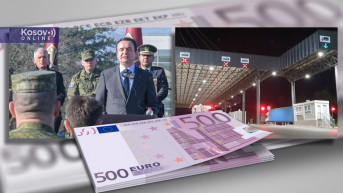
Reacting to a series of incendiary statements made by Kosovo officials before and during the election campaign, the president of the Chamber of Commerce, Lulzim Rafuna, warned that claims about the threat of war have driven away foreign investors. Threats of possible conflicts, constant tensions, and the creation of an atmosphere of uncertainty are detrimental to the economy, particularly to capital, because it is "the most fearful commodity," explain the interviewees for Kosovo Online.
Written by: Djordje Barovic
During the election campaign, Kosovo’s Prime Minister, now in a caretaker role, Albin Kurti, repeatedly warned of the possibility of aggression, justifying increased investments in weaponry and military equipment.
"Anyone who touches our border, we will chase them over the fence," was just one of Kurti's clear messages.
Undoubtedly, the "saber-rattling" continued even after the elections, with statements that over one billion dollars would be invested in the army in the new mandate and that the Kosovo Security Force (KSF) would receive "Black Hawk" American assault helicopters.
"We need a prime minister who guarantees peace, prosperity, and security. We need a prime minister who talks about the economy and development. We do not need a prime minister who governs through trauma, threats, and fabricated fears," countered the leader of the Social Democratic Initiative, Fatmir Limaj.
Economic experts have long warned that due to political and economic instability and the lack of reforms in strategic sectors, Kosovo is facing significant challenges—particularly in attracting foreign direct investment.
"Reckless statements from the state leadership that we are under attack from Serbia have caused hesitation among foreign investors to come," claims the president of the Chamber of Commerce, Lulzim Rafuna.
He says that many investors have personally contacted him about this issue.
"Investors called me and asked if war was about to start in Kosovo," Rafuna explained.
According to data from the Central Bank, Kosovo recorded a 7.7% increase in foreign direct investment last year.
"Foreign direct investment in Kosovo reached €806.95 million. This represents a 7.70% increase compared to the same period in 2023 when it amounted to €749.24 million. If this trend continues, FDI is on track to either match or surpass the total annual amount of €840.1 million recorded in 2023," stated the CBK.
Turbulence and capital
Commenting on these statistics, economic analyst Sasa Djogovic pointed out that Kosovo’s foreign direct investment last year was among the lowest in this part of Europe.
"In Kosovo itself last year, foreign direct investment was slightly above €800 million, while in central Serbia, it reached a record €5.2 billion. Within the Western Balkans, Kosovo is only ahead of Bosnia and Herzegovina. Bosnia and Herzegovina had close to €800 million in foreign direct investment due to the pronounced political crisis involving tensions between the two entities. This certainly does not contribute to the development of economic relations or improving the living standard of the population, and it is not a 'win-win' position for any side—whether it be Kosovo, central Serbia, or especially the residents of Kosovo," Djogovic told Kosovo Online.
He is convinced that the key reason lies in the constant provocation of "turbulence."
"Politicians are there to find solutions through diplomacy and peaceful means, not to create turbulence that is on the razor's edge in terms of leading to war escalations. This is not good for capital because it is the most fearful commodity. It relocates very quickly and leaves this region, not just Kosovo, because we are all interconnected," says Djogovic.
He emphasizes that the president of the Kosovo Chamber of Commerce, Lulzim Rafuna, has given an accurate "diagnosis"—the core of the problem lies in the inflammatory statements made by officials in Pristina.
"Such statements are not beneficial; they only further escalate tensions, scare potential investors, and even encourage those who have already arrived to consider leaving this market," the economic analyst stresses.
For this reason, he clarifies, Kosovo and Bosnia and Herzegovina have the lowest inflow of foreign direct investments, even lower than Montenegro.
"This is precisely due to such extreme political instability and the inability to reach agreements peacefully, through compromise, without escalating tensions and making extreme demands. Politicians are supposed to bring benefits to the people, to any people living in that territory, and improve their quality of life. They are not put in place to create tensions or call for war escalations," Djogovic concludes.
Populism and investments
Economic expert from Pristina, Mustafa Kadriaj, has no doubt that populist statements have caused significant harm to Kosovo's economy.
"The claims made by the Kosovo government have never been sustainable, and I have warned about this multiple times. Kosovo is not under threat from any country under any circumstances because it is protected by international forces, specifically KFOR. With such statements, the Kosovo government has actually harmed itself because when a foreign investor senses or even suspects any kind of threat or instability, it is completely natural for them to withdraw," Kadriaj told Kosovo Online.
He claims it’s government populism.
"This is about government populism, an attempt to portray itself as working in Kosovo's interest, while in reality, it serves more to score political points than to address the real interests of the state or its citizens," Kadriaj emphasizes.
He adds that while such a propaganda campaign is legitimate, it harms the economy and has serious consequences.
"These statements have caused significant damage to the country's economy because, like any other state, Kosovo depends on investments. When investments flow in, the level of economic and regional cooperation increases, and as a result, the countries of the region and the Western Balkans as a whole would be closer to becoming part of the European Union," concludes the economic analyst.
Mantras and business
Marko Miskeljin, an associate of the Center for Social Stability, believes that by constantly repeating the "mantra of a possible war," Albin Kurti maintains his political rating, but such rhetoric has not only driven away existing investors but also deterred those who had considered investing in Kosovo.
"If you keep repeating, now almost as a mantra, that a conflict is supposedly imminent and that Belgrade allegedly wants war, that can only have a repelling effect on anyone who might have planned to invest in Kosovo and Metohija. Moreover, upon hearing such messages, not only will they abandon those plans, but they will likely never even consider them again," Miskeljin told Kosovo Online.
He specifies that the "war mantra" was also the main weapon of the Self-Determination Movement during the February elections.
"When we look at the public statements of the entire administration that has been in Pristina so far, we can hear those tones in practically every single statement. The fact is that this was simply Kurti’s way of maintaining his ratings, gaining new votes before the elections, and diverting attention from other issues," Miskeljin explains.
He argues that economic issues in Kosovo should have been a priority from the beginning.
"The economic situation in Kosovo and Metohija is far from ideal. The economy is facing major challenges. There are no factors driving economic growth, and stability is the key element that attracts investments and ultimately fosters economic expansion," Miskeljin concludes.

0 comments