
Eighty years of the UN: Can fierce rivals overcome divisions and solve global problems?
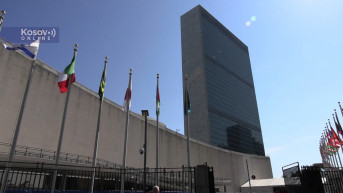
An evident crisis and an uncertain future without reform—that could be the diagnosis of the United Nations, the organization that this year marks its 80th anniversary. On the prospects of the UN returning to its original role, through the reaffirmation of the principles of its Charter, world leaders will begin discussions tomorrow from the green marble podium of the General Assembly Hall. Experts speaking to Kosovo Online note that in the 21st century the UN cannot retain the same kind of relevance it had eight decades ago unless the Security Council is reformed first, in a way that reflects the real distribution of power in today’s world.
Written by: Dusica Radeka Djordjevic
“This will not be an ordinary session,” declared Annalena Baerbock, former German foreign minister and President of the 80th session of the United Nations General Assembly, at its opening on September 9, calling on member states to make the UN ready for the 21st century by advancing reforms, implementing the Pact for the Future adopted last year, and focusing on substance over procedure.
UN Secretary-General António Guterres urged governments to show the same resolve that brought nations together to establish the UN 80 years ago and stressed the need to overcome divisions and reaffirm international law.
Although there is interest among its members in reforming the UN, the big question is what will happen and how far it will go, says Andrew G. Hyde, senior fellow and director of the Conflict Transformation and Governance Program at the Stimson Center in Washington, speaking to Kosovo Online.
“Many may say they support reform,” Hyde explains, “but what they want from reform is very different. The United States under the current administration has very big ambitions for reform. I don’t know if other member states share them fully,” he points out.
Despite the many critical voices directed at the world organization, Hyde believes that the UN has the capacity to meet today’s challenges, but that it is not permitted to use that capacity in a way that would make it successful.
“No Alternative”
“There are a number of national agendas in the UN that sometimes conflict with each other, and they obstruct what the UN can actually achieve,” Hyde notes, adding that there is no alternative to this organization and that “the UN is the tool we have.”
He points out that in Ukraine the UN currently plays no active role, nor in Gaza and the Middle East, but that these are not decisions made by the UN itself. “Political leaders around the world have said: ‘We’ll leave the UN aside. The UN won’t be part of these peace processes.’ That should change, because it is the only way to achieve success in finding peace in those conflicts,” Hyde assesses.
Historian Vukan Markovic also highlights the shift of issues that should be addressed within the UN to other forums.
“The original role of the United Nations—to be a great forum that not only gathers all the sovereign states of the world but also defines international law, since every UN decision is international law—has not existed since the beginning of this century,” Markovic tells Kosovo Online.
He sees two major reasons for the UN’s declining role—the attitude of the great powers, both toward the UN and toward one another, and the UN’s own internal problems.
“When the great powers use the UN as a forum and medium for pursuing their own interests, while also controlling the interests of rival powers, then the UN truly serves as a place where major issues are resolved diplomatically. That is no longer the case. I would say the main turning point was the Iraq War, though in this region many would point to the 1999 bombing. The Iraq War signaled to the other great powers that the international community’s stance no longer mattered. Since 2003 all great powers have actively vetoed and blocked the UN and, even more seriously, shifted to other forums—the G20, the Shanghai Cooperation Organization, the G7—to solve problems. The UN no longer has that kind of prestige. That is the first reason,” Markovic notes.
A Security Council Without the Global South
The second reason, he continues, is the balance of power within the Security Council. The UN was created in a world dominated by the victors of the Second World War, while today the Global South has risen without gaining comparable representation or prestige.
“There are also many other financial, budgetary, and interest-based differences, but the main issue is the relationship between the great powers. Unless states of the Global South—primarily India, Brazil, and some of the major African countries—are admitted to the Security Council, the UN cannot have the kind of relevance in the 21st century that it had during the Cold War,” the historian stresses.
He adds that Security Council reform requires the five permanent members to relinquish part of their powers and admit potentially rival powers, granting them equal prestige.
“The Security Council is the indicator needed for the UN to adapt to the new distribution of power in the world. That, of course, does not mean that the existing great powers will continue to respect the will of the UN. Since 2003 we have lived in an era of unilateral decisions by the great powers. No power will endanger its interests because international law forbids it. We have seen countless examples of that,” Markovic concludes.
Mihajlo Vucic, senior research fellow at the Institute of International Politics and Economics, also notes that the United Nations is no longer a true reflection of the world in terms of the distribution of power, which is most evident in the composition of the Security Council, the UN’s main organ and the only one authorized to adopt legally binding decisions. For that reason, he says, debates on UN reform revolve mainly around reforming the Security Council, the organ that functions the worst in practice.
“The image of the UN Security Council, with permanent members France, the United Kingdom, Russia, the United States, and China since the 1970s, does not reflect the real distribution of power in today’s world, where India, South Africa, and Brazil have also become great powers,” Vucic tells Kosovo Online.
He explains that today’s problems in the functioning of the UN stem above all from its structural organization, since it was created in a time very different from today’s international relations—in the aftermath of the Second World War, when the victorious powers designed an organization that suited their role as victors and their political agendas at that moment.
Proposals for Security Council reform, he notes, are not new, and some date back practically to the UN’s founding, since it was clear from the beginning that certain things would not function properly and might need to be changed. Proposals have come from permanent members themselves, but even more from those who would like to enter the Council or otherwise redistribute its power.
Reforms From Three Angles
He identifies three types of proposals coming from Security Council members. “One is that things should function more or less as they do now, which is essentially the US position, since it seems they do not see the possibility of including some of their allies in the Council to help improve the UN’s functioning. The fact is that the entire system of international relations after the Second World War was essentially a creation of the US and its allies. That system suits them, and we’re not talking only about the UN but also about the World Bank, the International Monetary Fund...” Vucic points out.
Proposals calling for partial reform, with the possible inclusion of new members in the Security Council but without granting them the same rights as existing ones, mostly come from Russia and some countries aligned with it at times, such as China or states outside the Council.
“These proposals generally envisage expanding the Security Council to include countries demanding greater multipolarity in the world. These are mostly countries once called the Third World, but in reality they are today very much part of the First World in terms of economic development, although that is not reflected in their influence in international organizations—for example, India, South Africa, or some Latin American countries. That proposal is legitimate, but the question is why admit new members without giving them equal rights, since these proposals do not envisage granting them the veto, the power to block Security Council decisions. I don’t know who would be interested in such an arrangement,” Vucic says.
The third type of proposal, he explains, comes from France, a permanent member of the Council, which tries to balance between the two opposing poles.
“It supports admitting new members with equal rights, but mostly proposes countries it is certain would act together with it, in its interest—for example, Germany, its main ally in international relations as a member of the European Union. So none of these reform proposals is aimed at making the Council more efficient; they are simply a topic for debate, and those debates are endless and lead nowhere...” he notes.
Vucic adds that for many years it has been clear that the center of decision-making on international security has shifted away from the UN and been reduced to a narrow circle of great powers deciding at their own diplomatic summits, such as a meeting between the US and Russian presidents in Alaska or between the Russian and Chinese presidents in Beijing.
Nevertheless, he argues, the UN should still be seen as something that has brought much that is positive to the world, since its activities extend far beyond security. He recalls that the UN has created numerous bodies and organizations addressing all aspects of human life on the planet—from the environment to cultural heritage, food shortages, poverty eradication, and the protection of water, air, and energy—and that in these areas it has been very successful.
Budget Troubles
Pristina-based political analyst Alma Lama highlights the issue of UN financing, noting that the UN cannot do anything without a budget, and it faces reduced contributions from its most important member states.
“The UN can adopt a resolution in the General Assembly, since it is now harder to do so in the Security Council, but to actually solve problems, a budget and political will from member states are needed,” Lama tells Kosovo Online.
She concludes that the UN is in crisis and needs reform, but that it is almost impossible to achieve without the support of the major powers in the Security Council. Moreover, those powers do not expect international institutions to increase their role, but to reduce it.
“We live in a world that is not multilateral but multi-competitive among the great powers. The US has great influence but seems not very interested in this institution. On the other hand, the UN Charter is directly challenged by war and Russian aggression in Ukraine. China seeks to increase its global power, but not within international institutions. Of course the UN needs reform, but without the support of the great powers on the Security Council, I see that as almost impossible,” Lama concludes.
The high-level debate of the 80th session of the General Assembly begins tomorrow, with this year’s theme: “Better Together: 80 Years and Beyond for Peace, Development, and Human Rights.” The session is considered a turning point, coming at a time of growing global challenges and urgent calls for renewed multilateral action.
Also on the agenda are a climate summit, the launch of the Global Dialogue on Artificial Intelligence Governance, and a global response to non-communicable diseases and mental health.
comments