
What is not in favor of Kosovo for admission to the Council of Europe?
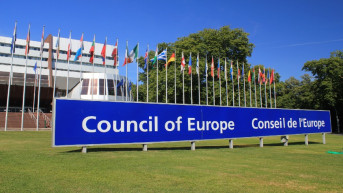
The authorities in Pristina, with the support of certain Western countries, are trying by all means to quickly open the doors of international organizations, for the beginning of the Council of Europe. However, there is a long list of reasons and arguments that are not in favor of Kosovo's admission to that organization, from political to procedural, and Kosovo Online interlocutors highlight at least three key ones - Kosovo's unconfirmed statehood, the fact that it is not a member of the United Nations and that it has been grossly violating for years basic democratic principles and human rights of the Kosovo Serbs.
Kosovo applied for membership in the Council of Europe on May 12, 2022, but even after a year, that request has not entered the official procedure in the bodies of that organization.
The subject of Kosovo's admission was not even at yesterday's meeting of the Committee of Ministers of the Council of Europe, at the ambassadorial level, despite the insistence of certain countries of the Quint that it be included in the agenda. Iceland, as the country that currently presides over the Committee of Ministers of the Council of Europe, managed to resist those pressures and not include the topic in the agenda, thus avoiding the application of Kosovo to be at the session of the Parliamentary Assembly of the Council of Europe, which begins on Monday, April 24.
This means that Kosovo will almost certainly not be discussed before the Council of Europe Summit, which takes place on May 16 and 17 in Reykjavík, and most likely not even then, due to the complicated procedure when it comes to the application for membership, which has to go through several steps. in the Council of Europe bodies before it comes to consideration at the umbrella, ministerial level.
However, technicalities and procedures are not the only obstacles to Kosovo's entry into the Council of Europe.
Although in the Council of Europe, Western countries that support Pristina have a two-thirds majority for decision-making (out of 46 members, Kosovo recognizes 34), putting the admission issue on the agenda could show divisions in Europe. Because five EU members do not recognize Kosovo, and some countries that do, such as Hungary, are not ready to vote for Pristina's membership in the Council of Europe.
Also, "pushing" Kosovo into the Council of Europe at a time when progress in the dialogue between Belgrade and Pristina is at the top of the agenda could seriously complicate those negotiations, given the clear position of the Serbian side that the formation of the Community of Serb-majority Municipalities is a key prerequisite for the other topics to come up on the daily agenda.
Kosovo violates the basic principles on which the Council of Europe is based
As Slobodan Zecevic from the Institute for European Studies says for Kosovo Online, the first and basic "obstacle" for Pristina is that it is not a member of the United Nations.
"Therefore, there is no general consensus in the international community that Kosovo is a state and that territory constitutes a state. On the contrary, two members of the Security Council, Russia, and China, but also the majority of members of the United Nations General Assembly does not recognize Kosovo's independence. Therefore, it is the first point of contention," he said.
Another reason why Kosovo cannot join the Council of Europe is related, Zecevic emphasizes, to respect for the rights of minorities and human rights, which, he adds, is the essence of that European organization and its activities.
Zecevic assesses that Kosovo, that is, the Kosovo Albanians have, first of all, problems with respecting the rights of the Serbs in that territory.
"The best evidence for this is that they did not respect the Brussels Agreement that they signed and ratified. They are doing this precisely because they would not respect the human rights of the Serbs in Kosovo," Zecevic believes.
Also, one of the disputed points for Kosovo's membership in the Council of Europe, according to Zecevic, is Pristina's intention to unite with Albania.
Kosovo had no intention of remaining an independent state, he concluded, emphasizing that Albanian politicians insisted on this all the time.
"Kosovo as such should not be in an organization whose basic and fundamental activity is respect for democracy and human rights," Zecevic says.
When asked why certain countries, such as Germany and Great Britain, persistently insisted on Kosovo's membership in the Council of Europe and what were the arguments of those countries for Kosovo's admission to that organization, Zecevic says that it is about "pure geostrategic elements".
"Those countries are interested in Serbia being territorially, and therefore politically, as weak as possible. They think that the weaker Serbia is, the better it is for them. In essence, their geostrategic interest is hidden behind that, and that is why they are pushing Kosovo in the Council of Europe. Those countries want to affirm Kosovo's independence at any cost, regardless of all these mentioned obstacles and rational arguments that exist in this regard," Zecevic believes.
Germany, he points out, traditionally leads a geostrategic policy which, on the one hand, advocates for good economic relations with Serbia, while on the other hand, it strives to make Serbia as politically, territorially, and populationally as weak a country as possible.
The British, says Zecevic, see the benefit in as many political and state divisions in the Balkans as possible.
"Britain does not like strong national states on the soil of Europe and therefore disputes the territorial unity of Serbia. Besides everything, it considers Serbia to be a traditional ally of Russia in the Balkans, which is another argument for such behavior by the British," Zecevic said.
Diplomat and former UN ambassador, Branko Brankovic, points out that the most fundamental obstacle to Kosovo's entry into the Council of Europe is the fact that Kosovo is not a state.
"Kosovo is not a country. It is not recognized by the 110 member countries of the United Nations and is not a member of the UN. The fact that Kosovo is a member of some incidental sports organizations does not mean anything," Brankovic said for Kosovo Online.
Another reason why Kosovo cannot join the Council of Europe is, the diplomat points out, that "everyone now understands that Kosovo was created by force, by NATO bombing, where a part of the territory, almost 25 percent, was torn away from a sovereign state, contrary to international law and the Charter of the United Nations and independent states, members of the United Nations - Serbia".
Brankovic assesses that the policy in favor of Kosovo does not have general support in the international community, especially after the escalation of the conflict in Ukraine, when Europe is turning to solving its own problem.
"Now we finally see, after this agreement between China and Russia and especially the departure of Macron and Ursula von der Leyen to Beijing, that Europe would be happy to do something to solve the problem in Ukraine. It is simply, in my opinion, the beginning of the political burial of the American violent policy. And therefore, since she is the one fueling all these negative things in Kosovo and Metohija and she is losing positions, of course, our province cannot have any positions on the international stage," Brankovic explains.
He also emphasizes that, when it comes to Kosovo's entry into the Council of Europe, it must not be forgotten that five EU countries have not recognized Kosovo.
When asked what the arguments of the countries that supported Kosovo's membership in the Council of Europe were, the diplomat says that in this way, the West is looking for a way out and justification for its decisions and actions during 1999.
"Their arguments are empty in my opinion, but they are frantically trying to find at least some way out in order to justify the interpretation that the bombing of Yugoslavia was justified. However you look at it, the bombing in 1999 was an act of violence, an act of violation of international law, proof that NATO committed a crime against humanity. They are frantically trying to find a way out in order to justify themselves, which of course they can't," Brankovic concluded.
What does the membership admission procedure look like?
When it comes to the procedure for the admission of Kosovo to the Council of Europe, if it were to start now and not go through any accelerated procedure, the final decision would most likely not be made before May 2024.
Namely, the request has to go through several stages, and in the best case it takes between one and two years, and there were cases when the decision was waited for as long as five years.
Kosovo submitted its application for membership in May last year to the Secretary General of the Council of Europe, who forwarded it to the country presiding over the Committee of Ministers of the Council of Europe. Then it was Italy, it forwarded it to Ireland, and the application was then taken over by Iceland, who until the Council of Europe Summit in Reykjavik in May chairs this organization. After Iceland, the baton will be taken over by Latvia, which will preside over the Committee of Ministers until November.
Neither Italy, nor Ireland, and now Iceland have so far forwarded Kosovo's request to the next station, which is the Committee of Ministers of the Council of Ministers at the level of ambassadors. At their meeting, it is decided to initiate the procedure by sending a request for an opinion to the Council of Europe Parliamentary Assembly. In order to reach the opinion of the PACE, there are several steps, because here, first of all, the opinion of two independent experts is sought, who consider the compatibility of the legal framework of the country applying for membership with the basic principles of the Council of Europe.
When these reports arrive, the PACE Bureau forwards them for consideration in three committees - for political issues and democracy, for legal issues and human rights, and for monitoring. The reports of these three committees are then consolidated at the Committee for Political Affairs and Democracy and from there forwarded for approval to the PACE plenum. For the adoption of that opinion, a two-thirds majority of the deputies present in the hall is necessary.
If the PACE gives a positive opinion on the membership request, it is sent to the Committee of Minister of the Council of Europe at the ministerial level, where the decision is also made by a two-thirds majority. The ministers of the Council of Europe countires generally meet once a year, now in May, at the Summit in Reykjavík.

0 comments