
Elections as a potential solution to the political deadlock: What path leads to them?
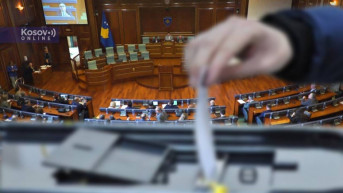
With only eight days remaining before the conclusion of the parliamentary session, theoretical possibilities still exist for the Assembly to be constituted and a new government formed. However, opposition politicians and a considerable number of analysts predict that Kosovo is headed for early elections. According to interlocutors for Kosovo Online, such a scenario would require either a ruling by the Constitutional Court allowing President Vjosa Osmani to call elections or an agreement among MPs to constitute the Assembly and subsequently vote for its dissolution.
Written by: Dusica Radeka Djordjevic
DSK leader Lumir Abdixhiku believes new elections are inevitable in order to overcome the institutional stalemate.
“Having a political solution would be ideal, but if there is no political will, then new elections are unavoidable,” he stated.
AAK official Pal Lekaj shares the view that Kosovo is now closer to holding new elections than resolving the parliamentary crisis, citing what he called the government's “incompetence and arrogance.”
Political analyst Arbnor Sadiku also points to a lack of trust among the main parties and concludes that the only viable path is an agreement on the date of new parliamentary elections.
Political scientist Ognjen Gogic identifies two potential routes for Kosovo to reach new elections. One involves MPs agreeing to constitute the Assembly and elect a Speaker, and then dissolving the Assembly by a two-thirds majority. Alternatively, the Assembly could elect a Speaker but fail to form a government within the constitutional deadline, thus enabling the President to dissolve the Assembly.
A more complex scenario would arise if the Assembly is not constituted by the 26 July deadline set by the Constitutional Court, leading to a legal vacuum that can only be resolved by further instructions from the Court.
“The Constitution does not foresee what happens if the Assembly fails to constitute itself. The only legal way out is for the Constitutional Court to interpret whether, under such circumstances, the President is authorized to dissolve the Assembly,” Gogic explains.
Under current constitutional provisions, he adds, the President cannot dissolve the Assembly after 26 July without risking accusations of violating the Constitution. Therefore, he expects President Osmani to seek the Court's interpretation regarding whether the conditions have arisen that permit dissolution.
Gogic notes that, under the Constitution, the President may dissolve the Assembly if a government is not formed within 60 days after the Prime Minister-designate is named—though this is not applicable in the present case.
“The Constitutional Court is expected to interpret the relevant provisions in the spirit of the Constitution, possibly acknowledging that institutional functioning has been disrupted and enabling the President to dissolve the Assembly. This would set a legal precedent, but it would not be the first time the Court has taken such a step,” he said.
Marko Milenkovic from the NGO New Social Initiative in North Mitrovica points out that no consensus has been reached among parties to first constitute the Assembly and then promptly dissolve it to allow new elections.
“While Self-Determination insists on keeping its nominee for Assembly Speaker, showing little inclination to make the process constructive toward the opposition, the opposition continues to demand a new nominee. This deadlock makes political consensus unlikely,” Milenkovic told Kosovo Online.
Should agreement be reached on electing the Speaker and then dissolving the Assembly, elections could follow in short order—within 30 to 45 days, he noted.
He also sees a second option in a renewed request to the Constitutional Court, whose next decision is eagerly awaited by all stakeholders.
“The Court's earlier opinion failed to clarify the situation and even complicated it. It imposed a 30-day deadline for constituting the Assembly and electing a Speaker but did not specify what happens afterward. We remain in legal uncertainty,” said Milenkovic.
"Juggling Dates"
According to Gogic, once the 26 July deadline passes without Assembly constitution, political actors will begin “juggling dates,” with the main question being whether to merge parliamentary and local elections.
“Holding both elections on the same day is possible if a political agreement is reached soon. However, this decision is political, not legal, as parties have divergent interests. Self-Determination likely favors joint elections on 12 October, hoping to improve its local election performance. The opposition, on the other hand, prefers to delay parliamentary elections,” said Gogic.
If by 26 July it is determined that the Assembly has not been constituted and the Constitutional Court permits Osmani to dissolve it, elections could feasibly be held in October, he assessed.
While all political actors recognize new elections as the only viable path forward, Milenkovic points out there is no agreement on the date.
“Self-Determination may favor simultaneous elections due to a lack of strong local candidates and limited achievements at the local level. It could also exploit nationalist rhetoric and the issue of the north as a campaign tool—something it has used effectively before,” Milenkovic said.
In contrast, he believes the opposition prefers to delay the process.
“Next year brings the election of Kosovo's new president. The situation is complex and reveals a lack of seriousness on the part of institutions and political parties, while also exposing the shortcomings of Kosovo's legal framework,” Milenkovic noted.
Only the Constitutional Court Can Provide a Solution
Analyst Artan Muhaxhiri argued that political leaders and parties created this crisis but are incapable of resolving it. The only hope, he believes, lies with the Constitutional Court—the sole authority capable of issuing a binding decision that both sides must accept.
“The core issue lies in Article 67 of the Constitution, which states that the winning party has the right to nominate the Assembly Speaker. However, it fails to address the scenario in which that party lacks the necessary votes to secure the Speaker's election. That is the main dilemma. I don’t understand why parties are not seeking clarification from the Court,” Muhaxhiri told Kosovo Online.
The Court’s most recent decision was vague, he said, leaving room for both Self-Determination and opposition parties (PDK, LDK, AAK, Nisma) to interpret it according to their interests.
“We need the Constitutional Court to issue a clear and unambiguous ruling that cannot be twisted. Unfortunately, there is little will among political parties to solve this—they prefer to blame one another. Self-Determination blames the opposition, and the opposition blames Self-Determination. This is a very unhealthy dynamic,” he warned.
President Vjosa Osmani, he added, could contribute positively by actively engaging and referring the matter to the Constitutional Court—something she is also obliged to do.
“Osmani is in a delicate position. Her mandate ends next year, and she is cautious not to alienate political actors, as she hopes for a second term. Her restraint is understandable from that perspective,” Muhaxhiri said.
In the past, he noted, Quint ambassadors played a decisive role in such crises.
“In earlier situations, the U.S. Embassy played a leading role and exerted significant influence on all parties, helping to facilitate solutions—such as government formation or electing the Assembly Speaker. That influence is now diminished. The U.S. currently lacks an ambassador in Kosovo, and with the Trump administration’s focus elsewhere—on Gaza, Ukraine, and other global issues—this particular crisis has remained unresolved,” he concluded.



0 comments