
Starovic: Growing number of EU member states support opening cluster 3 for Serbia
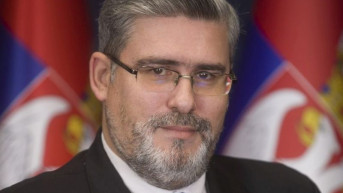
Serbian Minister for European Integration Nemanja Starovic said today that it is extremely important for Serbia that, at the beginning of July, it received a recommendation from the European Commission to open Cluster 3 in its EU accession negotiations, adding that it would be only fair for the cluster to be opened after four and a half years. Starovic emphasized that the number of EU member states supporting the opening of Cluster 3 for Serbia is growing, RTV reported.
"It is exceptionally important for us that, for the sixth consecutive time, at the beginning of July, we received a recommendation from the European Commission to finally open Cluster 3, and even through this extraordinary recommendation calling for it to happen during the month of July. I say extraordinary because, until now, in the last five annual progress reports published at the end of each year—from 2021 through the end of 2025—we received that positive recommendation, whereas this time it came in an extraordinary manner, at the beginning of July," Starovic told Tanjug.
He stressed that this is of great importance to Serbia because the European Commission is the only institution with the appropriate mechanisms and expertise to assess, on the basis of merit, whether a candidate country is ready to open a particular cluster.
Starovic noted that a number of EU member states had expressed skepticism or reservations regarding the opening of Cluster 3, but added that, in his view, the media had interpreted those positions with insufficient precision, and that it did not necessarily mean that each of those seven or eight countries would actually vote against opening the cluster.
"Perhaps two or three are particularly skeptical, problematic, or negatively inclined. I would not speak specifically, not even about the number, let alone the names of those countries. That would not be diplomatic, given that our communications are ongoing and intensive, and that over the next ten days we will see the continuation of the coordination process and consultations among the member states led by the Irish Presidency," Starovic said, according to RTV.
He added that the issue of opening Cluster 3 should be viewed in comparison with last December, when the matter was previously considered and ultimately ended with a negative outcome.
"Compared with last December, we now have a larger number of countries supporting us. In other words, the circle of support for Serbia is certainly expanding. We have long enjoyed almost unanimous support from the countries of Southern Europe, as well as predominant support from the countries of Central Europe. In December, we witnessed a strong, proactive joint initiative by France and Italy aimed at securing the opening of Cluster 3 for Serbia, and now that circle of support has grown even further. Germany, the EU's most politically influential member state, is now also part of that group, and all of this is steering the debate in a positive direction," the minister said.
He stressed that he could not make any promises because "the ball is in the European Union's court and in the hands of its member states," but said that it would be fair for Cluster 3 finally to be opened after four and a half years—not because it represents a particularly significant milestone in the accession process, since it is only one of around a hundred steps involved in joining the EU.
"However, it has acquired tremendous symbolic significance precisely because of the long period of waiting, during which we have, if not been stopped, then certainly slowed down at this particular stage. Everything we have been doing, especially over the past six months since the Operational Team for Serbia's Accession to the European Union became operational, has been aimed at ensuring that we are prepared for a truly accelerated advance in the accession process," Starovic said.
He expressed confidence that, should Cluster 3 be opened, Serbia would very quickly be ready to open Clusters 2 and 5 as well, and to meet the important interim benchmarks for Chapters 23 and 24.
Asked whether the Belgrade Declaration, adopted at the Conference of Speakers of Parliament of EU Candidate Countries, changes the European narrative and the perception that Serbs are "little Russians," Starovic said that the reactions so far had already been highly positive.
"I believe this is a very well-conceived format—a gathering of parliamentary speakers jointly organized by the National Assembly of the Republic of Serbia and the Verkhovna Rada of Ukraine. The first meeting was held here in Belgrade, which carries considerable symbolic significance. First, it demonstrates that all of us who are candidates for EU membership can achieve a great deal through mutual cooperation, and that we refuse to accept the notion that we should be competitors or engaged in any kind of rivalry, because the EU enlargement process is not a game of musical chairs with a limited number of seats that we are all racing to secure," Starovic said.
He assessed that the accession process is far more complex and said he believes candidate countries can help one another, something that has already been demonstrated in practice.
"At present, there are two groups of EU candidate countries. One consists of the Western Balkans, while the other comprises the candidates from Eastern Europe. It is a positive development that this kind of connection has been established between Belgrade and Kyiv, given that Serbia occupies a central position in the Western Balkans in every respect, while Ukraine plays a similar role among the Eastern European candidates, alongside Moldova and Georgia. It is therefore a good thing that this framework for cooperation has been established and that it will continue in the years ahead," Starovic said.
Speaking about the possibility that Serbia could fall behind in the EU enlargement process because of the Eastern European countries, which are geographically much closer to Russia, Starovic said that for many years both sides had been caught in a vicious circle in which certain EU member states continually ask Serbia to declare whether it is genuinely committed to the EU, while Serbia asks the EU to clarify whether enlargement will actually take place and whether Serbia is genuinely part of that process.
"We met all the technical requirements for opening Cluster 3 almost five years ago, at the end of 2021. Nevertheless, we are now prepared to make an additional effort, to accommodate all those expectations and additional political conditions that have accumulated in the meantime, to the extent that this is realistically possible. We then intend to place the ball back in the European Union's court and in the hands of its key member states, so that we can finally see where we stand and, if you will, put the matter to the test," Starovic said.
According to him, that was the entire purpose of the highly ambitious and successful wave of reforms that Serbia has implemented over the past several months.
"The goal is to ensure that we now meet not only our formal obligations—which we already fulfilled back in 2021—but also all those expectations that can realistically be met, and then finally determine whether there is a genuine political will for enlargement and whether Serbia is included in that enlargement agenda," Starovic concluded.
0 comments