
The escape of Ramadani from house arrest: A scandal or how to elegantly get rid of a "hot potato"
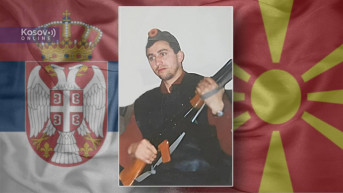
Legal, diplomatic, and even regional, the issue has suddenly become a domestic political problem for North Macedonia. Resignations are being demanded, and there's a blame game over who is at fault. For the interlocutors of Kosovo Online, the escape from house arrest of former KLA member Blerim Ramadani has been a "hot potato" from the start, and the outcome—a perfect solution for Skopje to avoid spoiling political relations either with Belgrade or Pristina.
Written by: Arsenije Vuckovic
Ramadani was arrested on July 17 in North Macedonia based on an Interpol warrant due to an indictment for war crimes against Serbs in 1999.
He was a member of the KLA's Nerodimlje Operational Zone, which is known for the persecution of several hundred Serbs from the urban part of Urosevac and the villages of Nerodimlje, Krajishte, Veliki and Mali Alas, Slatina, Goles, Pomazatin, as well as for burning Serbian houses, demolishing churches, kidnapping and killing dozens of Serbs, and expelling the Serbian population from the municipalities covered by this operational zone.
On August 1, the Basic Court in Tetovo decided that instead of being in prison, he would await the final ruling of the Supreme Court under house arrest.
He escaped from it on Wednesday, just two days before the sentencing.
According to Macedonian media, members of the judiciary and police helped him in this.
"The competent judicial authority has provided the Ministry of Internal Affairs with documentation to issue a central arrest warrant for B.R. as he is currently not available to law enforcement. The Ministry of Internal Affairs is taking measures to locate the individual," the Macedonian Ministry of Internal Affairs announced yesterday.
North Macedonian Prime Minister Hristijan Mickoski, responding to a journalist's question on how the escape and case of Blerim Ramadani would affect relations between Macedonia and Serbia, said that as a state and government, they want to build good neighborly relations with all their neighbors.
When it was pointed out that Health Minister Arben Taravara had already stated on August 2 that Ramadani had been released, Mickoski said he hadn't read that.
"I haven’t heard anyone boasting about releasing him. But, for example, we have a person who was accused in the 'Monstrum' case and is in prison in Kosovo serving a 24-year sentence. When we ask our neighbors, they say they can’t extradite him because he is serving a 24-year sentence there, as he committed a crime there, killed a man, and was convicted there. I wouldn’t comment on court decisions; let’s wait for the prosecution and courts to declare their stance, and then we can comment," Mickoski said.
North Macedonian Interior Minister Pance Toskovski says that the police are not to blame for Ramadani’s escape from house arrest.
"In the case of Blerim Ramadani's escape, the real question should be why the court decided to place that person under house arrest instead of effective detention," Mickoski said.
Then, political parties, both ruling and opposition, Macedonian and Albanian, became involved in the whole case...
The SDSM accused Toskovski of the police "turning a blind eye" to Ramadani's escape, while the recently ruling DUI took it a step further, calling the ruling parties vassals.
"The election losers, vassals who kiss hands in mono-ethnic power, who lack legitimacy from Albanian voters but are preferred by VMRO, boasted of releasing Blerim Ramadani, deceiving the people that security measures had changed, while yesterday the police again decided to detain him and place him under active detention," the statement said.
"Win-Win" Effect
In an interview with Kosovo Online, Skopje-based analyst Petar Arsovski stated that Blerim Ramadani's escape is somewhat beneficial for everyone in North Macedonia and the region. He assessed that Ramadani was a "hot potato" for North Macedonia from the start.
"It was a hot potato for the authorities because Macedonia found itself caught between Kosovo and Serbia, and there wasn't a good solution, except maybe this one. Pushing it 'under the rug' or allowing the suspect to escape is a way to cover up the case, or at least reduce the pressure within that triangle," Arsovski explained.
However, he emphasized that, legally speaking, Ramadani's escape hasn't changed anything.
"Nothing changes, the request remains valid. I think Macedonia had already decided not to extradite him, and that's an independent legal procedure. I don't know if this will strengthen the extradition request, but at the very least, it will change the decision from house arrest to effective detention. I believe that this is an independent process to secure the accused, that is, the person in extradition detention, within Macedonia," the analyst explained.
"I think this outcome was somewhat acceptable to everyone, because the extradition request created antagonism or tension between Macedonia and Serbia. Such requests have been rejected in the past. Also, we should bear in mind that this person holds a high level of sensitivity among the Albanian population in Macedonia, and extradition could have sparked political tensions. So, I think this outcome is politically favorable for everyone, although it complicates the administrative and institutional work," Arsovski concluded.
He assesses that Ramadani was a "hot potato" for North Macedonia from the beginning.
"It was a hot potato for the authorities because Macedonia found itself caught in the middle between Kosovo and Serbia, and there wasn't a good solution, except perhaps this one. 'Sweeping it under the rug' or the suspect's escape is a way to cover up the case, or at least reduce the pressure within that triangle," Arsovski explains.
However, he emphasizes that Ramadani's escape hasn't actually changed anything from a legal standpoint.
"Nothing changes; the request remains valid. I think Macedonia had already decided not to extradite him, and that is already an independent legal procedure. I don't know if this will strengthen the extradition request, but at the very least, it will change the decision from house arrest to effective detention. I believe that this is an independent process of securing the accused, meaning the one in extradition detention, within Macedonia," the analyst explains.
He concludes that the decision on extradition will undoubtedly have political consequences.
"We are already seeing these political consequences because these are individuals who provoke strong sensitivities among Albanians in Macedonia, including some political parties. That's why there is political influence, and that's why in the past, in most of these cases, extradition did not occur, as it would have drawn Macedonia into a dispute and struggle between Belgrade and Pristina, which we essentially do not want to engage in," Arsovski believes.
He is also clear that official Skopje will not change its foreign policy, at least concerning these regional issues.
"Despite the internal consequences, at least on the external front, I think this neutral position will be maintained at the level of Skopje's official policy," Arsovski concludes.
Law and Politics
Lawyer and former military prosecutor Dragan Pasic says that the non-extradition of Blerim Ramadani will likely have both political and legal consequences in the relations between North Macedonia and Serbia.
"There will most likely be political consequences. I would remind you that the Republic of North Macedonia did not extradite Garuf Dugoli and Tomor Morina. That was a few years ago, and I don't expect that they will extradite Blerim Ramadani either. When I say legal consequences, the principle of reciprocity comes into play. This means that if North Macedonia had such requests towards our country, the question arises whether our country would comply with such requests. Of course, political consequences also arise. It's about the trust between our state and the further political cooperation," Pasic emphasized in an interview with Kosovo Online.
According to him, extradition procedures for individuals wanted under international warrants always represent both a political and legal issue.
"Extradition is both a political and legal issue. The European Convention on Extradition from 1957 obligates the signatories of this multilateral treaty to mutually extradite citizens who have committed crimes recognized by all the states that are signatories to the convention," Pasic says.
He adds that there are also exceptions to extradition, citing the example from early 2017 when Ramush Haradinaj, at the time the president of the Alliance for the Future of Kosovo, was arrested at the "Basel-Mulhouse" airport in eastern France based on an Interpol warrant.
"On the other hand, there are exceptions to extradition. This is particularly characteristic of France, which has used this right in the past. I would remind you of the case of Ramush Haradinaj when they found that legal grounds for extradition were met, but they deemed it unjustified to extradite him to our country, believing that he would not receive equal treatment compared to other citizens of our country. So, it is both a legal and political issue, although it should ideally be based on law," Pasic explains.
He reminds us that the Extradition Treaty between Serbia and North Macedonia was concluded on November 29, 2011.
"According to that treaty, the Republic of North Macedonia is obligated to extradite citizens upon the request of our country if they have committed crimes on our territory," Pasic explains.
Controversial Decisions
Commenting on the outcome of Blerim Ramadani's case, Skopje-based lawyer Janaki Mitrovski told Kosovo Online that it was evident from the beginning that his extradition would not take place. He also questioned why house arrest was imposed on him, a measure that, in cases of extradition and flight risk, is applied only in special circumstances.
"I think it's more than certain that Blerim Ramadani will not be extradited. It is highly unorthodox, to put it mildly, not to impose detention, because in extradition proceedings, unlike regular ones, the law is set up differently. While detention is the last measure in regular proceedings, in extradition cases, a lighter measure is imposed only in exceptional circumstances, as the risk of flight is always the main argument for imposing detention," Mitrovski says.
He emphasizes that despite the new circumstances, the international warrant against Ramadani remains in effect, meaning he can be arrested anytime he leaves Kosovo.
"In the event of non-extradition, his international warrant will remain in effect because it was issued by Serbia, which is the primary condition for requesting extradition. So, Mr. Ramadani will not be a free man outside of Kosovo and should be arrested at any border crossing or if he finds himself in another country's territory," Mitrovski highlights.
Aleksa Grubesic, a researcher at the Center for Social Stability in Novi Sad, has no doubt that the Blerim Ramadani case has been a "hot potato" for North Macedonia from the start, and that this scenario has most benefited the Albanian political elites in both Skopje and Pristina.
"This was definitely a hot potato for the authorities in North Macedonia. They were under pressure from both sides—on one side, of course, from Belgrade to extradite Ramadani, and on the other side from Albanians not to do so. It’s highly debatable what the decision of the Supreme Court of Macedonia would have been, and who would have actually made that decision and how. The Albanians certainly didn’t want to wait, and Ramadani and his accomplices didn’t want to wait for such a court decision either, so they decided to escape from house arrest, making that the conclusion of this legal process," Grubesic told Kosovo Online.
He believes that this outcome of the extradition process was most favorable to Albanian politicians in both North Macedonia and Kosovo to avoid a trial for a person suspected of war crimes against Serbs.
"Certainly, Ramadani’s escape from house arrest suits the Albanian political structures in both North Macedonia and Kosovo because they absolutely do not want Serbia, official Belgrade, to try a KLA terrorist. Just to remind, Ramadani was a member of the Nerodimlje Operational Zone, which committed war crimes against Serbian civilians in Nerodimlje and the urban part of Urosevac and surrounding villages in the entire region. He is accused of expelling Serbs, killing Serbian civilians, and also of burning Serbian houses and churches. There is no doubt that he is a war criminal and terrorist who should be sanctioned," Grubesic asserts.
He recalls that Ramadani is the third former KLA member to be arrested in North Macedonia based on an Interpol warrant issued by Serbia, but in both previous cases, the North Macedonian court decided not to extradite them.



0 comments