
EU measures against Kosovo: What effects will they have and will Kurti now meet the demands of Brussels?
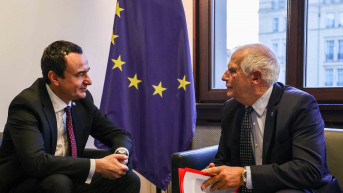
The measures introduced by the European Union to Pristina due to its refusal to de-escalate the situation in the north will have economic and political consequences for Kosovo, according to the interlocutors of Kosovo Online, and indicate that this is a clear message to Prime Minister Albin Kurti that "time is running out" to fulfill the demands of Brussels and Washington for the withdrawal of special units and illegitimate mayors, new elections and the formation of the Community of Serb-majority Municipalities. Analyst Predrag Rajic believes that the measures will not "intimidate" Kurti and force him to obey the US and the EU, while economist Safet Gerxhaliu assesses that he would have to do so.
As it was announced from Brussels, in the last few days, Kosovo had been excluded from the Digital Europe program, worth 7.5 billion euros, work in working bodies within the Stabilization and Association Agreement had been suspended, Pristina officials would not be invited to high-level meetings, and bilateral visits would be suspended.
It was confirmed that the programming of funds for Kosovo within the IPA 2024 was suspended, while the proposals presented by the Pristina authorities within the Investment Framework for the Western Balkans were not at all submitted for consideration to the Investment Fund Board at the meeting held on June 29 and 30.
Analyst of the Center for Social Stability, Predrag Rajic, tells Kosovo Online that, given that Kosovo is currently fully supported by the EU, but also by the US, if the denial of financial support instruments to Pristina continues, it may have noticeable consequences for the standard of living of people and the economic situation, but not in a short period of time.
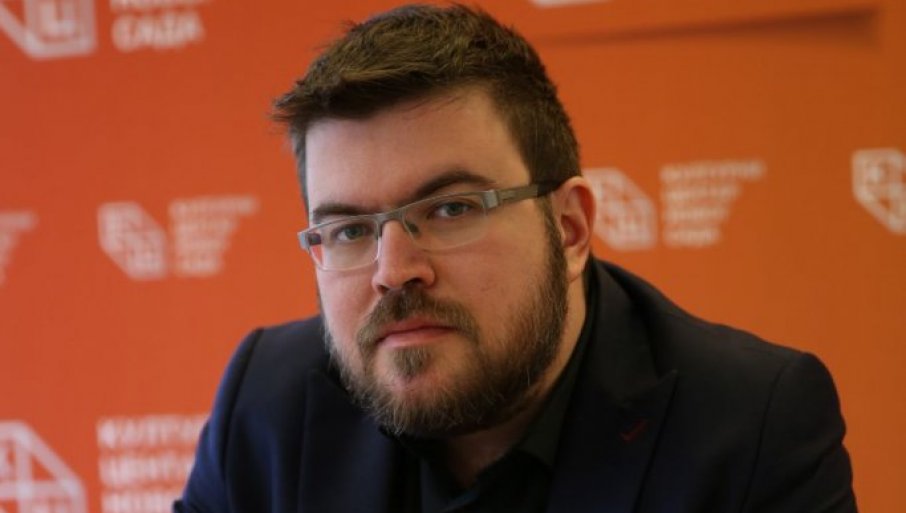
"These are not yet harsh enough measures that could quickly cause consequences. Any sanctions take time to see the effects. Nothing will happen instantly there. Kurti is a fanatic, he does not think rationally, and even if harsher sanctions were introduced now, he would not give in, but would again go in the direction of further escalation," Rajic believes.
He adds that Kurti is ready to "go to the end" to fulfill what he considers to be his mission, which is to ethnically cleanse Kosovo of the Serbs and to unite all Albanian lands.
"With the fact that he had the idea to personally be the first leader of that united 'Greater Albania'. I would not say that these are measures that will intimidate Kurti, but whether they are strong enough to provoke the opposition and some coalition partners of the Kosovo Prime Minister to possibly unite and try to overthrow him from power in the parliament is another question. In my opinion, I think that the opposition has not yet matured its attitude and readiness to overthrow Kurti at all at this moment and go to the elections and eventually take over power. It seems to me that they are running away from responsibility, as if they are waiting for some kind of complete confrontation between Kurti and the West, in order to remove him permanently politically, and until that happens, they are not ready to silently observe everything that is happening." Rajic states.
According to him, the EU could have applied more serious sanctions towards Kosovo. He hopes that the international community will do so at some point and that the decision will not come too late.
"IPA funds are, first of all, intended for the strengthening of administrative capacities, the civil sector, and for the possibility of realizing very small 'green field' investments. I don't think that at first, it will have any significant effect; I think that the broader consequences of the sanctions can be felt only in six months to a year. As I said, I don't think Kurti is intimidated by that, since he is literally trying to provoke a war day by day, and six months is such a long period for his plans," our interlocutor points out.
Economist Safet Gerxhaliu stated that Kosovo did not deserve sanctions from friendly countries, but that they would certainly harm Kosovo in every way.
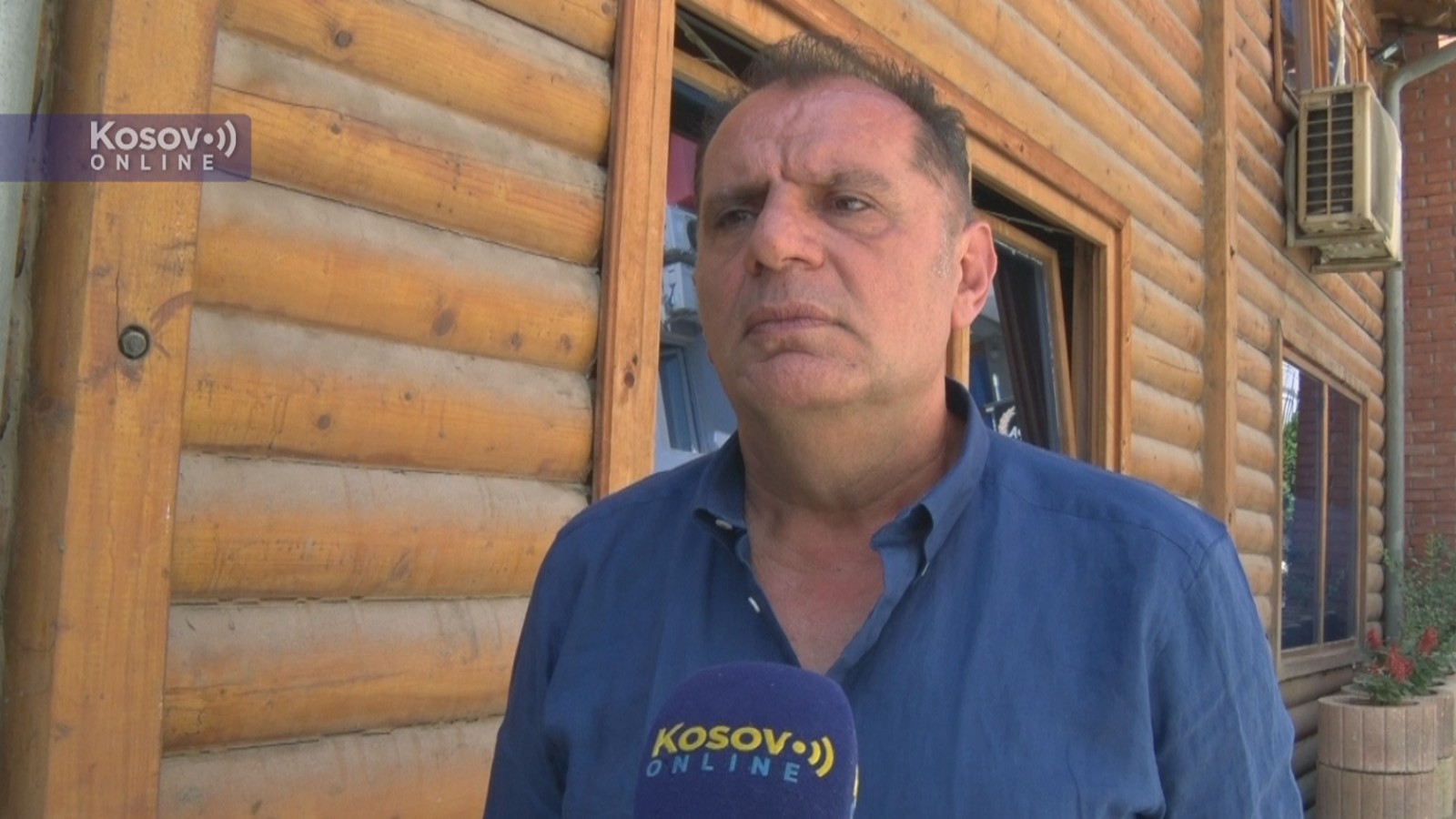
"The biggest problem is that Kosovo did not deserve to receive sanctions. However, we are witnessing that without the support of the United States of America and the EU countries, we would not be where we are now. In this context, any discrepancy between common interests will harm Kosovo," Gerxhaliu says for Kosovo Online.
According to him, the Kosovo economy will suffer severe consequences due to the EU sanctions.
"The freezing of funds will have very negative consequences, as will the freezing of the Stabilization and Association Agreement. When it comes to energy and large infrastructure projects, there will also be a big blow to Kosovo," Gerxhaliu emphasized.
He pointed out that in addition to political and economic analyses, the EU sanctions should also be viewed from a psychological point of view.
"EU measures should be analyzed in several dimensions, not only economically and politically, but also psychologically and emotionally because today it is not easy to be a citizen of Kosovo and have sanctions from friendly countries," Gerxhaliu added.
As he pointed out, the EU sanctions were a message to the Government of Kosovo to fulfill its obligations and return to dialogue.
"That should be a message for the government - to strengthen the dialogue and normalize relations with the US and the EU countries. As soon as possible, the dialogue should be strengthened and the tasks and obligations that Kosovo received from the EU and the US should be fulfilled as soon as possible because without friends you cannot move forward,” Gerxhaliu said.
He added that people in Kosovo were tired of politics and stated that it was necessary to somehow stop the departure of young people.
"In the public sphere, there is only talk about politics. People are tired of it and it is certain that it only strengthens the so-called demographic pandemic that has hit Kosovo because young people are leaving Kosovo uncontrollably," Gerxhaliu concluded.


0 comments