
The European Plan: Is there a reason for the accusations of the opposition in Belgrade and Pristina?
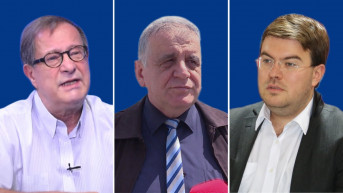
After the European Union, after a new round of dialogue at the highest level in Brussels, announced the European plan for the normalization of relations between Kosovo and Serbia, and stated that the two sides had agreed to start discussions on the modalities of its implementation, violent reactions followed from opposition parties both in Belgrade and in Pristina. Analysts Bosko Jaksic, Nexhmedin Spahiu, and Predrag Rajic spoke on this topic for Kosovo Online.
The President of Serbia, Aleksandar Vucic, and the Prime Minister of Kosovo, Albin Kurti, did not sign any document in Brussels, the agreement was - in fact, to continue the talks, and the head of the Serbian state emphasized that he had remained firm on the necessity of forming the Community of Serb-majority Municipalities, which Kurti persistently avoided.
In their reactions, the opposition parties on the Serbian political scene accused Serbian President Aleksandar Vucic of the "agreement in Brussels", so former President Boris Tadic said that CSM "is not a victory at all", while the leaders of the Srce Movement and People's Party, Zdravko Ponos and Vuk Jeremic, assessed that "Vucic recognized Kosovo", which is identical to the statements of representatives of Dveri, Oathkeepers, and the NADA coalition.
Commenting on the justification of such criticism, journalist and political analyst Bosko Jaksic tells Kosovo Online that such assessments are completely unjustified and mean a misunderstanding of reality.
"That reality is very unfavorable for Serbia, that is true, but not accepting the agreement has clear consequences from which both those who support and those who do not support the agreement would suffer because Serbia would be isolated, a pariah country, impoverished, threatened by unrest. So the arguments of history are absolutely opposite to the arguments of the future," Jaksic is convinced.
As for the assessment that "the CSM is not a victory at all", he says that it is part of undermining Aleksandar Vucic.
"The CSM has its importance. Without going into the all foreseen competencies, it is an important institution that would help the quality of life of the Serbs both north and south of the Ibar. Assessments that it means nothing are solely to undermine Vucic, for whom it is so important. And since it is so important to him, it is unimportant to us (the opposition). That is the simplified logic of our policy," Jaksic believes.
He also states that the criticisms of the "left" and "right" opposition are involuntarily reduced to the same thing, even though they come from completely different positions.
"The pro-Russian position has been known for a long time, they are satisfied with the status quo, the frozen conflict, and part of the pro-European opposition is extremely short-sighted and lacks vision and in fact also advocates a frozen conflict. And if we enter the next century with the problem of Kosovo, that is a disaster," Jaksic said.
Kosovo political analyst Nexhmedin Spahiu says that the opposition in Belgrade has its political right to criticize, because, in his opinion, the Franco-German plan is to replace the recognition of Kosovo with greater autonomy for the Serbs in Kosovo, than what is foreseen by Ahtisaari's plan and the Kosovo Constitution.
Spahiu points out that the opposition in Pristina is not dealing with the Franco-German plan, but with Albin Kurti.
"In Pristina, the opposition is not concerned with the EU plan, but with Albin Kurti, and reproaches him for changing his views. Which is completely unusual, naïve, and childish. Instead of looking at the interests of Kosovo, and saying what is not in the interests of Kosovo, they are not concerned with that, but with Kurti, which does not suit them and is not worthy of any political party," Spahiu concluded.
Predrag Rajic from the Center for Social Stability points out that there are two opposition wings in Serbia - the state-building wing, which is in the minority, and the non-state-building wing, among which there are those who always say that we should give up our identity, that this is just a burden and that it is for the best to forget who we are and what we are and continue like that, but also those who use demagoguery, appeal to epic songs, but without concrete proposals for solutions to problems, while "igniting" negative feelings in the people towards the holders of power.
All this, he points out, is bad and destroys national unity on the issue that, in fact, everyone in Serbia needs to come together, and that is Kosovo.
He also notes that those who spoke about the fact that "the CSM is not a victory" were those whose government was recognized by the overwhelming majority of countries in the United Nations, when proceedings were initiated before the International Court of Justice in support of Albanian secession in Kosovo, and when an agreement was reached on the transfer of negotiations from New York to Brussels, so instead of the UN, in which Russia and China have the right of veto, the EU is the mediator of the talks, whose key states recognize Kosovo's independence.
"Those who only suffered defeats will present every victory as a defeat. The CSM is, objectively, the most significant victory of the Serbs in this century in Kosovo and Metohija. But they will always present it as a defeat because they only know how to lose," Rajic said.
In Kosovo, the opposition is united in its condemnation of Albin Kurti because they believe, contrary to the views of the Serbian opposition that Kurti agreed to the CSM without receiving recognition from Serbia.
When asked whether the reaction of the opposition in Pristina spoke in favor of the fact that the CSM was, after all, a victory, Rajic says that he absolutely agrees with such a position.
"We see the great dissatisfaction of the Albanians in Kosovo and Metohija, and I would say that there will be more and more political clashes in Pristina. It's good that they don't have unity between the government and the opposition, but it's bad that it doesn't exist here either. But the comments of the opposition in Pristina clearly state how much the CSM is a victory for the Serbs, and how important its formation is for the Serbs in Kosovo and Metohija," Rajic said.
0 comments