
Expulsion of the Serbian dinar (and the Serbs) from Kosovo, a political move under the guise of the economy
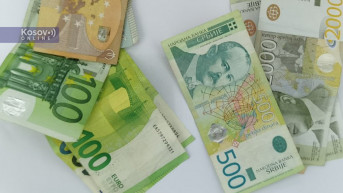
As of February 1, according to the decision of the Central Bank of Kosovo Committee, the euro will be the only currency allowed for cash transactions and in the payment system of Kosovo. If this decision is implemented, as indicated by Kosovo Online interlocutors, the use of the Serbian dinar in Kosovo would be suspended, causing numerous problems primarily for citizens, especially the Serbs, but also for the Albanians and others, as well as for the economy.
Those employed in companies connected to Serbia and funded from the budget of Serbia will be particularly affected. Currently, it is unclear under which regime and in which banks pensions and social benefits from the Serbian budget would be withdrawn in this scenario.
An additional concern for citizens is the announcement that NLB Komercijalna Banka also plans to close its branches in Kosovo as of February 1.
However, after yesterday's meeting with Serbian President Aleksandar Vucic in Davos, the EU Special Representative for the Belgrade-Pristina dialogue, Miroslav Lajcak, stated that he had informed Brussels about Pristina's intention to abolish payment transactions with Serbia and expressed confidence that a solution would be found without any negative consequences, this did not have a calming effect on Serbs in Kosovo. Some of them, interviewed by our reporters today, say that the decision to abolish the Serbian dinar would bring complete chaos into their lives, already filled with difficulties. They believe that this may be the most challenging situation for them so far.
Top of Form
The Acting Director of the Post of Serbia, Zoran Djordjevic, stated for our portal that the Post of Serbia was making an effort to find a way to continue its operations as before. In his assessment, Pristina and Albin Kurti are showing that they do not want the Serbs to exist in Kosovo.
He adds that everyone employed in institutions funded by the state of Serbia receives their salaries through the Post of Serbia, emphasizing that those employed in Serbian institutions are the ones directly affected. Any Serbian dinar transaction, he explains, can only be conducted at the Post of Serbia. He says that users of the Post of Serbia include all citizens, and their services range from financial transactions, deposits, withdrawals, salaries, pensions, social benefits, and voucher applications, to sending and receiving packages.
"This is very dangerous; the true face of the temporary Pristina institutions and Kurti is being revealed with this move, showing that he does not want the Serbs to exist in Kosovo and Metohija. I can responsibly say this as an economist. By abolishing payment transactions, I think he wants to drive the Serbs away from Kosovo and Metohija, but I am confident that it will not happen", Djordjevic stated.
Ljubodrag Savic, a Professor at the Faculty of Economics in Belgrade, stated for Kosovo Online that there was a significant danger for the economy and citizens if Kosovo abolished payment transactions in Serbian dinars, emphasizing that such a move would be catastrophic for the economy.
"There is a danger for both the economy and citizens. For the economy, primarily because it will not be able to function normally. The Kosovo side has its goals and uses every opportunity to achieve them, with the main goal being the absence of Serbia and the absence of the Serbs in Kosovo. That is the essence. If payment transactions are abolished, it will be a disaster. If payment transactions remain, but, for example, the Serbian dinar is abolished, that will also cause significant problems, I would say, in economic functioning. Equally significant is the fact that it is additional pressure on the Serbs to consider whether there is still a place for them to live in Kosovo", Savic emphasized.
He believes that the most severe consequences will be felt by citizens employed in the Serbian Provisional Institutions in Kosovo who receive salaries from the Serbian budget.
"People working in companies connected to the Republic of Serbia and funded from the budget of Serbia will have problems. As far as I understand, only Komercijalna Banka was doing that, and now they are announcing their withdrawal. If there is no Serbian dinar, then it will be a significant difficulty. Of course, this can probably be resolved with the euro as a currency that exists both in Serbia and Kosovo, but there must still be a bank willing to cooperate with, for example, the Government of Serbia and the relevant ministry that pays salaries for teachers and other employees. Probably, they will have to find a bank or intermediary willing to do that", Savic says.
Our interlocutor states that he has seen an explanation for why the Serbian dinar cannot be used in Kosovo anymore.
"As they say, the law applies to every foreign currency. I'm curious whether this law applies to the euro as well. So, all this is done to create additional pressure. Perhaps the primary goal is not to have people leave Kosovo as much as possible. That is, of course, important, but the reason for everything is pressure on the state of Serbia to definitively recognize the Kosovo side as an equal partner and to start respecting them. Due to all this, of course, our people here, our companies, and our banks will have problems, but the people living in Kosovo, connected to the Republic of Serbia, or receiving salaries or pensions from Serbia, will suffer the greatest damage", Savic stated.
Kosovo, as he notes, can abolish payment transactions in Serbian dinars overnight if it does not consider the consequences because they will also face certain problems due to that measure.
If there were to be an abolition of payment transactions with Serbia and a ban on the Serbian dinar in Kosovo, according to the assessment of the President of the Association of Serbian Entrepreneurs from Gracanica, Sasa Sekulic, it would lead to a humanitarian catastrophe. He says for Kosovo Online that older citizens receive pensions from Serbia, but also that employees in healthcare, education, and many other institutions receive salaries in Serbian dinars.
"Just as the new year began, unfortunately, after all these holidays, the Serbs received the announcement of the abolition of payment transactions. One bad piece of news, just like the bad news about the ban on Serbian goods, but this is even worse. I appeal to the government in Pristina not to do this, on behalf of entrepreneurs, and I call on all Serbian political representatives to start talking with international factors from today, even with representatives of the government in Pristina, so that this decision does not happen", Sekulic said.
He emphasized that if there were to be an abolition of payment transactions with Serbia, a humanitarian catastrophe would ensue.
"I will mention the oldest citizens who receive pensions; it would be a humanitarian catastrophe because many receive pensions by having postmen deliver them to their home addresses. What will happen to that? Where will they receive their pensions? And we have one more thing; many Albanians receive pensions from the Republic of Serbia; where will they receive them? I still hope that Pristina will not make this decision, but everything should be done to prevent it. The entire education and healthcare system receives salaries in Serbian dinars, even many entrepreneurs who work within the Serbian system trade with each other in Serbian dinars", Sekulic said.
Kosovo's economic expert, Mustafa Kadriaj, recalled for Kosovo Online that the Government of Kosovo in 2003 when it had introduced the euro, had determined that the Serbian dinar and the Albanian lek were not valid currencies in Kosovo.
"As Kosovo, we would like to have our currency, but we operate under the regime imposed by the EU on Kosovo. In that regard, I believe that Kosovo should work with the European currency if we claim that we want to be a part of the EU", Kadriaj says.
The announcement of abolishing payment transactions in Serbian dinars is seen by the Executive Director of the NGO "Aktiv", Miodrag Milicevic, as another in a series of problematic decisions. As he told Kosovo Online, this issue must be on the agenda of the international community to find a solution adapted to the everyday needs of citizens and institutions.
"Unfortunately, another in a series of quite problematic decisions, from the perspective of the Serbian community, which will undoubtedly lead to a series of problems in everyday functioning, not only for budgetary institutions but primarily for ordinary citizens. At this moment, we are dealing with facts that the Central Bank of Kosovo has already communicated through the media to the wider public, and there is a lack of various details, with no clarification of the elements or conditions under which this decision of the CBK will be implemented", he said.
What Milicevic finds particularly worrisome is that no alternative is offered, nor is there a clearer indication of how payment transactions will be conducted in the future.
"Facts and legal regulations and possibilities that the Republic of Serbia legally prescribes in Serbia are completely ignored. From that perspective, citizens are undoubtedly concerned at this moment, and that is what should be on the agenda of the international community now and must find some kind of solution, as Lajcak also said, primarily adapted to the everyday needs of both citizens and budgetary institutions operating in areas with a Serb-majority population“, Milicevic emphasized.
As he points out ordinary citizens currently have absolutely no additional information and are rightfully concerned about the continued functioning of their income and earnings from the Serbian budget.
Top of Form
Some economists from Pristina expressed their views a few days ago, stating that the use of the Serbian dinar was causing harm to Kosovo. Berat Jashari said that it would cause millions in damages to the budget, as sales made through Serbian dinars were not reported to the Tax Administration of Kosovo.
"The use of Serbian dinars in Kosovo is a great evil that occurs in the market, banks, and the Central Bank of Kosovo (CBK)", he said.
Legal expert Musa Damati characterized the use of Serbian dinars in Kosovo as unconstitutional and legally unlawful because there was no reciprocal bilateral agreement between Kosovo and Serbia.
What President of Serbia Aleksandar Vucic conveyed to international officials is that Pristina's announcements about abolishing payment transactions and banning the use of Serbian dinars represent the most severe and significant threat to the dialogue so far. He emphasized that hindering the payment of salaries and pensions for the Serbs in healthcare and education would mean "not a quiet but a loud departure of the Serbs from Kosovo and Metohija“.



comments