
Focus of the pre-election campaign – assigning blame for failure, unblocking institutions, or the Serb community?
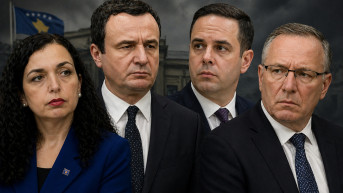
The ruling Self-Determination movement has failed to reach an agreement on the president with opposition parties, and Kosovo is heading to parliamentary elections for the third time in 16 months. Interlocutors of Kosovo Online point out that one of the key themes of the pre-election campaign will be responsibility for the failure to elect a president, but add that parties will also have to offer solutions and promise an exit from the institutional deadlock. They also expect that the Serbian community in Kosovo will again be among the campaign topics in this election cycle.
Written by: Jelena Novakov
Since the first failed attempt to elect a new president in early March, political parties in Kosovo have been mutually accusing each other of sabotaging the process. Opposition parties rejected the option under which Self-Determination would hold the positions of prime minister, president of Kosovo, and speaker of the Assembly, while Self-Determination accused the Democratic League of Kosovo (LDK) and the Democratic Party of Kosovo (PDK) of lacking the will to reach a political agreement.
The Democratic Party of Kosovo demanded that Albin Kurti guarantee that, if they were to nominate Vjosa Osmani for president, she would receive the votes of 66 MPs. The prime minister did not respond, and the session to elect a new president was held without a quorum on Monday evening and continued on Tuesday.
Tensions between the government and the opposition have intensified, with the opposition and some organizations accusing the authorities of violating the constitutional order and staging a coup. Consequently, in addition to assigning blame for the failed presidential election, the opposition may use this unilateral attempt to elect a president as a campaign argument against Self-Determination.
Interlocutors note that focusing solely on blame will not be sufficient, and that the opposition must mobilize and convince citizens that it can bring stability and establish functioning institutions.
They also point out that the campaign will address Serbian educational and healthcare institutions, although opinions differ as to which party this may benefit. On one hand, there is a possibility that Kurti will continue exerting even greater pressure on Serbs; on the other, some argue that the agreement on the implementation of laws on foreigners and motor vehicles has opened space for the opposition to highlight the prime minister’s inconsistency.
The possibility of targeting the Serbian community was also raised by the Serb List in a statement regarding graffiti of the KLA (OVK) that appeared on the wall of a family home in the village of Mogila. The Serb List questioned the competent authorities and international representatives whether this signals the beginning of another political campaign in which the lack of concrete results is concealed by raising tensions and instability among citizens.
President of Serbia Aleksandar Vucic stated last night that the upcoming elections in Kosovo would bring a new wave of “anti-Serb hysteria” and increased tensions.
Who is to blame?
Political scientist Ognjen Gogic told Kosovo Online that the key theme of the upcoming elections will be responsibility for the failed presidential election, as well as providing guarantees to voters that instability will end and stable institutions will be formed. In addition, he notes that campaign topics will include Serbian institutions, relations with Western partners, and war crimes verdicts against former KLA leaders.
“This is already the third time in a year and a half that Kosovo is going to parliamentary elections, and all topics and promises have been exhausted. No one can say anything new that has not already been said, nor is there anyone willing to listen. Citizens are more interested in why Kosovo cannot constitute its institutions after all these election cycles,” he said.
According to him, the central question is responsibility for the repeated failure to form institutions, as well as how to avoid such situations in the future.
“The main promise of the parties will be the constitution of institutions—the election of a government and a president—and assurances that there will be no need for new elections in a few months. Everything else is secondary, because no one believes in new promises if they are not sure that there will even be institutions to implement them,” he added.
Gogic also expects that relations with Western partners—particularly the United States—will become a campaign issue.
“If Vjosa Osmani runs as an opposition candidate, she could criticize Kurti’s alleged anti-American stance. Parties may compete over who is more pro-European and pro-American,” he said.
At the same time, he expects war crimes to be a relevant campaign issue, especially in light of anticipated first-instance verdicts in cases involving former KLA leaders, including Hashim Thaçi.
“Whatever the verdict, it will raise tensions in Kosovo and could significantly affect the final phase of the campaign,” Gogic assessed.
He added that Serbian educational and healthcare institutions could also become a campaign topic, particularly due to Kurti’s perceived inconsistency.
“Kurti previously insisted he would not tolerate what he called illegal parallel institutions of Serbia in Kosovo, but later, in agreement with Peter Sørensen, effectively accepted that they continue operating without formal integration into the Kosovo system, at least for now,” he said.
According to him, the opposition could use this inconsistency to challenge Kurti politically.
Gogic concluded that Albanian political parties compete in nationalism and patriotism, often directing such narratives against the Serbian side, which may make Serbs in Kosovo feel uneasy during the campaign.
Kurti’s populism and opposition reform
Political analyst Artan Muhaxhiri stated that Albin Kurti will not be able to rely on previous advantages such as populism and tensions in northern Kosovo, emphasizing that much will depend on the opposition’s ability to reform.
“After six years in power, his populism has begun to fade,” Muhaxhiri said, noting that the opposition remains passive and lacks new strategies.
He added that a potential candidacy of Vjosa Osmani could influence the electoral balance, but stressed that opposition reform is essential.
The Serbian community
Assistant professor Stefan Surlic stated that Kurti cannot base his campaign on anti-corruption efforts, but rather on what he described as “imaginary enemies” within the Serbian community.
According to him, another campaign theme will be the integration of Serbian educational and healthcare institutions, including pressure on universities and educational structures.
Campaign rhetoric and national divisions
Former deputy president of the Municipal Assembly of North Mitrovica Skender Sadiku expressed hope that national divisions will not dominate the campaign, emphasizing that the democratic nature of the central authorities in Pristina is reflected in their treatment of minority communities.
“Democracy is measured by how the majority treats the minority,” Sadiku said, calling on both central and local authorities to reduce rhetoric and ensure equal protection for all citizens.


0 comments