
Foreign investments in the region: Who invests the most in the Balkans, and who is the largest regional investor?
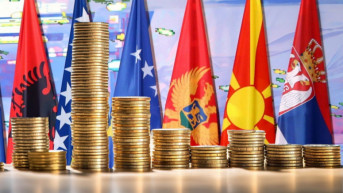
The Western Balkans has increasingly positioned itself as a favorable business destination on the global economic investment map in recent years. As countries in the region strive to attract foreign direct investment (FDI), there is also a growing emphasis on economic cooperation among them. Economic experts from Belgrade, Tirana, Skopje, and Pristina discuss for Kosovo Online which countries are the leading sources of foreign capital and where the region itself invests.
Written by: Petar Rosic
Serbia has been the regional leader in foreign direct investments (FDI) for several consecutive years, explains Bojan Stanic, Assistant Director of the Strategic Analysis Sector at the Serbian Chamber of Commerce, for Kosovo Online.
"When we talk about investments in Serbia, they have been at a record level for several years now, amounting to around 4.5 billion euros in foreign direct investment inflows. This is an excellent indicator, considering that investments are a source of economic activity growth in Serbia as they expand production capacity," Stanic states.
He explains that the European Union, as a group of 27 members, is the biggest investor in Serbia, while China has been the most significant single investor in recent years.
"Looking at a longer timeframe of about ten to fifteen years, nearly 60 percent of all investments that came to Serbia were from the EU. In terms of significant investors, besides Germany and the Netherlands, mentioned China, there are also substantial investments from the United States. Although the amount has decreased in the last few years, Russia has also made significant investments, followed by Turkey and others," our interlocutor notes.
Regarding the region, he mentions, significant investments are lacking.
"We have investments from Croatia, Bosnia and Herzegovina, and Montenegro, but, of course, they are at a more modest level. Hungary also has its investments..." he says.
These are primarily investments in real estate and to a lesser extent in the manufacturing industry.
On the other hand, he is explicit, Serbia is a very significant investor in the region.
"Thanks to positive economic growth in recent years, which has been explosive, over three percent, Serbia has accumulated certain funds, and the economy in general, to invest in countries of the region. If you look at the period from 2019 to 2023, there were about 500 million euros of foreign direct investments from Serbia in the region, mainly going to Montenegro and Bosnia and Herzegovina," the assistant director of the Strategic Analysis Sector at the Serbian Chamber of Commerce points out.
He emphasizes that significant investments in the region continued even in 2024.
"For example, looking at Montenegro, Serbia has been the most significant investor over the past few years. If a longer time period is considered, then Serbia is in second place behind the Russian Federation, but due to the war in Ukraine, this list of significant investors has changed, and now Serbia is the leading investor in Montenegro, but also in Bosnia and Herzegovina, alongside Croatia," Stanic says.
Regarding Montenegro, the most significant investments are in real estate and certain financial services, while in Bosnia and Herzegovina, investments are in the energy sector and certain service activities. He expects the continuation of Serbian economic activity in the region to increase in the coming year.
"Serbia continues to be a driver of intra-regional trade, keeping in mind, as we mentioned, that it is the most significant economy. However, a lot depends on external factors. In this specific case, also on the situation in the Eurozone. Here, the German economy is a growth engine, which is also one of the region's largest foreign trade partners," he emphasizes.
He explains that a very mild growth is expected in Germany next year, but another external factor might cause the German economy to enter a recession zone.
Also, a lot depends on the situation with energy resources, and the decisions of the new administration in Washington.
"All these are consequences of a geopolitical situation that is truly unpredictable in the coming year," Stanic concludes.
In attracting foreign direct investments, Albania holds the second place in the region, says Eduart Gjokutaj, an economic expert and president and fiscal analyst at Altax for Kosovo Online.
"In Serbia, foreign investments are at a level that reaches 7, 8 percent of its gross domestic product. Albania is in second place, thanks to purchasing real estate and investments coming either from formal sources or from offshore areas. Northern Macedonia holds the third place in the region, also having an aggressive policy of attracting foreign investments mainly in the chemical industry, telecommunications, and the service and trade sector," Gjokutaj notes.
He adds that Montenegro and Kosovo are at similar levels when it comes to attracting foreign investments.
"Montenegro has investments in service sectors, mainly related to tourism and trade. Kosovo has foreign investments in telecommunications, partially in the energy sector, and trade, and the trend is on the rise, but not at levels demanded by the economy and citizens. Foreign investments are also considered special projects of the European Union for investing in these countries," our interlocutor explains.
Observing the economic relations between the countries of the Western Balkans, it is noted that Kosovo remains the main partner for Albania "despite the fact that Kosovo and other countries have limitations on investing in Albania."
North Macedonia follows as a neighboring state that has interests in the telecommunications, energy, and services sectors, and Montenegro, which has more interests in the tourism sector, mainly in real estate.
"With Serbia and Bosnia and Herzegovina, the levels of foreign investment in Albania are lower, either due to certain historical and cultural reasons or because of various political obstacles and administrative barriers. In total, these foreign investments in Albania make up only five percent of the gross domestic product, so they are not at the expected level due to the geographical proximity of the countries," says Gjokutaj.
He explains that Albania has "the same approach."
"The most is invested in Kosovo because of the cultural, linguistic, and other connections that make this cooperation logical. Similarly, in North Macedonia, as a neighboring country, there are foreign investments from Albania, which are mainly related to telecommunications, financial services, and trade," says the analyst from Tirana.
Biljana Lepavcova, Advisor for International Cooperation at the Foreign Investors Council of the North Macedonian Chamber of Commerce, says that in 2023, the total foreign direct investments in Macedonia amounted to 616.7 million euros, while in the first three months of 2024, they exceeded 800 million euros.
Lepavcova notes that in the structure of foreign direct investments, equity capital and inflows based on reinvested profits predominate.
Regarding the countries from which the capital for foreign direct investments originates, these are the countries of the European Union.
"Austria is in first place, followed by Germany, Greece, Turkey, and the Netherlands. These are the top five countries from which the capital originates," says our interlocutor.
She explains that in the entire region, there has been "flexibility" regarding foreign direct investments in recent years, which is generally a consequence of the COVID crisis and the war in Ukraine.
"European countries have been looking for new, closer locations for their investments, and this process known as nearshoring actually represents a business strategy that involves relocating business to locations that will offer greater efficiency for their business operations, reducing transport and other operational costs, avoiding logistical operations, language barriers, and different time zones," says the advisor for international cooperation from Skopje.
Thus, she explains, the countries of the Western Balkans have represented the first choice for investors when seeking a favorable business destination, or location for their next investments.
"This region of the Western Balkans offers advantages for foreign investors due to the proximity to European markets, because of relatively low operational costs, skilled labor force, and young workforce, and so on," she notes.
Analyzed by sectors, of the total investments in Macedonia, 33 percent was invested in manufacturing, and 22 percent in financial and insurance activities. It is added that in the past two years, there has been a trend of increasing investments in the energy sector in Macedonia.
It is emphasized that traditionally, Serbia has invested the most in Macedonia from the region, followed by Albania and Kosovo, while investments from Bosnia and Herzegovina and Montenegro have been significantly less.
"For example, in 2023, investments from Albania increased in value compared to previous years, and these investments were predominantly in the real estate sector," he states. On the other hand, he notes, Macedonia also invests in the region.
"For instance, Alkaloid has invested 104 million euros in the region in the past few years in the pharmaceutical industry; then, IGM Trade has its investments in the region, specifically in Slovenia, but also in other countries from the region," she explains.
Kosovo is the worst in the region when it comes to foreign direct investments, and economic expert from Pristina, Mustafa Kadriaj, blames the current government.
Kadriaj explains that this year, Kosovo was shaken by political problems that also had an impact on the economy.
"I believe that foreign investors were not interested because the political situation has always dictated the economy, and as a result, the burden fell on the government, which has not worked on attracting investors," says the economist from Pristina for Kosovo online. He notes that investments in Kosovo mainly come from Germany and Turkey, but they are not at an enviable level.
"If we talk about investors, they have primarily been from Germany and Turkey, but in recent years the investments have been weak because the current government had no interest in the economic development part. More was invested in social policies which have proven to be unsuccessful. Since the war in Kosovo, the number of foreign investors has been quite low in the last four years. I hope that whichever government comes after the 2025 elections will change course in this regard," says Kadriaj.


0 comments