
Mazreku: If the new leaders in Syria are pro-Western, their position on Kosovo will be more constructive
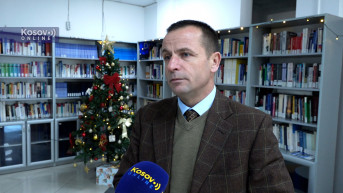
Avni Mazreku, a professor of European law from Pristina, tells Kosovo Online that it is currently unclear whether the revolutionary forces holding transitional power in Syria will align with Eastern or Western interests, which is why it remains to be seen what their position will be regarding the recognition of Kosovo.
“In the broader context of Islamic countries, very few nations from the Organization of Islamic Cooperation have recognized Kosovo, and I do not see a direct role of Iran in the recognition of Kosovo,” Mazreku said, responding to the remarks by former Kosovo Foreign Minister Enver Hoxhaj, who had suggested that the fall of Bashar al-Assad's regime in Syria presented a strategic opportunity for Kosovo to overcome Iranian influence in countries like Syria, Lebanon, and Iraq, creating a chance for Kosovo to secure new recognitions.
According to Mazreku, if the revolutionary forces in Syria take a pro-Western orientation, their stance on recognizing Kosovo will likely be more constructive. However, he notes that, so far, he has not seen any statements from the new Syrian leaders that indicate a pro-Euro-Atlantic orientation.
Regarding the Syrian population, Mazreku points out that it is not homogenous, as it comprises various ethnic groups, and that therefore, it is too early to predict their stance on Kosovo.
“There are three key factors in Syria: Iran, Russia, and Turkey. The relations of the new Syrian leaders with Russia are in a process of reconfiguration, even though Russia was one of the countries that bombed the military positions of the revolutionaries. We do not know what their orientation will be, whether pro-Eastern or pro-Western. If it is pro-Western, a more constructive approach to recognizing Kosovo’s independence can be expected,” Mazreku explained.
He also emphasizes that countries with internal issues, such as Spain, hesitate to recognize Kosovo’s independence due to the precedent it might set. However, he reminds that, according to former UN Special Envoy for Kosovo Martti Ahtisaari, Kosovo’s case is unique and cannot be taken as a precedent.

0 comments