
Freedom of expression or verbal offense in the 21st century: Should the courts decide?
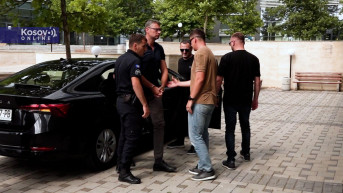
Divergent views on past events are not unique to Serbs and Albanians, nor is this a Balkan-specific phenomenon. The European Union has attempted to bridge such divides with joint history textbooks—something still considered unfeasible in this region. Pristina has opted for a different approach—arrest. The detention of Igor Popovic for expressing views about the events in Orahovac 25 years ago, which some found disagreeable, is being seen by observers as a case of suppressing free speech and intimidating dissenting voices, Kosovo Online reports.
Written by: Dusica Radeka Djordjevic
“This is like trying to deliver a speech on Golgotha in Jerusalem where Christ suffered. Our brothers suffered because KLA terrorists didn’t want Serbs in these parts, and by executing them, they wanted to scare the remaining Serbian population into leaving. What hurts is that the terrorists, the organizers and perpetrators of the crimes, have not been found or punished in all these years—while, in comparison, for the kidnapping of Israeli civilians, all of Gaza is being destroyed. Despite numerous international investigative groups—UNMIK, EULEX, the Hague Tribunal—there have been no convictions. Yet, the KLA is still portrayed as a liberation army and freedom fighters,” said Igor Popovic, Assistant Director of the Office for Kosovo and Metohija of the Serbian Government, on Friday in Velika Hoca, after a memorial for the Serbs killed in Orahovac.
That same day, Kosovo police arrested him, and yesterday, the pre-trial judge of the Basic Court in Pristina ordered 30 days of detention. The prosecution claims his speech incited division and hostility.
Acting Kosovo Prime Minister Albin Kurti was quick to deliver his judgment. According to him, Popovic’s statements “incite hatred and tensions and pose a security threat to the Balkans, as they come from officials who control the security apparatus.”
Notably, the same charge now brought against Popovic was previously laid against Ivan Todosijevic, President of the Provisional Authority of Zvecan and former Kosovo Government Minister, who during a commemoration marking 20 years since the NATO bombing said that the Racak incident had been fabricated and used as a pretext for the bombing. Though initially sentenced in Pristina in late 2019 to two years in prison, the Supreme Court of Kosovo acquitted him in July 2023. The court ruled that Todosijevic had expressed a personal opinion, which could not be interpreted as “incitement to hatred.”
The Supreme Court also found that while some of his claims may have been inaccurate, they did not amount to calls for hostility or hatred toward another community.
One of Igor Popovic’s attorneys, Ljubomir Pantovic, told Kosovo Online that during the hearing they specifically invoked the 2023 Supreme Court decision acquitting Todosijevic—but the court still ruled for detention.
“Unfortunately, we’ve come to a point where you cannot say anything that the local public dislikes without risking prosecution. You must weigh every word, especially on such sensitive topics, where someone might interpret your words as disturbing interethnic relations or spreading hate. It’s truly a very, very difficult situation for our people here,” Pantovic remarked.
Former judge of the Higher Court in Mitrovica, Nikola Kabasic, said that the Kosovo Supreme Court had taken a clear, precise, and well-argued stance in the Todosijevic case, and provided guidance to lower courts and the Court of Appeals.
“They stated that going forward, a distinction must be made between freedom of public expression and what constitutes criminalization of that opinion—what amounts to incitement or stirring of national hatred. They referred to several rulings of the European Court of Human Rights, stating clearly that facts must be proven, whereas opinions do not need to be proven—they can be right or wrong, informed or uninformed—and that Kosovo must guarantee freedom of thought,” Kabasic said to Kosovo Online.
Commenting on Popovic’s detention, based on his remarks about the KLA, Kabasic noted that in recent years, the ruling Self-Determination Movement itself had not been favorable toward the KLA, its legacy, or its leaders—and had used much harsher language than Popovic, yet no one had been held accountable.
“With the detention of Igor Popovic, I believe we are witnessing Pristina’s further escalation in the instrumentalization of the police, the Special Prosecutor’s Office, and the Special Court, and the narrowing of space for freedom of opinion and public expression—especially for Serbs and other non-Albanians in Kosovo. We must be extremely cautious going forward because anyone can now fall under Article 147(1) of the Kosovo Criminal Code on incitement to hatred and division based on national, racial, religious, or other differences,” Kabasic warned.
He believes that, as in Todosijevic’s case, Popovic did not commit a crime and that Pristina’s intentions are transparent.
“They ban the word ‘Metohija’ in verdicts, criminalize mentioning Racak through the Todosijevic case, and now Igor Popovic is being prosecuted for referring to an event for which the KLA is held responsible—an event that is part of the indictment at The Hague Tribunal, where the KLA’s top leadership is being tried. That’s precisely why they’re on trial,” Kabasic emphasized.
He also pointed out that Popovic’s statements did not significantly disturb interethnic relations between Serbs and Albanians, as the prosecution claims.
“We saw no such consequences. Less than two hours passed between his speech and his arrest. No one was even aware of it until [Interior Minister] Svecla went public. This speaks volumes about the kind of legal system we live in and shows that Serbs cannot expect a fair trial when the police minister dictates the investigation and court proceedings,” Kabasic concluded.
Legal expert Milan Antonijevic stated that the question of history must remain within the realm of freedom of expression. In a democratic society, he said, everyone must have the right to question all issues, including those relating to the KLA’s responsibility for crimes against Serbs.
“This is essential in Kosovan society. We must not forget that the KLA’s crimes are currently being tried in The Hague and that all the issues raised during the Orahovac gathering are part of the court’s investigations. Nothing said there contradicts the testimonies before the tribunal or the previous assessments by the U.S. State Department regarding the KLA and related matters. This is undoubtedly a matter of free expression and must not be criminalized, as doing so would stifle open discourse about crimes and victims—dialogue essential for the future of our region,” Antonijevic told Kosovo Online.
Political analyst Blerim Burjani commented on Popovic’s arrest by saying one must distinguish between political speech and criminal offenses.
“All facts should be considered. Hate speech should not be used, as it is a criminal offense under Kosovo’s Constitution and laws. There are consequences for violating the law. One must be cautious not to cross the legal line. National hatred is unlawful. Now it’s in the hands of the prosecutor and the court,” Burjani told Kosovo Online.
However, political scientist Ognjen Gogic sees the arrest of Popovic, an assistant to the Serbian Government’s Office for Kosovo and Metohija, as political persecution—a violation of the right to free speech.
“Nothing Popovic said was insulting or threatening to the Albanian people. He didn’t talk about Albanians at all. He spoke about Serbian victims of crimes that have never been properly investigated or prosecuted. That was the focus of his remarks—and that should not be offensive to Albanians,” Gogic said.
According to the standards of the Council of Europe and the European Court of Human Rights, he explained, freedom of expression is interpreted very broadly to prevent all dissenting opinions from being categorized as hate speech. There is a clear distinction between free speech and hate speech—free speech can be controversial.
“Popovic has the right to speak critically or negatively about the KLA. He doesn't have to be right—he might be wrong—but he has the right to say it. This cannot be interpreted as an insult to the Albanian people, because he does not equate the KLA with the Albanian people. What we see here is that someone is being denied their freedom for expressing a value judgment—even if it’s inaccurate. This should be treated as a human rights issue. If, for example, Popovic’s statements were defamatory, KLA veterans could sue him in civil court for damage to reputation and honor. The issue is not whether what he said was true or not, but that he had the right to say it, and it should not be considered hate speech because he did not target an ethnic group,” Gogic told Kosovo Online.
He added that Popovic’s arrest should be viewed in the context of ongoing tensions in Kosovo, where authorities in Pristina are making increasingly extreme moves due to the overall political situation.
He questioned what part of Popovic’s speech actually offended acting Interior Minister Xhelal Sveçla—his remarks on the KLA or the fact that he mentioned Serbian victims who never received justice.
“Perhaps that’s what made it controversial. Perhaps, going forward, anyone who speaks at memorials for Serbian victims in Kosovo will face the same consequences. Maybe simply reminding the public that there are victims who never saw justice is now considered offensive,” Gogic suggested, noting that Serbs and Albanians clearly have different views of the past and of the KLA.
He stressed that no real dialogue has ever occurred—either within or between the two communities—on who did what to whom.
Head of the Freedom Party of Austria’s delegation in the European Parliament, Harald Vilimsky, described the detention of Popovic as a scandal, stating it showed Pristina’s unwillingness to confront its past.
“The Popovic case is an alarming example of ongoing political arbitrariness and intimidation of dissenting voices in Pristina. Arresting a Serbian government official simply for stating historical facts and openly naming KLA crimes is a scandal. Freedom of expression in Kosovo seems to apply only when it aligns with the pro-Albanian narrative,” Vilimsky told Kosovo Online.
Finally, Serbian President Aleksandar Vucic said that the arrest of Igor Popovic could have unforeseeable consequences and that Serbia had informed all its international partners and would continue to do so.
“The arrest of Igor Popovic shows that Kurti has completely lost his mind and wants to provoke incidents and conflict in the Western Balkans,” Vucic declared.


comments