
How much are the international guarantees to Serbia and the Serbs in Kosovo worth?
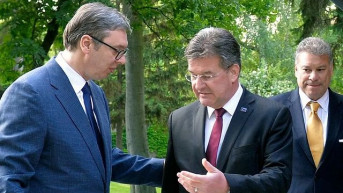
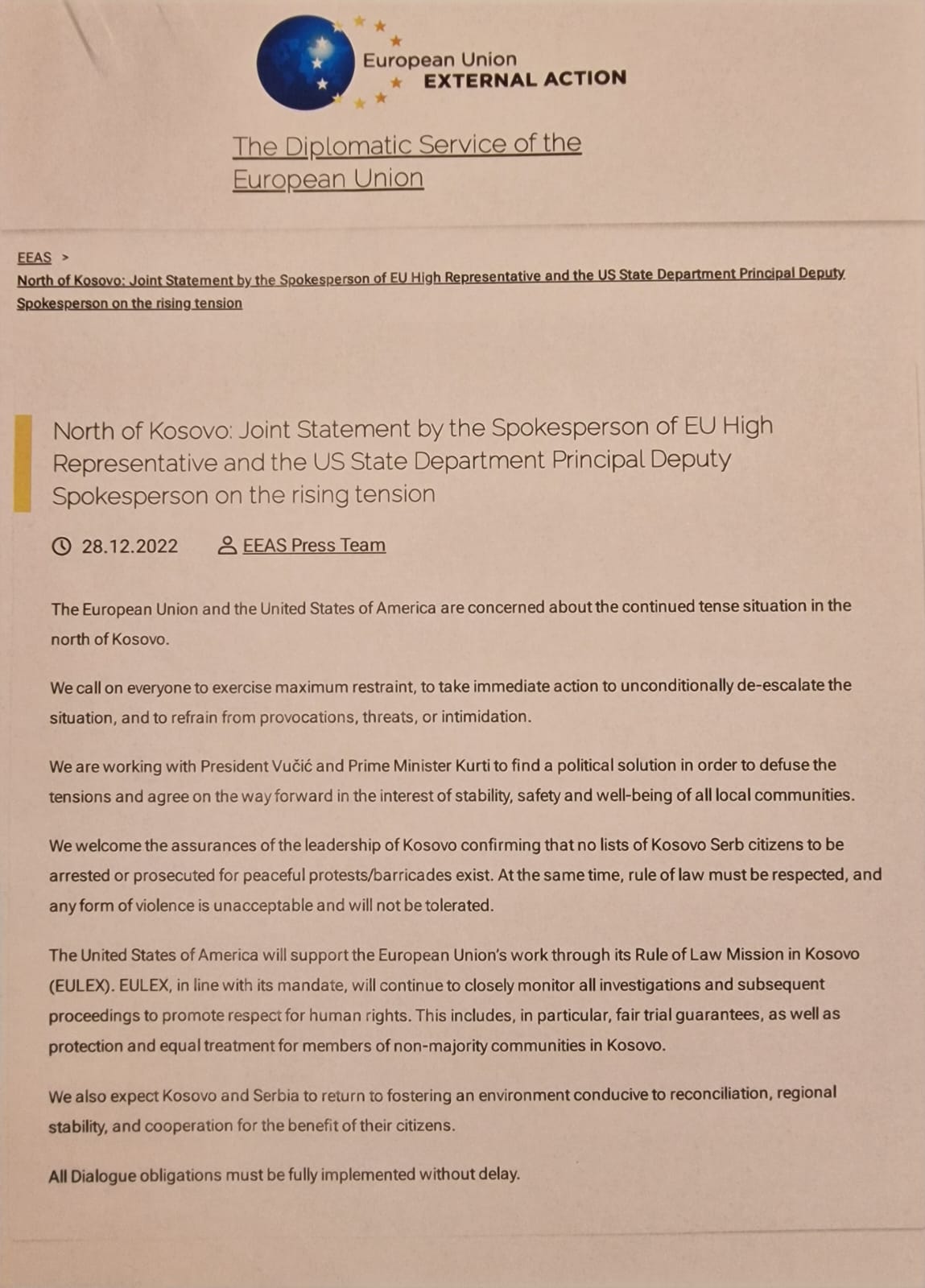
Lawyer Nebojsa Vlajic said two days ago that his client Nenad Orlovic, who had been arrested by Kosovo Police Special Forces on Friday in North Mitrovica, was accused of participating in last year's barricades organized by the Serbs in the north of Kosovo. Previously, the Kosovo Prosecutor's Office, after the arrest of the athlete Milun Milenkovic, announced that he was charged with the "events in front of the election commission building in North Mitrovica" from December 2022. The European Union, the United States, and NATO gave guarantees to Belgrade at the end of last year that the Serbs who participated in the protests due to the unilateral decisions and moves of the government of Albin Kurti, would not be arrested, and the President of Serbia, Aleksandar Vucic, recently reminded that those guarantees had been violated.
In addition, many agreements reached in Brussels between Belgrade and Pristina, whose guarantor is the EU, have also not been implemented. Such as the establishment of the Community of Serb-majority Municipalities, but also the agreement that was reached on license plates, which were several times the cause of raising tensions and causing crises in the north of Kosovo.
The interlocutors of Kosovo Online believe that the guarantees given by the great powers do not have the weight they had in the former policy. On the other hand, they state that agreements are necessary because they are the basis for achieving peaceful political and diplomatic solutions, but that experience shows that they should not be fully relied on.
Research associate of the Institute for International Politics and Economy, Aleksandar Mitic, says that the guarantees to Serbia that came from the West were never respected and therefore, according to him, their non-fulfillment could surprise only the very naive or the very forgetful.
"That was the case during all the conflicts of the 90s, especially in the case of Kosovo and Metohija," Mitic told Kosovo Online.
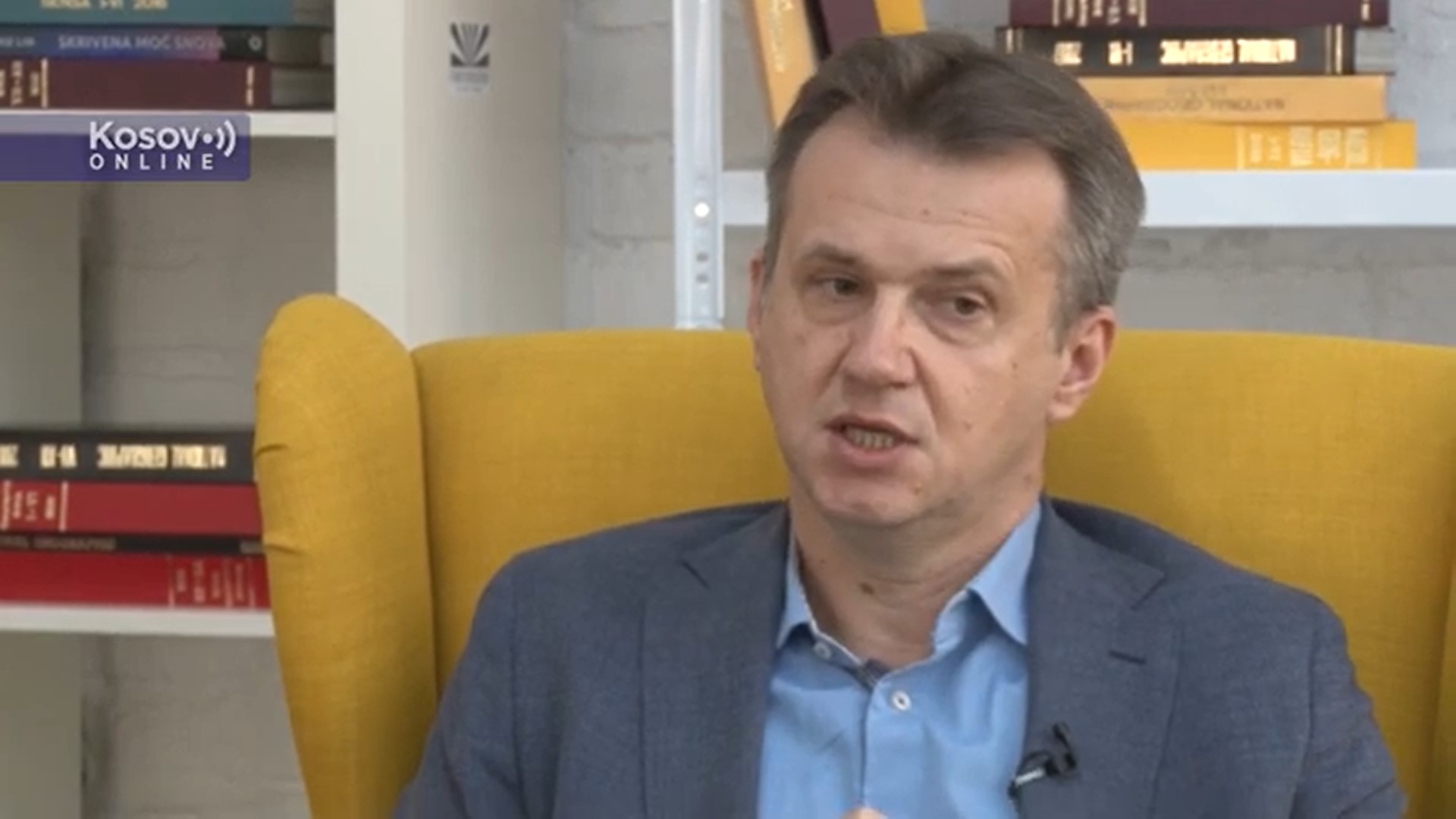
Mitic recalled the case of the OSCE Verification Mission in Kosovo, which had been headed by William Walker.
"Which served to prepare for NATO aggression in 1999, various NATO guarantees within the KFOR command that served to prepare the Albanians to encircle the territorial integrity of 'independent Kosovo' and collapse the Serb resistance, and EU guarantees within the Brussels Agreement that served to destroy the presence of the Serbian state in Kosovo and Metohija, and in return the minimum is not met – the CSM," Mitic says.
According to Mitic, even at the current moment, we should not have high expectations from the given guarantees.
"Such is the case even today. Simply, the West gives alleged guarantees to the Serbs only to tactically buy time and advance in its mission of legalizing the 'unilateral declaration of independence of Kosovo', which irreversibly collapsed the international legal order in 2008," Mitic concludes.
Foreign policy commentator and long-time Politika correspondent from Berlin, Miroslav Stojanovic, also believes that in the case of guarantees given by Western countries, something that once meant something has been completely relativized.
"It used to be a kind of a holy book. When some agreements are made and guarantees are given, they should be kept, even if they are oral, they don't have to be written. However, everything has turned around, because the interests of the countries are at stake which can violate agreements. We are talking about countries that have military, economic, and political power, they break those agreements for their own benefit when they don't suit them," Stojanovic said.
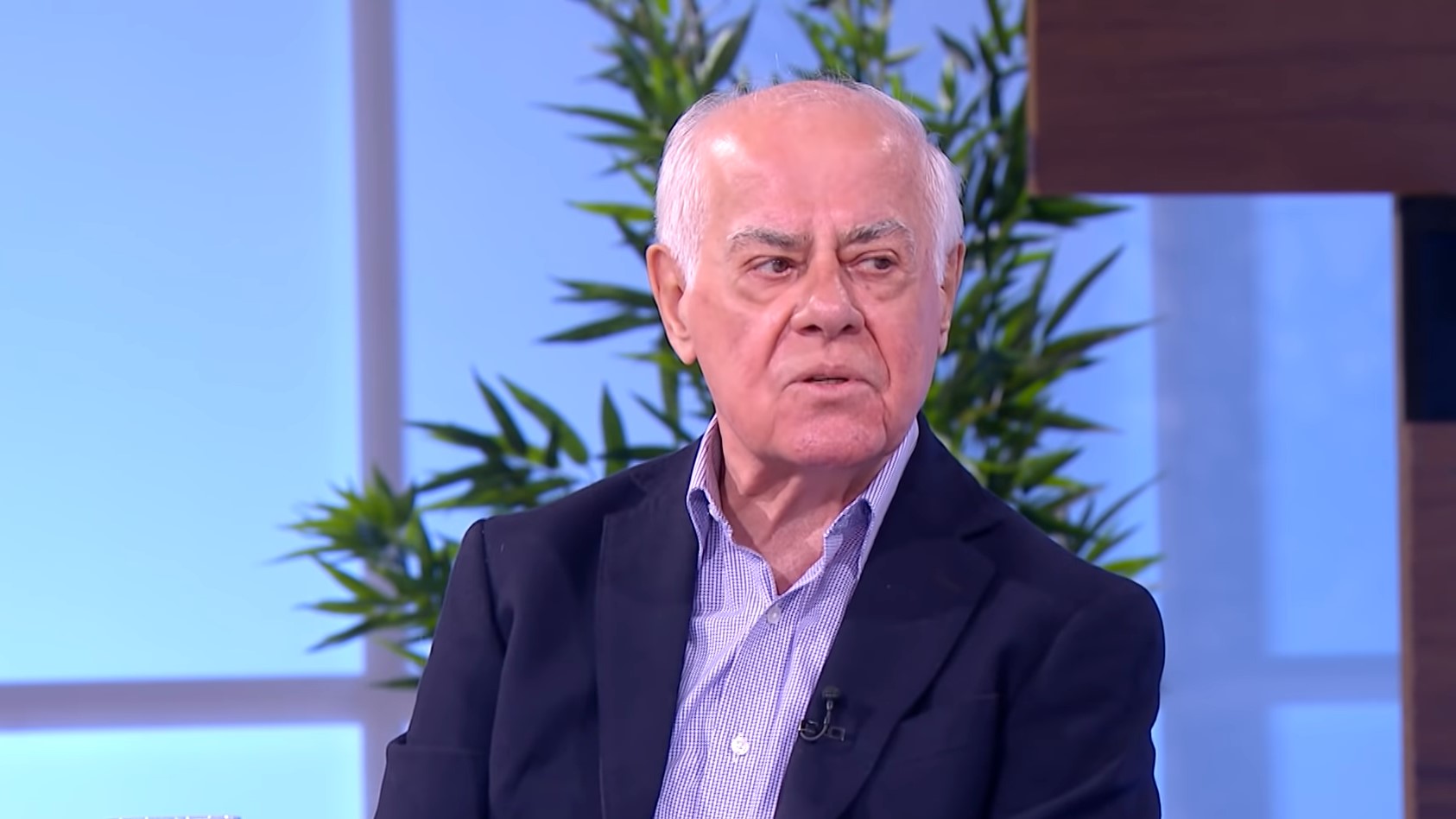
Stojanovic says that this has become more common recently, and he cites the situation in Ukraine as a drastic example, as well as the issue of Kosovo.
"Even the so-called agreements that were made in Brussels are not respected, and many of those agreements have not been implemented although the big EU countries, first of all, Germany, stood behind them and guaranteed what they did not implement, so we are in a situation where we cannot talk seriously about those agreements, and that, of course, also applies to all the guarantees given by big countries," Stojanovic points out.
According to him, agreements are nevertheless necessary, because every crisis must be resolved through diplomacy, agreements, and respect for guarantees.
"Now it is much more difficult to make them without having the feeling that what you get from the guarantees will at some point be relativized or postponed or never made at all. The problem is the credibility of those guarantees. Some agreements should be made no matter how much we doubt them, because they create a kind of certainty that some minefields will not be activated at one time, because of license plates in one moment, at another because of taxes on goods, or now in a situation of extreme uncertainty where the Serbs from Kosovo, when they come to central Serbia, do not know who will wait for them and how when they return whether they will be arrested or not, it's a feeling of extreme insecurity, that's why some agreements should be made no matter how much we doubt them, they can achieve something at some point," Stojanovic says.
Stojanovic recalled the agreement between Serbia and Kosovo in Washington during the time of US President Donald Trump, which he said had now been completely rejected.
"He had a good idea to relieve things economically and create a more relaxed atmosphere in which political moves, unpopular on one side or the other, can be made more easily, and the Democrats rejected that," Stojanovic says.
According to him, the US Special Envoy for the Western Balkans, Gabriel Escobar, interpreted the Ohrid Agreement as practically giving Kosovo full legitimacy, although there is no such thing in the agreement.
"The intention of the US is to fill some fields with this move that will seem as if Kosovo is getting closer to the goal that the supporters of Kosovo's independence stand for and the powerful countries will not give up on that idea. It should not be surprising that they do not respect the guarantees they give, but the worst situation is that the hostages of this whole story and uncertain situation, promises that are not realized, are mostly the Serbs in Kosovo," Stojanovic concludes.



comments