
Drecun: KFOR has unilaterally changed its mandate into one of preserving the "false state of Kosovo"
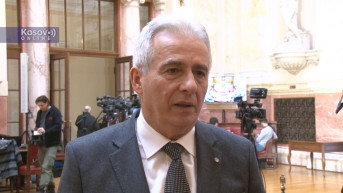
Milovan Drecun, Chairman of the Serbian Parliament's Committee on Defense and Security, said today that KFOR had itself reconfigured its mandate, transforming the mandate it had received from the United Nations—to maintain security in Kosovo—into one aimed at preserving the "false state of Kosovo."
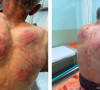
Speaking about the brutal beating of Nenad Raskovic from Zubin Potok, who was transferred to the Clinical Center of Serbia in Belgrade for treatment, Drecun said that EULEX would monitor the case from a distance and perhaps issue a statement, while KFOR was also "washing its hands" of the matter, RTV reported.
"They say it is not within their mandate to interfere in law enforcement. But this is not law enforcement; this is terror being carried out by those who are supposed to protect those very citizens. And I really have to ask: what is KFOR's mandate? What is KFOR supposed to be doing in Kosovo and Metohija now? Let the Turkish general Ulutas explain that to us. What are you doing in Kosovo and Metohija? Are you securing shipments of lethal weapons for the so-called Kosovo Security Force? Are you protecting them?" Drecun told Tanjug.
He added that KFOR Commander, Turkish General Ozkan Ulutas, was signaling more intensive cooperation with the Kosovo Police and their integration into security arrangements for the Visoki Decani Monastery and the Ibar Bridge.
"There will be much more to come. And they will probably allow the Kosovo Security Force to enter northern Kosovo and be permanently stationed there. What is their mandate? Let them answer. They constantly refer to Resolution 1244 and say that their mandate derives from that resolution. That is true. But, gentlemen, you have reconfigured your mandate yourselves, without the approval of the Security Council. What have they done? They have transformed the mandate they were given to maintain security in Kosovo and Metohija into a mandate to preserve the false state of Kosovo," Drecun stressed.
He asked why KFOR, if it was the only armed force in Kosovo under Resolution 1244, allowed members of foreign armed forces who were not part of KFOR to enter Kosovo, as well as shipments of weapons, while stressing that the greatest problem was the impunity of the Kosovo Police.
"The pattern is to use the actions of the so-called Kosovo Police Service to create unbearable living conditions for Serbs so that they leave. And unfortunately, that pattern is working. One of the results, in addition to the departure of Serbs south of the Ibar, is that over the past five years 18 percent of Serbs in northern Kosovo have been forced to leave precisely because of that mistreatment," Drecun stressed.
He said that Pristina was carrying out institutional terror by reducing Serbs to second-class citizens.
"And physical terror is being carried out, primarily through this so-called Kosovo Police Service and their special paramilitary and parapolice units. And that is why there is no accountability," Drecun stressed.
He added that investigations were conducted by "some inspectorate of theirs."
"Do you know how they conduct those investigations? They summon the victim. Let us say Ljubinko is the victim. They summon him, and they summon you if you are the police officer who beat him. And now, in your presence, Ljubinko is supposed to say: 'Yes, he beat me.' How can he say that when he knows that afterward they will come and beat him and his family, perhaps even kill them, and so on? So there will be no serious investigation. It is all done pro forma," Drecun said.
He added that the Serb List had said that another seven people had recently been beaten, but that none of this was being recorded as interethnic violence or as ethnically motivated violence against Serbs.
"This man was beaten because he is a Serb. And this is not an incident. He was not beaten by masked criminals, but by police officers. It was not an accident. If they come once, leave, and then return, and there are three of them, that shows that they have been tasked with terrorizing and harassing Serbs. The same applies when Serbian children are shot at and when Serbs are beaten, arrested, stopped, and harassed for every possible reason and for no reason at all," Drecun said.
In his assessment, this proved that there was a directive from Kosovo Interior Minister Xhelal Svecla.
"He is perhaps the person most responsible, together with Albin Kurti, for these crimes being committed against Serbs, and his directive is: 'Harass Serbs wherever you can and in every possible way, including through physical force. You will not be held accountable for it.' That is why these three can behave in this manner," Drecun stressed.
He emphasized that Resolution 1244 was the sole basis in international law for defending Serbia's territorial integrity in Kosovo.
"Resolution 1244 is the foundation of our defense of our territorial integrity in Kosovo and Metohija. Any change in the status of that resolution would only benefit them. They are the ones who want that resolution changed," Drecun said.
He recalled that Serbia had no force in Kosovo with which it could protect the Serbian people.
"We must base our defense of Kosovo and Metohija and of the Serbian people on diplomatic activities, on demands that international law be respected, that our territorial integrity be respected, that the false state of Kosovo not be recognized, and that we find ways—despite Kurti's attempts to obstruct us in every possible manner—to help the Serbian people in all areas of life so that they can survive, despite Kurti's efforts to eliminate every Serbian institution," Drecun assessed.
Regarding KFOR's decision to reduce its troop presence, Drecun said that he believed it was the result of an agreement between NATO, or KFOR, and Albin Kurti.
"The aim is to transfer part of KFOR's mandate under Resolution 1244 and some of its responsibilities to the so-called Kosovo security institutions, gradually, step by step. As you can see—Decani; as you can see—the bridge, and other areas. In my view, the second phase would then be to enable Kurti to fully militarize Kosovo and Metohija by stationing the Kosovo Security Force in northern Kosovo. I have no doubt whatsoever that this agreement has been reached and that this is the plan between NATO on the one hand, or KFOR, and Albin Kurti and the provisional institutions of self-government on the other," Drecun concluded.

0 comments