
How should Berlin’s differing positions on the formation and competences of the CSM be interpreted?
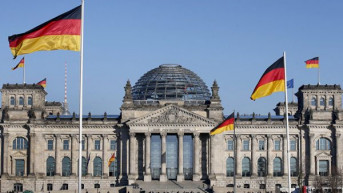
The same old topic, but with different interpretations. And this time, from the traditionally precise Germans. In just five days, official Berlin offered two interpretations of the competences of the Community of Serb-majority Municipalities (CSM), but also of the fate of Serbian healthcare and education in Kosovo. A clash between the concepts of the old and the new administration is one possible answer, say interlocutors of Kosovo Online. However, they warn that this will not help the Serbs much, since Germany will not change its foreign policy toward Kosovo. As for the Brussels Agreement and the formation of the CSM, they are convinced it will, as always, depend on who reads and interprets it.
Written by: Djordje Barovic
“I urgently call on Kosovo to refrain from attacks on healthcare institutions managed by Serbia. The concerning actions of last week negatively affect the citizens of Kosovo, contradict its obligations and commitments toward the EU, and burden our bilateral relations,” stated on 15 September Michael Reiffenstuel, Director for the Western Balkans, Turkey, the Council of Europe and OSCE at the German Foreign Ministry.
At the time, he was reacting to the Kosovo Police raid on the RFZO and PIO fund in North Mitrovica.
Five days later, after the Kosovo Police entered the Clinical Hospital Center (KBC) Kosovska Mitrovica and the Health Center of North Mitrovica, another German voice spoke up – the outgoing ambassador in Pristina, Jorn Rohde.
He did not comment on the police raid but on the statement of Srpska Lista, which said that “the integration of healthcare and education into the Kosovo system is not part of any negotiations or agreements.”
“These are the pillars of survival of the Serbian people and they will remain so. All international agreements clearly state that these are separate systems,” the party declared.
Rohde, however, claimed something entirely different – both in relation to Srpska Lista and to Reiffenstuel – asserting that healthcare and education were never part of the “Brussels package.”
“There is no integration of education and healthcare in any agreement. In points 4c and d of the General Principles from 2015, it is stated that education and healthcare are part of the CSM financed by Serbia, point 17d. At least familiarize yourself with the agreements at the end of your mandate,” responded Petar Petkovic, Director of the Serbian Government’s Office for Kosovo and Metohija, after Rohde’s claim.
There was no reply.
Jam or honey?
Former ambassador to Germany Zoran Jeremic wryly observed that perhaps Rohde’s response was symbolic, since during his farewell meeting with Kosovo’s President Vjosa Osmani, the German ambassador presented her with a jar of jam.
Commenting on the contradictory stances of Reiffenstuel and Rohde regarding the fate of Serbian healthcare and educational institutions in Kosovo, Jeremic remarked that it would have been much more appropriate for Rohde to have brought honey instead.
“This first interpretation, which criticized the Kosovo authorities for interfering in Serbian healthcare and educational institutions, came from an official at the German MFA who ‘keeps the ledger’ on this matter. The second assessment, by the German ambassador in Kosovo, came from a directly involved official who is quite responsible for the situation,” Jeremic told Kosovo Online.
He claimed that the outgoing ambassador, during his five-year mandate, was “quite responsible for the failure to adopt decisions on the establishment of the CSM.”
“Despite various German pressures, his role was always in the background, delaying, slowing down, or minimizing the CSM,” Jeremic emphasized.
He explained the difference through Germany’s foreign policy concepts toward Kosovo. The previous German administration, he noted, tried to reduce the CSM to a minimum of competences to prevent the emergence of a “the Republic of Srpska in northern Kosovo.”
“From that thesis came this minimizing of the CSM and the ambassador’s interpretation that the inclusion of Serbia’s healthcare and education and the avoidance of dualism was actually envisaged by the agreement. That is not true. It was agreed that these institutions would exist within the CSM. Since the CSM does not exist, neither do such institutions, nor a valid interpretation,” Jeremic underlined.
He added that Ambassador Rohde’s statement should be seen as a “maneuver”:
“Since there is no CSM, there are no such institutions, nor any valid interpretation. This is a maneuver by a man who had his fingers in the honey jar throughout this matter. Now, as he departs, he is trying to cover for some of his actions,” Jeremic said.
He recalled that Rohde was appointed during Annalena Baerbock’s tenure as Foreign Minister, when Germany pursued “a completely different policy toward Kosovo.”
“Now, under the new minister (Johann Wadephul), a concept has been formulated that returns to ‘basic principles,’ and that is probably why the same matter is being interpreted so differently,” Jeremic said.
The problem, he noted, is that Wadephul has not yet formulated a clear policy toward Kosovo.
“He is now ‘swimming’ within a broader European concept on Kosovo, and we will see whether this will eventually take shape into a distinct German position,” Jeremic said.
Because of this, Germany has so far tolerated or even encouraged the avoidance of forming the CSM.
“Up until now, Baerbock’s thesis – that there would be no the Republic of Srpska in northern Kosovo – has prevailed. This avoidance was tacitly tolerated or even encouraged. The EU also did not take a clear stance, so Germany did not feel the need to advocate for the form agreed upon in the Brussels Agreement. In general, this confirms the old thesis that both the EU and Germany use the Brussels Agreement selectively, when and how it suits them,” Jeremic explained.
Interpretation of the Brussels Agreement
On the other hand, Afrim Hoti, a professor of international relations in Pristina, told Kosovo Online that the key problem is not differing interpretations by German officials, but the fact that the Brussels Agreement has not been interpreted properly.
Had it been, he stressed, the CSM would already have been formed, and within it Serbian healthcare and education would have continued operating in line with Kosovo laws.
“From my perspective, the only thing missing at this moment is the establishment of the Association with the Serbian community. If the Brussels Agreement had been interpreted correctly, and if the Association had been established by now, then education and healthcare would definitely have been included within it, but in line with Kosovo law,” Hoti asserted.
He views the contradictory statements of German officials as problematic only because neither Reiffenstuel nor Rohde offered full explanations.
“The misunderstanding arose from the lack of explanation both officials should have given. Generally, I think both are aware that healthcare and education for the Serbian community in Kosovo must be in line with Kosovo’s laws. That is definitively correct and proper, and both of them know that education and healthcare must be separated from Serbia’s system,” Hoti said.
This analyst is convinced that despite the different statements from MFA officials, Germany fully supports the implementation of the Brussels Agreement.
“At the same time, the question is how German officials perceive the whole situation in light of the fact that the Association has not yet been created,” Hoti emphasized.
However, he is not optimistic that the CSM will be formed soon.
“The situation is such that neither side is ready to move forward. It seems that Serbia, at least under the current president or ruling party, is not ready to implement the Brussels Agreement.
And in response to that, it seems that the Kosovo authorities are not ready to move forward with the Association either,” Hoti argued.
The ‘Berlin strategy’
Petar Curcic, a researcher at the Institute for European Studies, sees the contradictory statements from Berlin on the fate of the Serbian healthcare and education systems in Kosovo as “part of a strategy” in which Germany simultaneously supports Pristina unequivocally while also seeking good relations with Western Balkan states, especially Serbia.
“These two statements are, in my view, part of a strategy of strategic positioning of German policy, which has not fundamentally changed since the Kosovo crisis: from 1987 until 2008, Germany has been one of the key countries supporting Kosovo’s independence and, as they say, its further integration into the EU and other multilateral organizations. At the same time, Germany must take wider regional politics into account,” Curcic told Kosovo Online.
He added that Rohde, despite occasional “critical tones” during his mandate, generally showed sympathy for Pristina.
He interprets the “clash of views” between Reiffenstuel and Rohde as “different perspectives” within the German MFA regarding the broader perception of the Western Balkans.
“The Western Balkans is a particularly sensitive area, and here we are not talking only about the Belgrade–Pristina dialogue, but also about other countries: from North Macedonia to Albania,” Curcic emphasized.
Another problem, he noted, lies in the differing interpretations of what was agreed in Brussels.
“There are these different interpretations: Belgrade insists on the establishment of the CSM, while Germany and other countries, in a way, support stronger integration of Kosovo and the organization of competences. So this is indeed part of one single policy – the only question is how far the Germans are ready to go in accelerating and supporting Kurti’s government,” Curcic argued.
Finally, he added, there is also the “Kosovo perspective.”
“We have an unstable political situation, we had elections that did not bring clear political results. Kurti is again trying to sharpen rhetoric with pressure politics. But in the broader political circumstances, foreign actors are trying not to further radicalize an already tense regional situation,” the analyst noted.
In that light, he concluded, the dissonant tones of German officials on the Brussels Agreement and the competences of the CSM should be viewed.
“These two statements may appear contradictory, but they are essentially part of the same strategy, since Germany’s policy toward Serbia and Kosovo will not change,” Curcic said with confidence.
He believes Germany attaches importance to the Brussels Agreement, but the key issue is how it interprets it.
“This is noticeable in the wording. It is not called the CSM but rather the ‘Community of Serb-majority Municipalities.’ In other words, they adopt the Pristina discourse. Certainly, Rohde’s statement on the unresolved issue of healthcare, education, and science indicates that Germany has an interpretation closer to Pristina’s – which is not surprising given that Germany recognized Kosovo’s self-declared independence back in 2008,” Curcic explained.
That is why, he stressed, the CSM issue remains unresolved.
“This is a major open issue that still needs to be regulated, and we will see in what format. Of course, Pristina’s parties are not particularly willing to implement such a measure at this moment. On this issue, the support of Western countries that advise Kosovo’s institutions in making decisions will undoubtedly be necessary,” Curcic said.
Asked whether this means that the CSM issue is no longer a topic for Germany or the EU, Curcic responded: “Time will tell.”
“I think this issue must certainly be resolved and the CSM must be established. Of course, the general political circumstances are such that you have to insist on a certain level of stability. Now it is only a matter of the degree and scope of readiness and patience. But undoubtedly, both the Brussels Agreement and all decisions made before and after the negotiations will have to be implemented. These are issues that must be opened in this long process of negotiations,” Curcic concluded.

comments