
How will the rise and consolidation of the right-wing in Europe affect the resolution of the Kosovo issue?
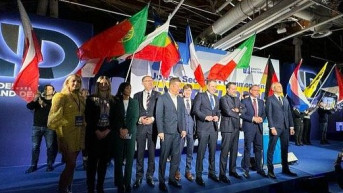
The political map of Europe is rapidly shifting to the right, with conservative and nationalist parties gaining better results and even forming governments in several EU countries. There has been recent talk of the possibility of these parties uniting and jointly participating in the European Parliament elections in June next year. Given that many of these parties are critical of the international community's policies on Kosovo and some even call for their home countries to revoke their recognition of Kosovo's independence, the question arises of whether and how the rise of the right will affect the resolution of the Kosovo issue and the dialogue between Belgrade and Pristina.
Kosovo Online interlocutors believe that despite the reservations most European right-wing parties have toward Kosovo as an independent state and their sympathies for Serbia and the Serbs, there are slim chances of a radical shift in the West's policy and individual countries' stance towards Pristina. However, they point out that what Belgrade and the Serbs in Kosovo can expect is a "softening of policy" regarding Kosovo with the strengthening of right-wing parties. This could result in a greater understanding of Serbia's policies and interests in international forums and European institutions.
In recent years and months, far-right parties have come to power in Italy, extended their rule in Hungary, gained coalition roles in Finland, become de facto government partners in Sweden, entered the parliament in Greece and achieved remarkable results in elections in the Netherlands and regional elections in Austria and Germany.
Right-wing parties like Alternative for Germany (AfD) or the Freedom Party of Austria are gaining increasing support in their countries. Similarly, in France, the National Front is gaining strength, and in recent elections in Spain, the People's Party of the right-wing center received the most votes.
The situation in Germany is particularly interesting, as it is one of the significant supporters of Pristina, and the foreign policy of the country is now led by the Greens, who openly lobby for an independent Kosovo. On the other hand, AfD submitted a request in the Bundestag in March of this year for Berlin to withdraw its recognition of Kosovo, stating that this "failed pseudo-state" was created after the unlawful NATO aggression against the Federal Republic of Yugoslavia. They pointed out that despite the unilateral declaration of independence in 2008 without a conducted referendum, and despite the tolerance of the expulsion of hundreds of thousands of the Serbs, Jews, and other non-Albanians, and the disregard for the will of the Serbian minority in the north, Kosovo was not only the poorest in the Western Balkans but also the second-poorest "state" in Europe after Moldova.
Their right-wing parties aim to expand their influence beyond their home countries and elevate it to the level of the entire EU. Matteo Salvini, the leader of the Italian League and deputy Prime Minister in the right-wing government, recently gathered related European parties in Florence to coordinate joint actions in the European Parliament elections scheduled for June next year.
The current forecast for the European Parliament elections suggests that parties within this group will have significant success, potentially becoming the fourth, and in the case of more surprises, maybe even the third-largest force in the EU after the European People's Party (EPP) on the right and the Socialists and Democrats on the left, which, according to Salvini, is precisely the goal of him and his allies. Salvini stated that this was their objective.
Petar Curcic from the Institute for European Studies believes that the prospects for the strengthening of the right wing in some European countries and their gathering before the European Parliament elections significantly influencing the resolution of the Kosovo issue are not substantial. However, considering their Christian identity and respect for Serbia and the Serbs, these parties will likely show more understanding of the Serbs and the Serbian cultural heritage in Kosovo.
"Wherever the right has won so far, and I'm talking about countries that have recognized the independence of Kosovo, it has not significantly influenced a change in the stance of these countries on important issues, regardless of whether these parties have more or less sympathy for the Christian heritage in Kosovo or a critical attitude towards the NATO pact. I think that countries that have recognized the unilateral independence of Kosovo will not change their stance, but we can say that some of these parties, especially considering their Christian identity, show respect for Serbia and the Serbs. Given that the circumstances are currently very challenging, especially with the constant pressure exerted by Kosovo Prime Minister Albin Kurti on the Serbian community in Kosovo, I believe that right-wing parties can show more understanding, especially for the Serbian cultural heritage in Kosovo", Curcic says for Kosovo Online.
He states the example of Hungary, which recognized the independence of Kosovo, where Viktor Orban's right-wing government showed an understanding of Serbian interests in the preservation and protection of cultural heritage, primarily churches and monasteries.
"In the case of Kosovo's admission to UNESCO, they showed a more reserved stance. I think this can be an interesting space for cooperation that may not fundamentally change the attitudes of these countries, but in some way, they will have an understanding of the Serbian community. In the case of the right-wing Government of Giorgia Meloni, which recently visited Belgrade, the Italian contingent in KFOR guards one of the most important cultural sites in Kosovo, the Visoki Decani Monastery. I think there can be a kind of space for cooperation", Curcic says.
He emphasizes that not all right-wing parties are inherently favorable to Serbia. He points out that populist leader Geert Wilders, whose Party for Freedom received the most votes in the recent elections in the Netherlands but not enough to form a government on its own, "no matter how much he shows anti-Islamic sentiment, will not fundamentally change his country's policy towards Kosovo if he becomes Prime Minister".
"In 2010, the minority supported Mark Rutte's Government, so the Netherlands did not change its decision to recognize Kosovo's independence. Serbia then received that very unfavorable decision from the International Court of Justice on Kosovo. Of course, the Netherlands does not influence the decisions of the ICJ, but it was somewhat indicative that all this happened on its territory", Curcic says.
Regarding the rise of the right in Germany, especially the Alternative for Germany (AfD), our interlocutor points out that it is a specific anti-establishment party that "flirts with national and conservative attitudes but also has a very strong left wing". He notes that AfD has shown an extremely critical attitude towards Germany's recognition of Kosovo's independence, but believes that if this party participates in the government, they will not fundamentally change Germany's policy, although they may show much more sympathy towards the Serbs compared to other parties.
The rise of the right in European Union countries can impact the resolution of the Kosovo issue, especially considering that most of these parties have the stance that Kosovo is not an independent state, Nikola Perisic from the Center for Social Research says. However, he points out that regardless of the trend of these parties gaining votes in EU member states, the question remains about their coalition potential, i.e., whether they will succeed in forming a government or be a part of the government.
"The rise of the right can impact the resolution of the Kosovo issue in several ways. First of all, we know that these parties have the stance that Kosovo is not an independent state, and you even have the initiative of the Alternative for Germany that offered the Bundestag a solution to withdraw recognition of Kosovo's independence. In other countries, we see the strengthening of the right; they performed very well in the elections in the Netherlands. However, the question remains whether these parties, regardless of their rise, will manage to be a part of the ruling coalition. Very often, their coalition potential is uncertain", Perisic states for Kosovo Online.
Perisic points out that what can also reflect on the EU regarding the rise of the right is the resurgence of a sovereignist approach.
"Namely, the EU cannot act coherently, lacks unity, and faces a crisis within the Union. The EU has some significant internal problems to solve, and it is questionable how much it can engage in foreign policy. We see that the diplomatic capacity of the EU in these crisis moments, starting from COVID and throughout all the crises in recent years, is questionable, and the way they handle it is not as easy as expected", he says.
When asked if this increasingly evident change in the political landscape in Europe was one of the reasons for the rush to resolve the Kosovo issue and implement the Franco-German plan, Perisic points out that everything happening in recent years, including wars and security crises, does not favor the EU.
"The economic crisis is strongly felt, and consequently, there is a political crisis. Somewhere, the rise of the right is also connected to all these problems. What is also clear is that the EU does not have the capacity to solve all this, and that's why we increasingly see the initiative of the United States in the negotiations between Belgrade and Pristina. It is somewhat expected because the United States has brought long-term peace to Europe and has effectively mediated in all long-term peace agreements. They only did not mediate in the Minsk 1 and 2 agreements, and we see how that ended, with the conflict in Ukraine", Perisic emphasizes.
He also reminds that a few days ago, Italian Prime Minister Giorgia Meloni visited Belgrade.
"Italy is one of the Quint member states, and an active role of the Quint countries in the resolution and mediation of the Belgrade-Pristina dialogue is definitely expected in the coming period", Perisic says.


0 comments