
Curcic: With the strengthening of the right-wing in Europe, the understanding for Serbs in Kosovo is also increasing
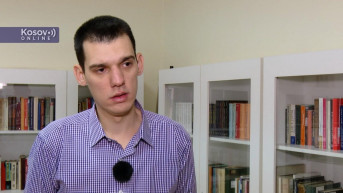
The rise of the right in certain European countries and their gathering before the elections for the European Parliament next year is not likely to significantly impact the resolution of the Kosovo issue, but these parties, considering their Christian identity and respect for Serbia and the Serbian people, will likely show more understanding for Serbs and Serbian cultural heritage in Kosovo, according to Petar Curcic from the Institute for European Studies.
"Wherever the right has won so far, and I'm talking about countries that have recognized the independence of Kosovo, it hasn't significantly influenced a change in the stance of those countries on important issues, regardless of whether these parties have more or less sympathy for the Christian heritage in Kosovo or a critical attitude towards the NATO pact. I think the countries that have recognized the unilateral independence of Kosovo will not change their stance, but we can say that some of these parties, especially considering their Christian identity, show respect for Serbia and Serbs. Given that the circumstances are currently very difficult, especially with the constant pressure exerted by Kosovo Prime Minister Albin Kurti on the Serbian community in Kosovo, I believe that right-wing parties can show more understanding, especially towards Serbian cultural heritage in Kosovo," Curcic says for Kosovo Online.
He cites the example of Hungary, which has recognized the independence of Kosovo, where the right-wing government of Viktor Orban has shown understanding for Serbian interests in preserving and protecting cultural heritage, primarily churches and monasteries.
"In the case of Kosovo's admission to UNESCO, they showed a more reserved attitude. I think this can be an interesting area of cooperation that may not fundamentally change the positions of those countries, but in some way, they will have understanding for the Serbian community," Curcic says.
Extreme right-wing parties have become a dominant political factor in recent years and formed governments in numerous EU member states, from Hungary through Italy to Slovakia, and parties with the prefixes "conservative" and "nationalist" have achieved excellent results in recent elections in Spain, the Netherlands, as well as regional ones in Germany and Austria. Matteo Salvini, the leader of the Italian party Lega, who is also the deputy prime minister in the right-wing government of Giorgia Meloni, recently organized a gathering of European right-wing parties in Florence to coordinate their joint appearance in the European Parliament elections next June.
"In the case of the right-wing government of Giorgia Meloni, which was recently visiting Belgrade, the Italian contingent in KFOR protects one of the most important cultural objects in Kosovo and Metohija, the Visoki Decani Monastery. I think there can be a kind of space for cooperation," Curcic says.
He emphasizes, however, that not all right-wing parties are a priori favorable to Serbia. He notes that the populist leader Geert Wilders, whose Party for Freedom received the most votes in the recent elections in the Netherlands but not enough to form a government on its own, "no matter how much he shows anti-Islamic sentiment, will not fundamentally change his country's policy towards Kosovo in case he becomes prime minister."
"In 2010, he supported the government of Mark Rutte, so the Netherlands did not change its decision to recognize the independence of Kosovo. Serbia then received that very unfavorable decision of the International Court of Justice on Kosovo. Of course, the Netherlands does not influence the decisions of the ICJ, but it was somewhat indicative that all this happened on its territory," Curcic notes.
Regarding the rise of the right in Germany, especially the Alternative for Germany (AfD), our interlocutor points out that it is a specific, anti-establishment party that "flirts with national and conservative attitudes but also has a very strong left-wing." He notes that the AfD has shown an extremely critical attitude towards German recognition of the independence of Kosovo but believes that if this party participates in the government, they will not fundamentally change Germany's policy, although they may show much more sympathy for Serbs compared to other parties.



0 comments