
How would freezing the dialogue between Belgrade and Pristina, according to Edi Rama's proposal, impact the normalization of relations?
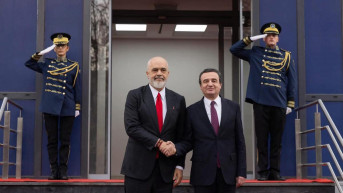
Freezing the dialogue with Belgrade and turning only to negotiations with the European Union, along with unilaterally implementing the agreements reached in the dialogue, is a suggestion that the Prime Minister of Albania, Edi Rama, has made to Kosovo. Although such a development might finally lead Pristina to fulfill some obligations from the dialogue, this scenario would also imply a change in the format of negotiations, which, according to Kosovo Online's sources, international actors likely would not support. There are also opinions that such a turn could lead to a renewal of conflict.
Written by: Dusica Radeka Djordjevic
"Kosovo must freeze the bilateral dialogue on normalization and take a giant step forward towards EU membership," Rama wrote on Facebook, where he posted part of his speech during a joint session of the Albanian and Kosovan assemblies in Pristina.
"Kosovo can provide unequivocal proof of its will to belong to a united Europe and NATO in a short time by unilaterally fulfilling all the conditions of normalization with Serbia, not for Serbia's sake, but for the sake of the martyrs and their children," said the Albanian Prime Minister at this session, at one point addressing it as 'brotherly.'
Rama's advice was not well-received within the Government of Kosovo, as the Minister of Foreign Affairs, Donika Gervalla, described his words as pressure on Kosovo, noting that within a family, consultation occurs, not public 'brotherly' advice. As she stated, it is about increasing pressure on Kosovo to unilaterally implement the agreements from the dialogue.
Regarding the possibility of unilateral implementation of the agreements, Kosovo's President Vjosa Osmani also spoke in the middle of last month, stating that Kosovo could unilaterally implement the Brussels Agreement and the Ohrid Annex if it receives guarantees from international partners that it will, in return, benefit from recognition and membership in international organizations.
Stefan Surlic, Assistant Professor at the Faculty of Political Sciences in Belgrade, sees the proposal of the Albanian Prime Minister as a kind of exit strategy for Pristina to finally begin to fulfill its obligations, not as concessions to Belgrade but for a higher goal, such as EU membership.
Surlic, for Kosovo Online, suggests that Rama wanted to present a creative solution to help representatives of Pristina escape the vicious circle of a nationalist agenda that yields no results.
"All that has been happening in the Self-Determination's pre-election campaign was in the context: 'we will not give in anything to Belgrade, we will not form the Community of Serbian Municipalities,' so my reading is that Edi Rama wanted to creatively offer an exit by presenting the negotiations as a dialogue with Brussels, but actually fulfilling what was agreed with Belgrade because there is nothing that is the subject of dialogue and agreement that did not involve Belgrade. So, it's a political trick where Belgrade is ostensibly omitted, but the conditions from the Ohrid Annex and the European proposal are met, and this is presented as a concession to the European Union and Brussels, not the Serbian community and Belgrade," says Surlic.
Surlic believes that Brussels might find it acceptable to present the fulfillment of obligations from the dialogue as a concession for Kosovo's European future, but he doubts that Brussels would formally deviate from the existing framework of negotiations which requires a minimum cooperation and meetings between representatives from Belgrade and Pristina despite the obvious and long-standing stall in dialogue.
Asked what would happen with the topics that remain open in the dialogue if Pristina started implementing what was agreed but at the same time froze further dialogue with Belgrade, Surlic says that such a scenario would be buying time.
"Pristina should primarily form the Community of Serbian Municipalities and present it as a concession to the European Union, but other issues will come up in the implementation process where Belgrade is indispensable, as well as representatives of the Serbian community in Kosovo. So, I read this more as a kind of political marketing. A similar situation occurred in previous years when they implemented some law or decision that was supposed to be in the interest of the Serbian community, and when they presented it as unfair laws but were implemented because there was a higher goal, good relations with the US and EU. This latest initiative by Edi Rama follows that trail," Surlic adds.
According to Milos Pavkovic, an associate at the Centre for European Policy, the scenario proposed by Rama is not realistic, and this idea is unlikely to gain the necessary support.
"I do not expect it to receive broad international support, either among EU member states or among the Quint countries. The existing format of the dialogue was established by a United Nations resolution in 2010, which opened the possibility for the European Union to take over moderation of the dialogue between Belgrade and Pristina, and this scenario would also not receive support from Belgrade. Rama's statement has practical value for local public opinion and was given primarily in the context of the upcoming parliamentary elections," Pavkovic said for Kosovo Online.
He says that the broader context in which this statement was given should be considered.
"It was during a joint session of the Kosovan and Albanian assemblies, where Rama was addressing primarily the deputies of Kosovo and Albania, and perhaps it was also a message to a wider public audience. Certainly, it comes at a time when the Brussels dialogue is in obvious crisis with very limited progress in implementing the agreements and an apparent problem in finding a common language between Belgrade and Pristina," Pavkovic notes. Rama had similar extreme views during the summer of 2023 when he also proposed breaking off the dialogue and organizing an international conference to resolve the status of Kosovo, but even that idea did not resonate in the international community.
Considering that Kosovo's President Vjosa Osmani has expressed similar views about unilateral implementation of the agreements, Pavkovic says that Osmani was actually suggesting that the processes of Kosovo's European integration and the dialogue between Belgrade and Pristina be separated because she believed that the dialogue, which is not progressing, is also hindering the European integration process.
"In the EU, there is currently no understanding for such a move because the EU sees European integration as a key factor and motivation for both Belgrade and Pristina to make some progress in the dialogue. If these processes were separated, we would very likely face a multitude of new problems because Serbia would expect the same approach, and then that would only further complicate both the normalization process and the European integration process, for both Kosovo and Serbia," Pavkovic assesses.
Professor of Political History in Pristina, Blerim Canaj, told Kosovo Online that the essence of Rama's statement was that the agreements should be implemented unilaterally, so that Kosovo would finish what it took as its responsibility because nothing is happening in the dialogue.
"What we see is that if Vučic or Kurti needs it, then they go to the dialogue, but there is nothing from that dialogue. The other thing is that Kosovo and Serbia do not have an agreement between themselves, but Kosovo has an agreement with the European Union, as does Serbia. If the EU takes its responsibility, then unilateral implementation of the agreement is possible. If one side has taken some responsibility, then it must finish it. Kosovo must finish it, as must Serbia. But if we wait for one side to finish something and the other does not finish anything, then where do we stand, those of us who live in Kosovo?" says Canaj.
He assesses that the dialogue has no alternative because, he says, it is known that the international community demands dialogue.
Political analyst Blerim Burjani sees in the whole story about freezing the dialogue also a danger to security and warns that it could lead to a renewal of conflict.
"The dialogue should be concluded by implementing the agreements from Brussels and the Ohrid Annex, or a new one should start, which means that the EU must have a platform for normalizing relations between Kosovo and Serbia. I don't think the dialogue should be frozen; that's not an alternative. The parties, of course, should know that there is no dialogue without borders; it must indeed be concluded. Also, the parties must keep in mind that the dialogue is conducted for a better life and relations between Albanians and Serbs," said Burjani.


comments